
Vandorn Hinnant was born in 1953 in Greensboro, North Carolina, and grew up in a landscape marked by open fields, steady rhythms, and the quiet details of Southern life. That environment taught him early to notice the small things—how shapes relate, how balance appears in nature, and how patterns often sit just beneath the surface of everyday experience. He later studied Art Design at North Carolina A&T State University, earning his BA, and continued his sculptural studies at the University of North Carolina at Greensboro. His training laid the groundwork, but curiosity is what carried him forward. Over the years, he has moved freely between sculpture, drawing, installations, and geometric inquiry, treating each medium as another way to explore form.
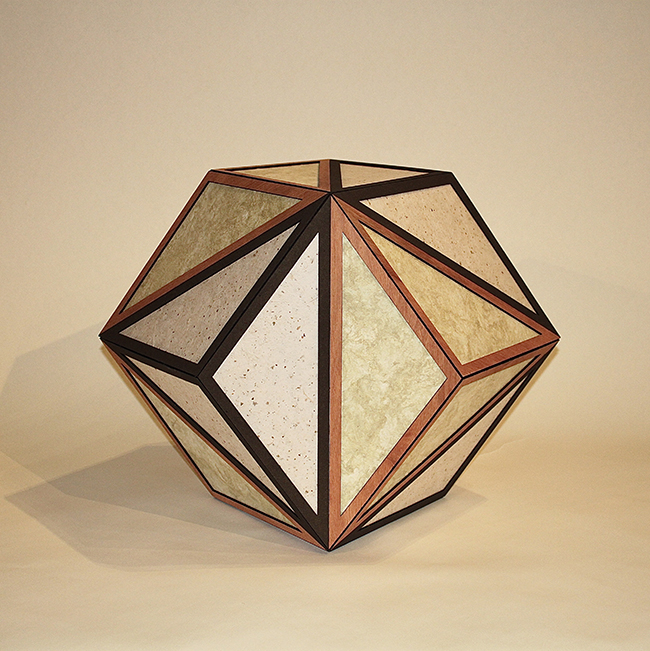
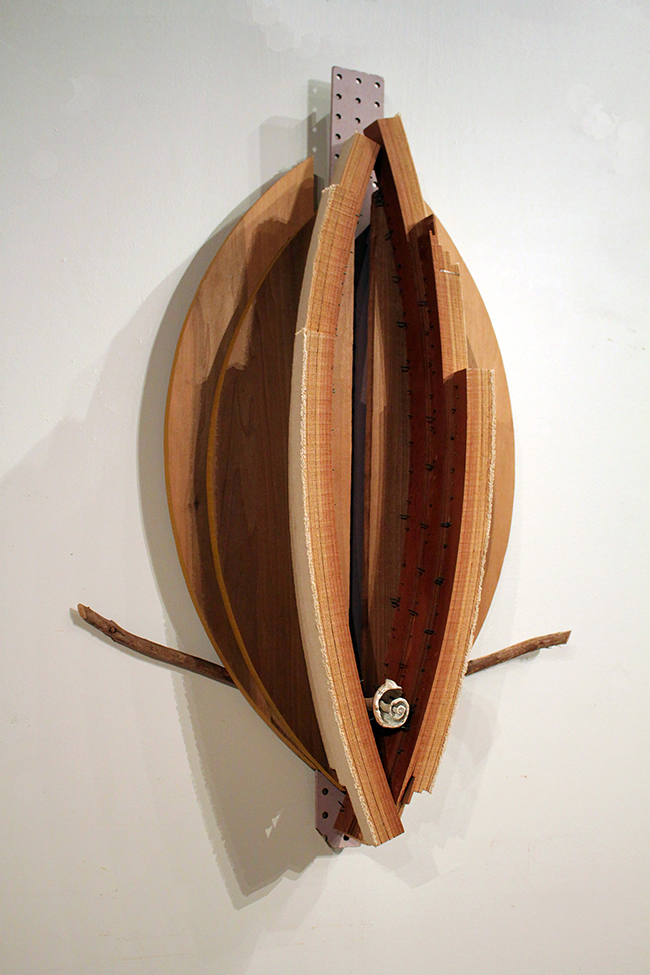
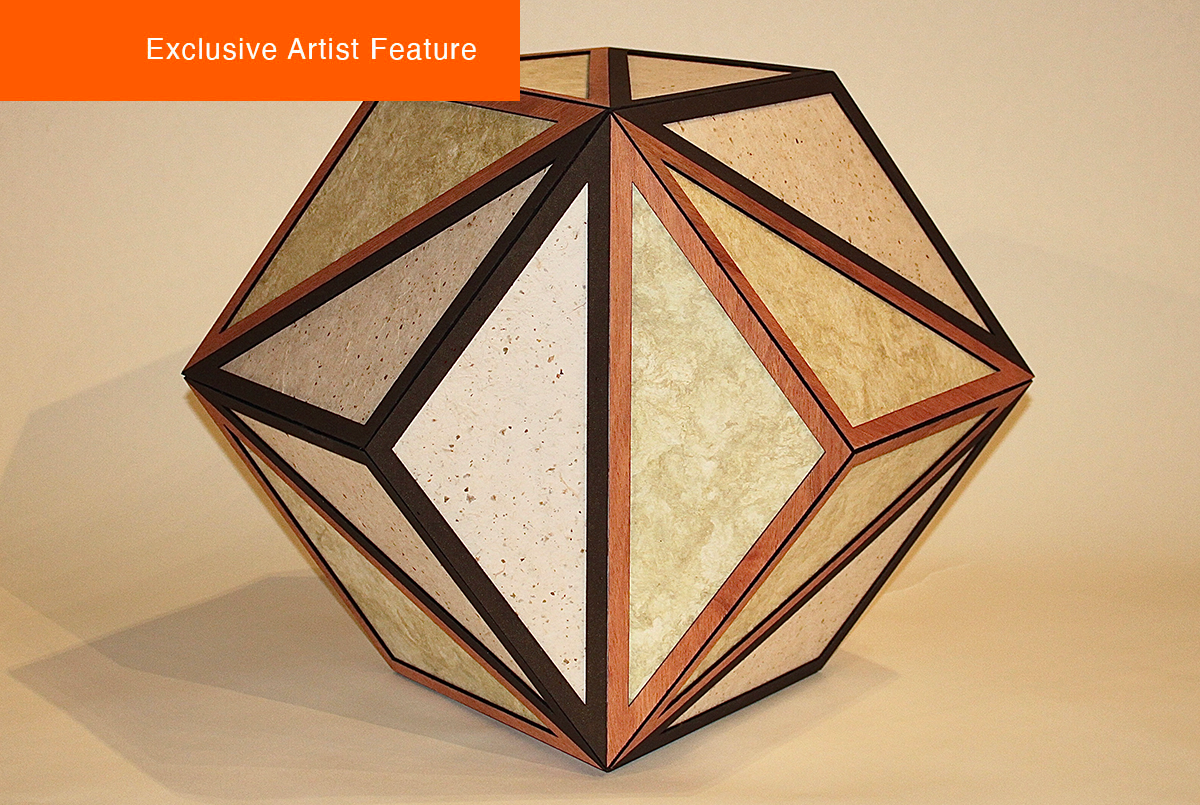
To Hinnant, geometry isn’t a dry discipline. It’s a language with texture and history. He approaches proportions and shapes as vessels of memory—structures that echo what we see in nature, ancient architecture, and long-standing spiritual systems. His ongoing study of Platonic solids, the golden ratio, and other sacred geometries gives his work a lasting quality. Nothing he creates feels bound to a specific trend. Instead, his pieces seem to belong to a larger timeline, as if he is tapping into an old conversation that never truly ended.His 2014 sculpture “Platonic Symmetries of Truth, Beauty, and Goodness” shows this clearly. The piece is made from exotic papers and polychromed wood and is built around the rhombic dodecahedron, a shape central to his geometric explorations. The golden ratio guides its internal relationships. Hinnant doesn’t treat that ratio like a statistic; he sees it as something alive—visible in leaves, shells, and the bones of ancient structures. In this sculpture, the proportion gives the form its cohesion. The way its surfaces meet feels natural, almost as if the piece grew into itself.Hinnant once mentioned that a mystic told him his purpose in this life was to bring ancient Egyptian geometries into the present day. He doesn’t frame this as literal truth, but he does acknowledge that many shapes appearing in his work feel familiar, as though they come from a lineage that predates written history. The sculpture carries that sense of return—something rediscovered rather than invented.Despite its strict geometry, the work has warmth. The materials soften it, giving the form weight and calm. The ideas named in its title—truth, beauty, and goodness—are expressed through proportion rather than symbolism. They appear quietly, through alignment rather than declaration.Hinnant’s interest in form also extends toward remembrance and cultural honor. This is evident in his 2023 piece “MERIDIAN: Hanging From The Learning Tree (A Song for Ms Cicely Tyson)”, created from polychromed wood, metal, canvas, and a seashell. The work pays tribute to Cicely Tyson—her presence in film, her role in the Civil Rights era, and her commitment to portraying characters full of depth and integrity. The sculpture stretches upward, giving it a sense of dignity and lift.At the center is a layered vesica piscis, a shape connected with the feminine and with creation. Hinnant reshapes this familiar geometry, opening it beyond its usual iconography. A cedar branch crosses the form horizontally, supporting a weathered conch shell. Together, they echo qualities often found in nature’s feminine symbols—growth, endurance, and resonance. The composition feels like a quiet gesture of respect, unfolding slowly rather than demanding attention.Throughout his body of work, Hinnant balances structure with intuition. Geometry gives his pieces their foundation, but intuition guides their final expression. His sculptures feel intentional without becoming rigid. They feel alive, with room for stillness, breath, and contemplation.Curiosity fuels his entire practice. He revisits the same shapes again and again not out of repetition, but because each encounter reveals something new. His work reflects an ongoing relationship between the visible world and the unseen forces shaping it. Through geometry, memory, and quiet homage, Hinnant creates work that is steady, grounded, and continually reaching toward something just beyond the edge of form.