

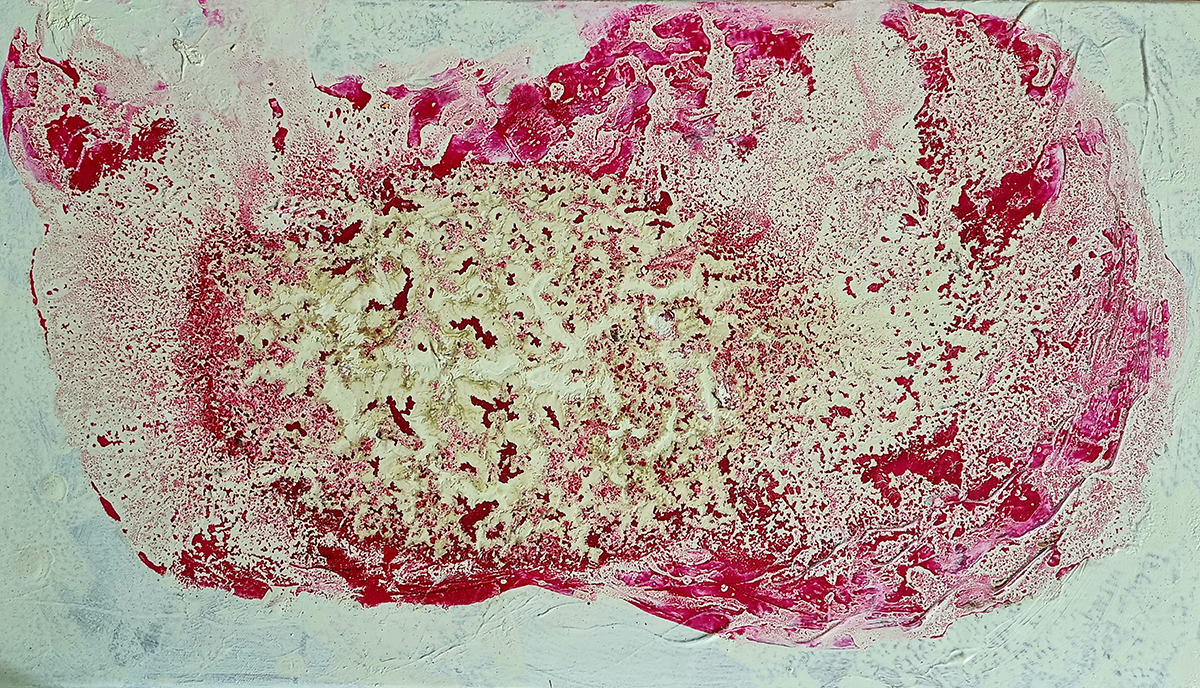
Ted Barr’s path into art began long before he ever picked up a brush. Born in Nevodar, Romania, close to the wide horizon of the Black Sea, he spent his early childhood watching life shift around him. At four years old, he moved with his family to Israel, a transition that carried him from one world into another. That early uprooting became the first chapter in a life shaped by movement—across borders, across ideas, and eventually across inner landscapes that reach far beyond geography.
Barr’s art reflects this sense of searching. He doesn’t settle for the obvious or the familiar. Instead, he aims his attention upward and inward, toward the vast structures of the universe and the equally complex terrain of human experience. His work draws from cosmic imagery, philosophy, and the quiet questions that linger at the edge of understanding. In many ways, his art is his compass, guiding him through the mysteries he refuses to ignore.
The Symbol Y — A Gateway into Barr’s FLY Philosophy
Main Section — ~600 words
At the center of Ted Barr’s artistic and philosophical structure is a single symbol: the letter Y. It appears simple at first glance, but for Barr it acts as a doorway—a visual key to a larger way of seeing the world, which he calls the FLY philosophy: Free the Life Within You. The Y stands for “You,” but it also represents motion, choice, branching, merging, and the ongoing pulse of existence.
Barr’s fascination with the Y begins with its double reading. Depending on which direction you approach it from, it offers two very different interpretations of how life unfolds. One reading looks like a V resting on top of a straight line, forming a shape that points upward and outward. In this position, the Y mirrors the act of conception. Two paths meet in a single stem. Think of the union between woman and man creating a child. Think of celestial bodies moving into alignment. Think of a seed meeting the soil and water it needs to become fruit. It’s the meeting point where two become one. For Barr, this orientation of the Y captures nourishment, union, and emergence.
But the symbol changes entirely when imagined in reverse. Now the Y begins from a single vertical line that splits into two arms stretching toward possibility. Here, the shape speaks of expansion—one source giving rise to many expressions. A single idea becoming a movement. A lone spark generating a wave of reactions. The original point doesn’t disappear; it expands, replicates, and transforms. For Barr, this orientation represents growth, diversification, and the unfolding of potential. It’s not only about biological or physical creation but also about revolutions, inventions, and cultural shifts born from a shared impulse.
This dual reading—one leading to unity, the other to multiplicity—captures what Barr sees as the ongoing rhythm of the universe. Everything moves between these two states. Two into one. One into two. This swing never stops. It is the pulse behind physical birth, creative breakthroughs, and collective change.
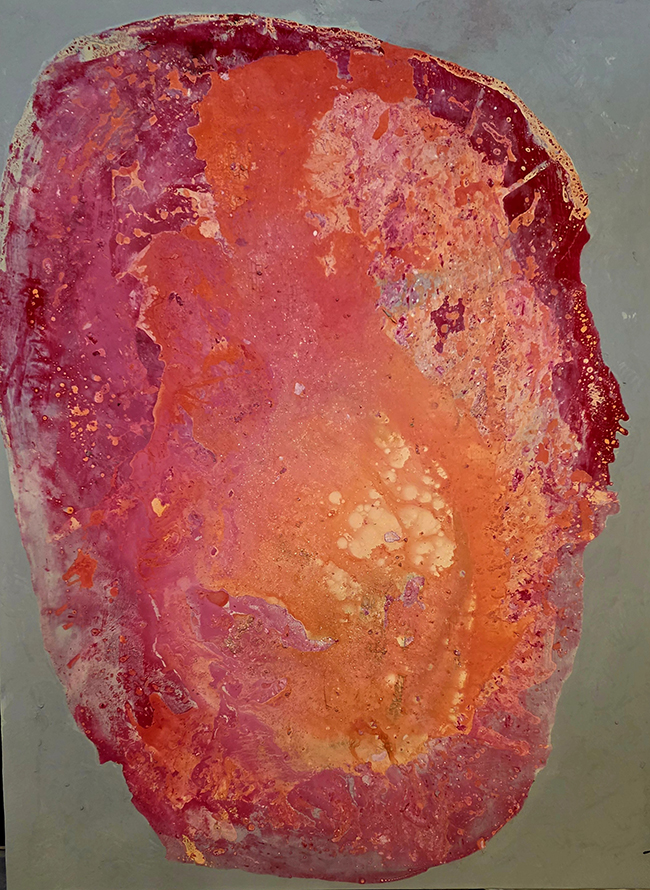
This is why the Y sits at the heart of the FLY logo. In FLY—Free the Life Within You—the Y is not just a letter; it’s a person. A vertical being standing upright with two arms open to the world. This simple posture reflects how humans live: always extending ourselves outward, always reaching for what surrounds us, and always receiving signals from the world. Barr sees human life as a constant exchange—between inside and outside, between self and environment, between thought and action. We sense, react, respond, and reshape the world based on those interactions.
From this point, Barr pushes the idea even further. If the Y represents the individual and the individual is constantly absorbing and transmitting information, then each person becomes part of a larger architecture. We’re not separate units moving through a disconnected world. We are threads in a vast web—touching, influencing, and being influenced. Our perceptions knit reality together, moment by moment.
Hovering above this entire concept is a question that Barr returns to again and again: Why? Why is this system designed this way? What is the purpose of this enormous exchange of life, energy, thought, and matter? Who—or what—put these structures in motion? Barr doesn’t claim to have the answer, but he uses art as his way of exploring that question without fear.
The Y, then, is more than a graphic mark. It’s a compass needle pointing toward both origin and possibility. It’s a reminder that existence is always in motion, always shifting between unity and expansion. Through this symbol, Barr invites viewers to consider their own place in that motion—to ask where they stand, what they’re reaching toward, and what they’re allowing themselves to become.
