

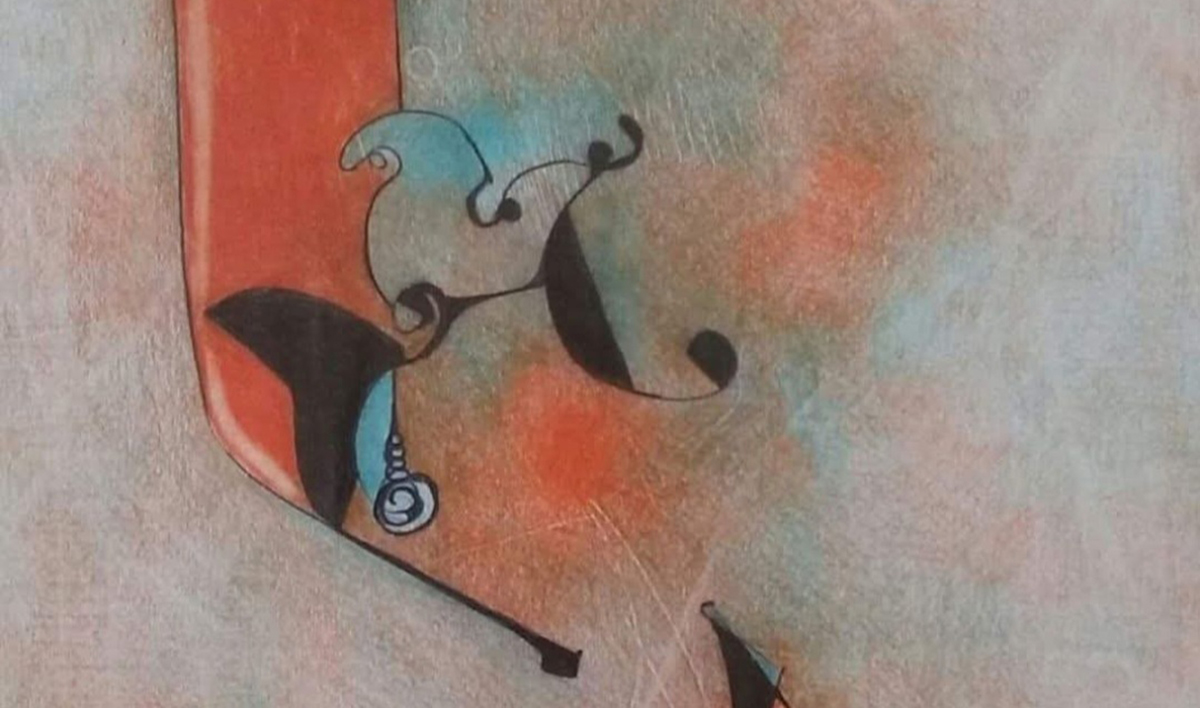
Mike Garibay creates paintings that bring color, movement, and emotion into active conversation. Working with oil paint, oil pastels, ink, and other materials, he develops everything from expansive canvases to smaller works on canvas and panels. His abstract compositions are guided by instinct, yet their lines, shapes, and colors form carefully balanced relationships. Garibay also creates detailed portraits, revealing his ability to shift between spontaneous expression and focused observation. His mural projects extend his visual language into architectural environments, where color and form can influence the experience of an entire space. Rather than beginning with a fixed narrative, Garibay allows each piece to develop through the creative process. A gesture may suggest the next shape, while one area of color may determine the direction of another. The completed artwork becomes a record of exploration, discovery, and emotional response.
The Expressive Art of Mike Garibay
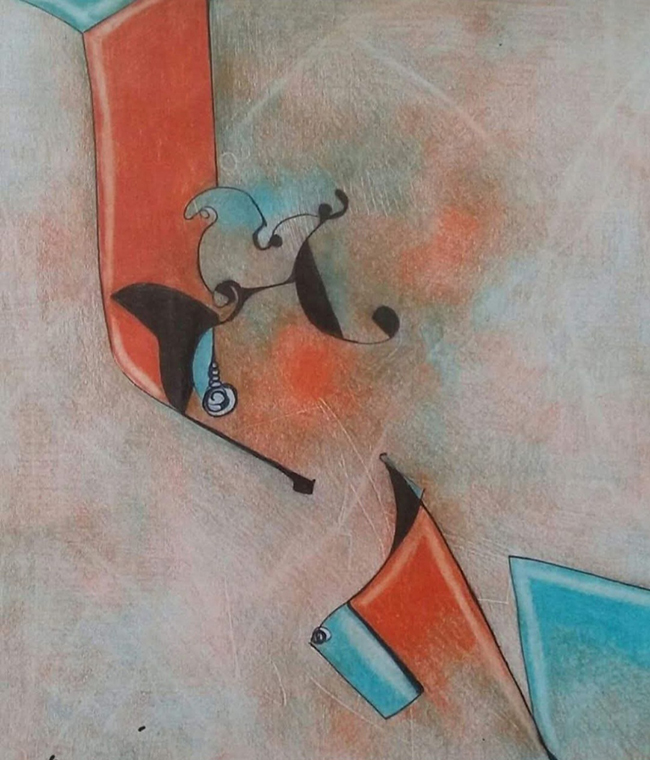
Mike Garibay’s artistic practice is shaped by a willingness to follow unexpected directions. His compositions often begin with an instinctive mark, a color relationship, or a form that invites further development. Instead of planning every detail in advance, he responds to what appears on the surface. This method gives his work a sense of immediacy while allowing each composition to acquire its own internal order.
At first glance, the shapes within Garibay’s abstract works may appear spontaneous or disconnected. With closer attention, however, visual relationships begin to emerge. Curved lines answer sharper angles, concentrated areas of color are balanced by quieter passages, and bold forms are given room to move across open space. These decisions create rhythm without imposing a rigid structure. The viewer’s eye is encouraged to travel through the work, following gestures and discovering connections between seemingly independent elements.
Color is central to this experience. Garibay uses vivid contrasts as well as softer tonal transitions, adapting his palette to the atmosphere of each piece. A bright hue may introduce energy, while a subdued area provides stillness and space. Rather than treating color as surface decoration, he uses it to establish mood, depth, and movement. Each tone affects the surrounding forms, creating a visual exchange that continues throughout the composition.
His materials contribute to the character of his work. Oil paint offers richness, texture, and gradual transitions, while oil pastel allows for more immediate lines and concentrated areas of pigment. Ink can produce precise contours or fluid, unpredictable gestures. By combining these qualities, Garibay creates surfaces that feel layered and responsive. The physical act of making—drawing, blending, covering, and revising—remains visible in the completed image.
Although abstraction forms an important part of his practice, Garibay also works with recognizable subjects. His portraits demonstrate patience, control, and close attention to individual characteristics. The transition between abstract painting and portraiture does not represent a division in his work. Instead, it shows two connected ways of studying presence. In a portrait, that presence may be found in a face, expression, or posture. In an abstract composition, it may emerge through the relationship between shape, line, and color.
Garibay’s mural-scale projects add another dimension to his practice. A mural changes the relationship between the artwork and the viewer because it occupies a shared environment rather than a contained frame. At this scale, his forms can move across walls and interact with surrounding architectural features. The work becomes part of a place, altering its mood and inviting people to experience color through physical movement.
Across these formats, Garibay approaches art as a developing emotional process. He does not require every work to communicate a single explanation. Instead, he gives viewers the freedom to encounter the imagery through their own memories and associations. A curved form might suggest a body, an instrument, an animal, or something entirely imagined. Another viewer may interpret the same form as movement without assigning it a specific identity.
This openness gives the work its lasting energy. Garibay creates enough structure to hold each composition together while preserving uncertainty and discovery. His paintings do not dictate where interpretation must begin or end. They invite observation, curiosity, and personal response.
Through abstraction, portraiture, and mural painting, Mike Garibay continues to explore how visual elements can carry feeling. His work demonstrates that spontaneity and control can coexist: an intuitive gesture can be refined without losing its original energy, and a carefully organized composition can remain open and unpredictable. Each piece represents an exchange between the artist, the materials, and the possibilities that emerge during the act of creation.
A Visual Conversation in Pastel and Ink
Mike Garibay’s limited-edition work presents an imaginative arrangement of geometric forms, curving lines, and softened color. Created with pastel and ink, the image carries a gentle atmospheric quality while retaining a clear sense of movement. Coral red, turquoise blue, muted gray, black, and pale neutral tones interact across the surface, creating an environment that feels both architectural and dreamlike.
The composition appears divided into loosely defined spaces. A coral-red vertical area rises along the upper left, bordered by blue and gray sections that suggest walls, openings, or overlapping planes. These elements introduce the feeling of an interior, although the space does not follow conventional perspective. Instead, the artist bends and reorganizes it according to the needs of the composition. The result exists between a room, a stage, and an imagined landscape.
Near the upper center, a group of curling black lines becomes the work’s main point of activity. These lines twist outward with a lively, almost musical rhythm. They may suggest parts of a face, an animated character, or the mechanisms of an unfamiliar instrument. Their meaning remains deliberately unresolved. Small blue forms and a spiral detail provide contrast while encouraging the viewer to examine this intricate area more closely.
Below, a larger orange and blue shape angles across the composition. It resembles a horn, vessel, abstracted body, or machine, depending on how it is viewed. Its diagonal position creates a visual connection between the central imagery and the turquoise form near the lower right. Together, these shapes guide the eye downward and across the picture rather than allowing it to remain fixed in one location.
The work’s energy comes from the contrast between the animated forms and the broad, quiet background. Garibay avoids filling every part of the surface with detail. The open areas allow the smaller shapes to feel active and independent. Subtle variations within the gray field keep the background from appearing empty. Traces of coral, blue, beige, and green seem to rise through it, producing an atmosphere that feels worn, hazy, and softly illuminated.
Pastel gives the colors a velvety appearance. The pigments seem to settle into the surface rather than resting sharply above it. Ink supplies definition, especially within the dark outlines and curling linear passages. This combination enables Garibay to move between softness and precision. The pastel establishes mood, while the ink directs attention and creates visual rhythm.
There is also a playful quality within the image. The forms seem capable of movement, as if they might rotate, unfold, or continue traveling beyond the edge of the paper. This impression gives the work an animated character without turning it into a literal scene. Viewers are free to create their own stories from the visual clues or to experience the piece entirely through its colors and formal relationships.
The square 24-by-24-inch format supports the composition’s balance. No single direction dominates the image. Vertical, diagonal, and curved elements pull against one another while remaining contained within the square. This tension gives the artwork momentum without making it feel unstable.
Produced as a limited edition of 100, each print is signed by the artist and presented on museum-quality paper. The edition offers collectors an opportunity to experience Garibay’s distinctive combination of abstraction, imaginative imagery, and carefully controlled color. Each print is priced at $600 and is shipped securely in a roll.
Orders can be placed directly with Mike Garibay by emailing garibaymike9@gmail.com. The work provides an engaging example of his ability to transform subtle color, abstract structure, and expressive line into an image that remains open to discovery.
