

Julian Jollon is an American artist whose creative journey reflects a remarkable intersection of artistic expression, scientific inquiry, and personal transformation. Formally educated in Fine Arts, Photography, and Painting, Jollon initially pursued a path rooted in the visual arts before his professional life took an unexpected direction into Hospital Epidemiology. For many years, he dedicated himself to understanding disease prevention and protecting human health, developing an analytical perspective that would later complement his artistic vision.
A defining moment in his life came when he underwent a liver transplant, an experience that profoundly reshaped his understanding of mortality, resilience, and renewal. This encounter with physical vulnerability brought a deeper appreciation for existence and the transformative possibilities of creativity. Returning to artistic exploration with renewed purpose, Jollon embraces photography as a means of discovering hidden meaning within ordinary surroundings, revealing unexpected connections between material reality, spiritual reflection, and the enduring human capacity for transformation.
Blue Man Vision: Exploring the Sacred Through Color, Transformation, and Photography
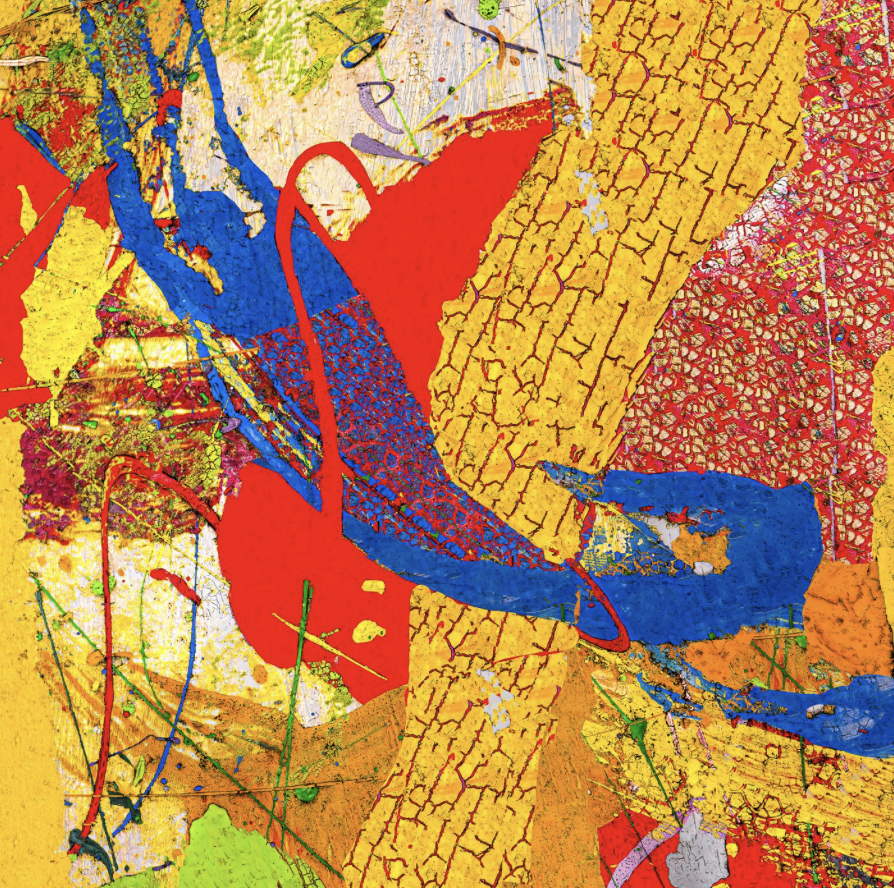
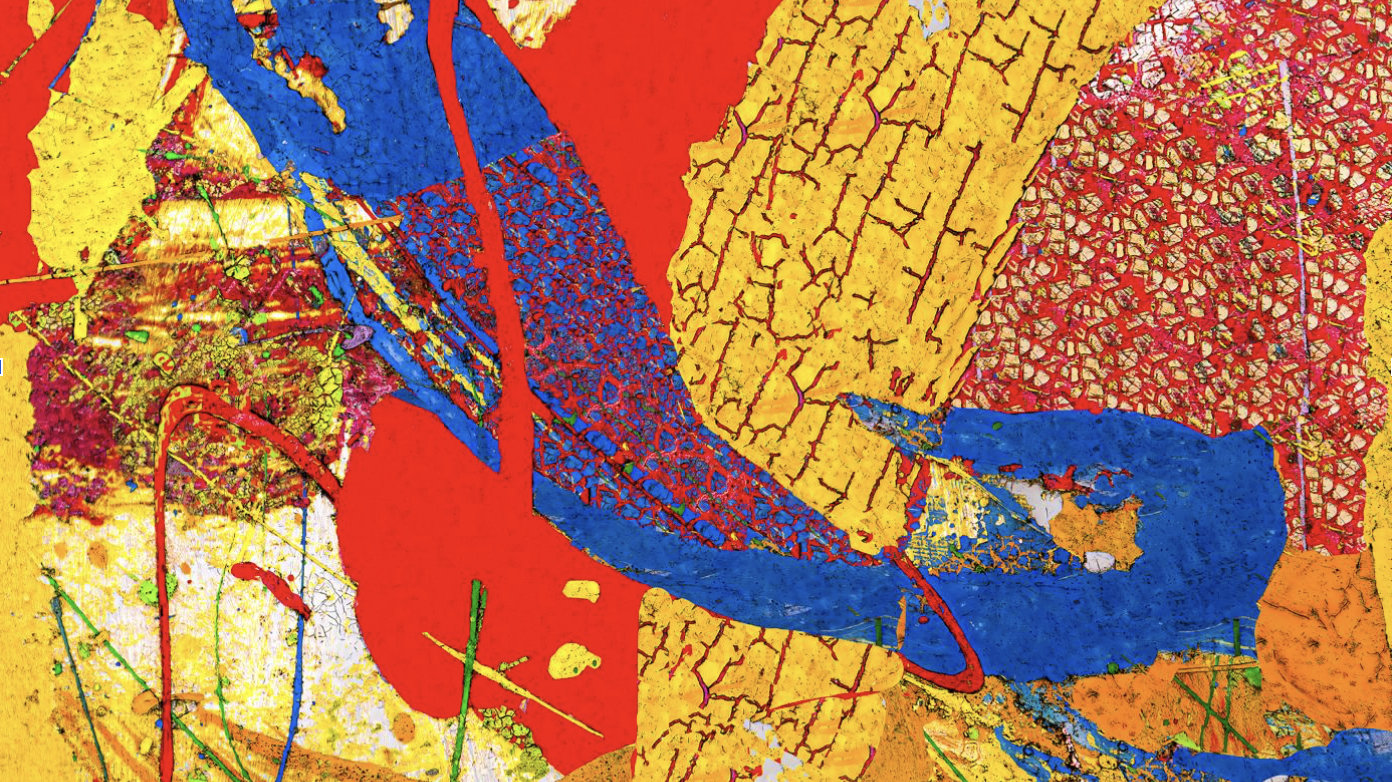
In Blue Man Vision, Julian Jollon transforms an overlooked urban object into a compelling meditation on spirituality, renewal, and the mysterious relationship between artistic perception and human experience. Through photography, he captures the weathered surface of an abandoned automobile covered in spontaneous splashes of paint, revealing an extraordinary visual composition within something seemingly forgotten.
At first glance, the image presents an energetic collision of colors, textures, and irregular patterns. Layers of paint interact with rusted metal, creating an abstract landscape that appears both accidental and strangely intentional. Rather than constructing the composition through conventional painting techniques, Jollon discovers its expressive potential through observation and photographic framing. His camera becomes an instrument of transformation, elevating a discarded object into a visual experience filled with symbolic possibilities.
The vibrant blue markings occupy a particularly significant place within the composition. Their fluid appearance suggests movement, water, and an almost mystical energy emerging from the surrounding textures. Against the deteriorating automobile, these splashes introduce a striking contrast between physical decay and the possibility of regeneration. What might otherwise be dismissed as random markings begins to resemble an ancient symbolic language, inviting viewers to explore meanings beyond the visible surface.
Jollon’s interpretation draws inspiration from Black Elk Speaks, a literary account of the spiritual experiences and teachings of Black Elk, the Oglala Lakota spiritual leader. Through this connection, the artist explores themes of visionary experience, healing, and spiritual transformation. The blue elements within the photograph become associated with symbolic medicine, suggesting the possibility that an image can communicate something deeper than its physical appearance.
This spiritual association transforms the abandoned automobile into what might be described as a contemporary urban petroglyph. Although traditional petroglyphs are carved into stone and carry particular cultural histories, Jollon’s photograph evokes a similar sense of mystery through its weathered surface and seemingly symbolic markings. Rust and lacquer replace stone, while accidental splashes of paint become the foundation for imaginative interpretation.
An accompanying poem further develops the artwork’s transformative qualities through three powerful metaphors: paint becomes water, the automobile becomes a body, and vision becomes healing.
The transformation of paint into water suggests spiritual nourishment and renewal. Through the camera lens, the viewer metaphorically absorbs the image, experiencing its colors and textures as something capable of influencing perception. Photography becomes more than documentation; it becomes an encounter between the visible world and the imagination.
The automobile’s transformation into a body introduces another layer of meaning. Abandoned, weathered, and seemingly exhausted, the vehicle reflects the vulnerability of physical existence. Yet through artistic attention, it acquires renewed significance. Its deteriorating surface no longer represents only decline but also endurance and the possibility of transformation.
Finally, the idea of vision becoming healing suggests that perception itself can generate profound change. By discovering unexpected beauty within a discarded object, Jollon challenges conventional distinctions between worthlessness and value, destruction and creation, and the ordinary and the sacred.
These themes resonate with the artist’s personal history, particularly his experience of undergoing a liver transplant. His encounter with mortality provides meaningful context for understanding the work’s exploration of vulnerability, survival, and renewal. The abandoned vehicle, reimagined through color and photography, offers a compelling visual parallel to the human capacity to endure and rediscover purpose.
Beyond its spiritual associations, Blue Man Vision also demonstrates Jollon’s ability to bridge photography and abstract painting. The spontaneous paint markings resemble expressive brushstrokes, while the photographic medium preserves their accidental arrangement. This combination creates a distinctive dialogue between chance, observation, and artistic interpretation.
Ultimately, Blue Man Vision celebrates the transformative power of seeing beyond appearances. Through an unexpected encounter with an abandoned automobile, Julian Jollon reveals how forgotten materials can inspire reflection on healing, spirituality, and the mysteries of existence. His work reminds us that beauty and meaning are not confined to traditional artistic spaces. Sometimes, the most profound discoveries emerge from the overlooked fragments of everyday life, waiting for an attentive eye to recognize their extraordinary potential.
