

As the year 2024 draws to a close, reflecting on the artists who have produced interesting works feels essential. Among them, Vandorn Hinnant, an artist whose journey began in Greensboro, North Carolina, in 1953. Over the decades, Hinnant has developed a body of work that seamlessly weaves together elements of art, science, and spirituality into an engaging and cohesive visual dialogue.
Hinnant’s artistic curiosity took root early in life and flourished through formal studies. He earned a Bachelor of Arts in Art Design from North Carolina A & T State University and later explored sculpture at the University of North Carolina at Greensboro. These experiences gave him a strong technical foundation and a conceptual framework that continues to define his work.
His accolades include the North Carolina Arts Council Artist Fellowship Award (1993-1994), a recognition that reflects his contributions to the cultural landscape. Hinnant has also immersed himself in creative communities through residencies at institutions such as The Hambidge Center, Project Row Houses, and the Brandywine Workshop. These opportunities have deepened his practice and enriched his perspectives, allowing him to push boundaries and expand his artistic vocabulary.
Platonic Symmetries of Truth and Beauty
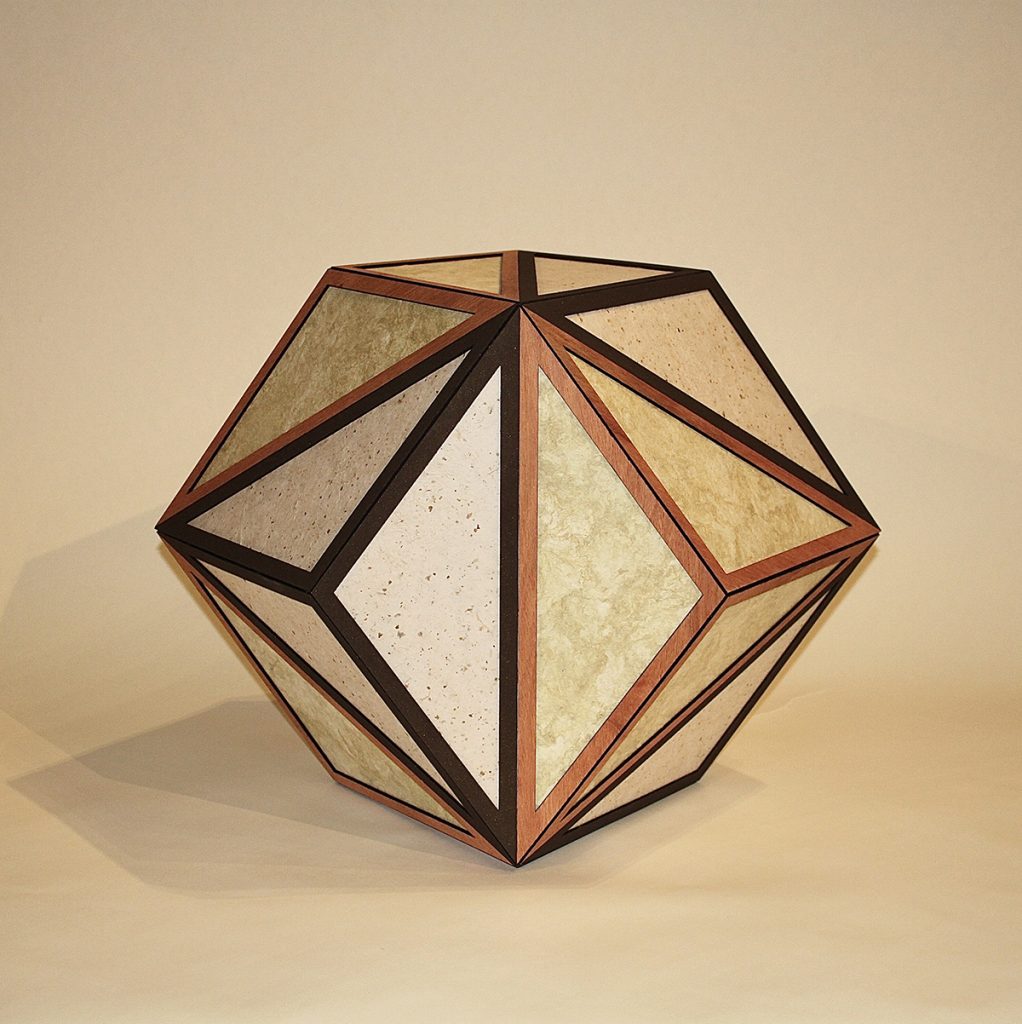
In Platonic Symmetries of Truth and Beauty, Hinnant crafts a vibrant dialogue between material and meaning. Measuring 24 inches by 26 inches by 24 inches, this sculpture combines polychromed woods with exotic pigmented papers. The piece draws inspiration from Platonic ideals, referencing the enduring concepts of truth and beauty through its intricate geometry and balanced design.
The work’s structure invites contemplation, with its harmonious forms and layered colors echoing patterns found in nature and mathematics. Hinnant uses contrasting materials—solid wood juxtaposed with delicate paper—to create a dynamic exploration of permanence and transience. The vibrant hues seem to pulse with energy, encouraging viewers to reflect on the interconnectedness of physical and metaphysical realms.
A Dogon Instrument for Measuring the Distance Between Stars
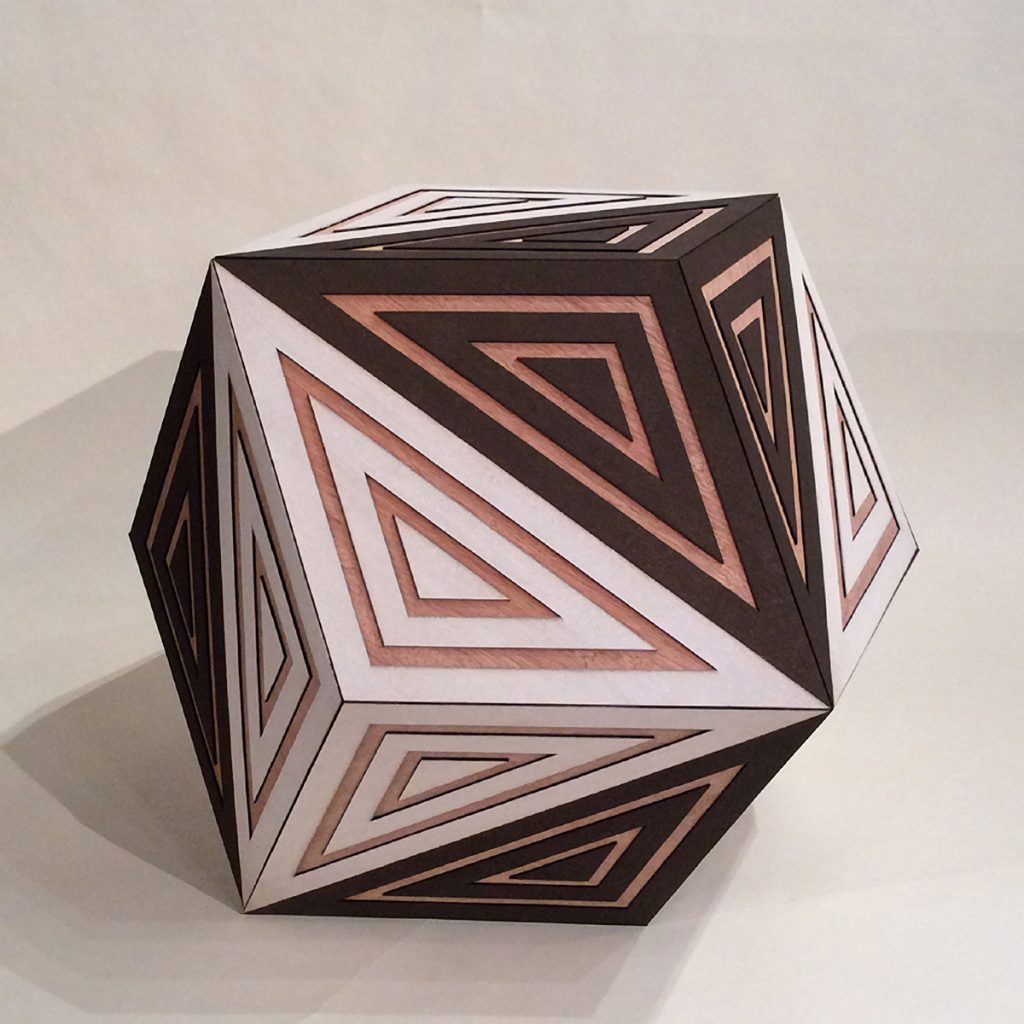
Hinnant’s fascination with cosmic mysteries and cultural heritage comes alive in A Dogon Instrument for Measuring the Distance Between Stars. This polychromed wood sculpture, measuring 34 inches by 36 inches by 34 inches, is both a tribute to the Dogon people of Mali and a meditation on humanity’s enduring curiosity about the universe.
The Dogon’s advanced astronomical knowledge inspired Hinnant to create a piece that feels like an artifact of both past and future. Its intricate design suggests a scientific tool for celestial exploration, while its abstract qualities place it firmly within contemporary art. The polychromed surface adds depth and vibrancy, with colors that seem to shift and evolve depending on the viewer’s angle.
By blending functional and symbolic elements, the sculpture bridges the gap between the tangible and the speculative. It’s an invitation to explore the cosmos, not just through scientific inquiry but through the lens of imagination and art.
The Art of Connection
Through pieces like Platonic Symmetries of Truth and Beauty and A Dogon Instrument for Measuring the Distance Between Stars, Hinnant showcases his commitment to exploring universal themes. His work doesn’t fit neatly into one discipline but instead creates a nexus where philosophy, science, and art converge.
Hinnant’s attention to materials is evident in every detail. Whether working with wood, paper, or pigments, he elevates each element into something that transcends its physical properties. His sculptures invite viewers to engage deeply, offering a sense of discovery with every angle and detail.
As 2024 ends, Vandorn Hinnant’s work reminds us of the power of creative expression to foster reflection and connection. His sculptures are not just objects to admire—they are portals to larger questions about existence, interconnectedness, and the human experience.
By merging disciplines and challenging boundaries, Hinnant creates art that resonates on multiple levels. His works stand as enduring symbols of how creativity can bridge gaps between the tangible and the abstract, the scientific and the spiritual. In a world often divided, his art serves as a unifying force, inviting us to see the universal truths that bind us all.
