

Garda Alexander is a German-born artist who lives and works in Switzerland. Her practice moves in a direction that avoids spectacle or theatrical display. Instead, her work grows from attentive observation and a close relationship with the natural world. Across painting, sculpture, spatial concepts, and land-based interventions, Alexander explores how color, form, and space influence the way people experience their surroundings.
Her approach is thoughtful and restrained. Rather than presenting rigid interpretations or dramatic statements, Alexander builds environments that encourage reflection. Shapes, surfaces, and spatial arrangements are carefully balanced, allowing viewers to encounter the work slowly. The intention is not to direct meaning but to create conditions where observation and contemplation can take place.
This perspective gives her work a calm, reflective tone. Whether working on canvas, developing sculptural objects, or carving forms into stone within a landscape, Alexander treats each project as a meeting point between perception and environment. Through these works, attention is drawn to the quiet forces that exist between human awareness and the rhythms of the natural world.
At the center of her artistic thinking lies a simple belief: nature already communicates through form. The artist does not invent these forms but learns to recognize them.
“I try to read the energy language of nature that manifests itself in the forms we see,” Alexander explains. “I do not create them, I discover them. We have to learn to decode these forms in order to use them.”
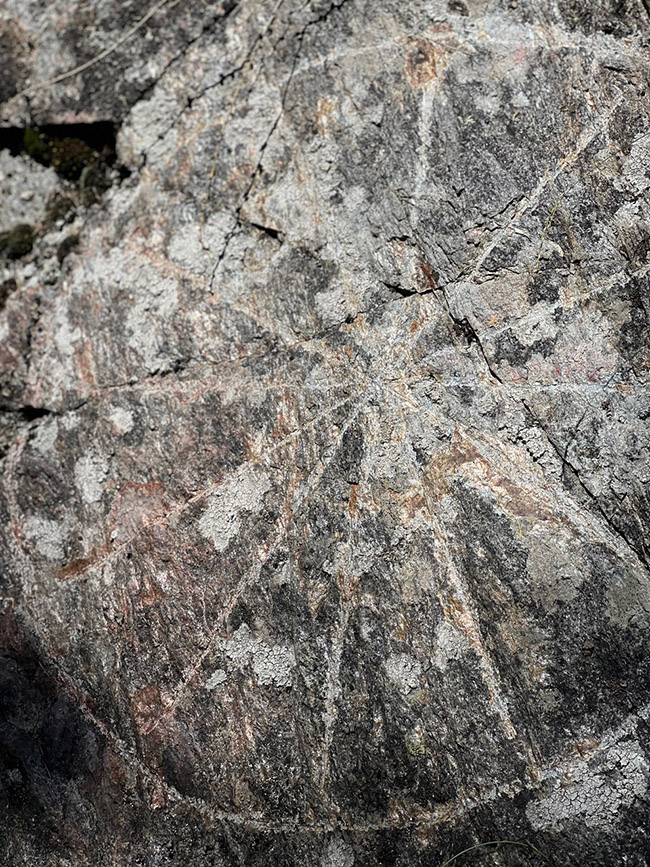
With this mindset, the relationship between artist and environment changes. Instead of shaping nature according to a predetermined idea, Alexander approaches it as a partner in the creative process. Geological formations, organic patterns, and natural structures provide the starting points for her visual investigations. Through this process, art becomes an act of discovery rather than invention.
The influence of nature in Alexander’s work is also deeply personal. Throughout her life, natural landscapes became places of recovery and renewal. In moments marked by emotional hardship, trauma, and loss, these environments offered her spaces of quiet where healing could begin.
Within those landscapes she found the strength to continue forward. As Alexander has described, these places allowed her to rediscover direction and reaffirm what she calls the “choice for life.” This experience continues to shape her artistic thinking. Many of the environments she creates echo the restorative qualities of the landscapes that once supported her own healing.
Over time, this connection expanded beyond the studio and into the land itself. Alexander began developing land-art projects that place her ideas directly within natural environments. Rather than remaining inside controlled spaces, she searched for locations that carried personal, geological, or historical resonance.
Each site is selected with careful attention. Archaeological significance, geological features, and personal meaning all play a role in the process. Many of these places carry a quiet sense of age and mystery. Remote landscapes and striking rock formations become the stage for her interventions.
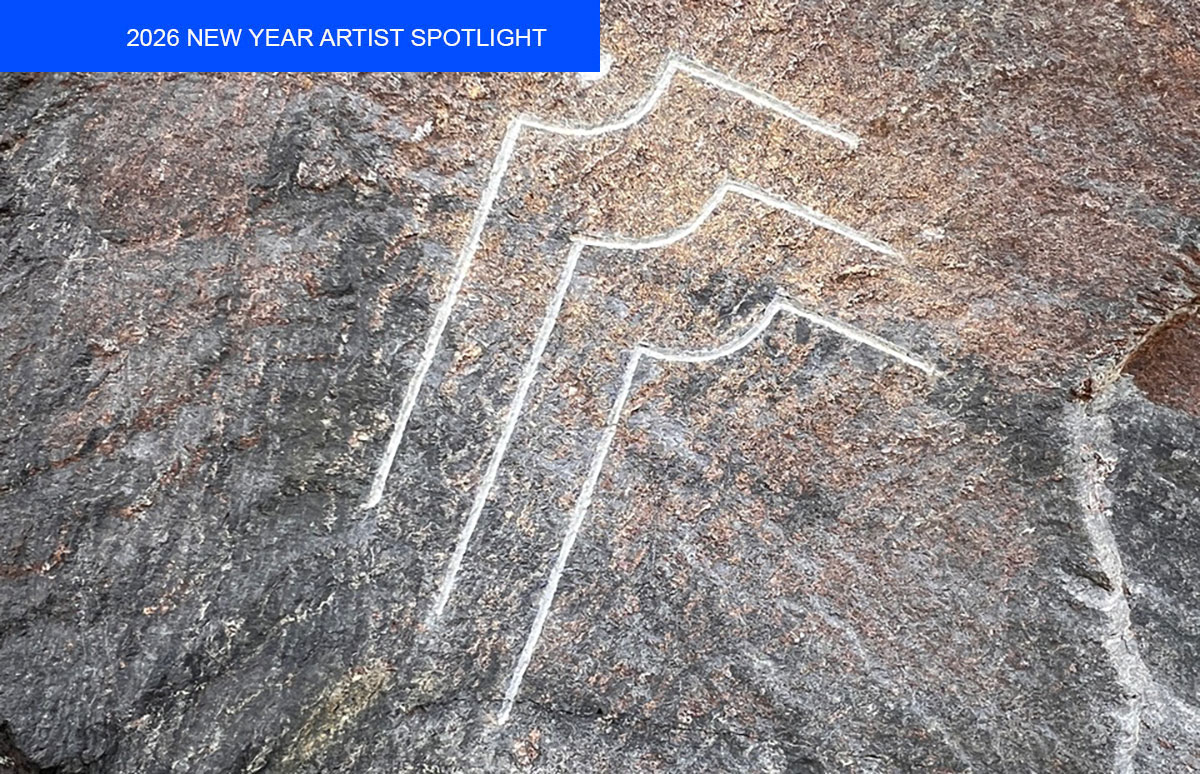
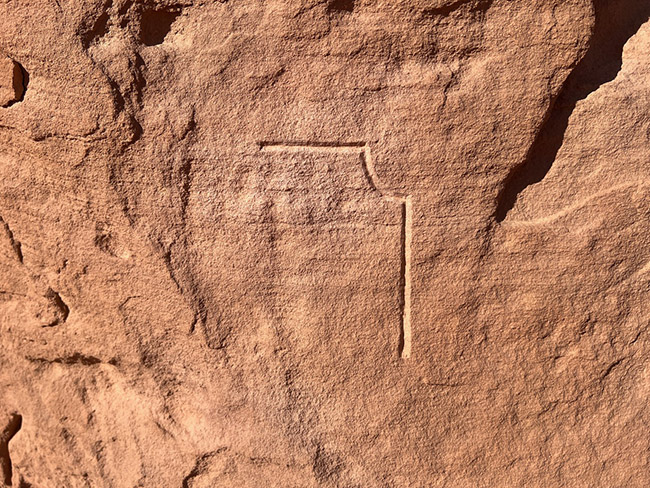
Within these environments, Alexander engraves symbols into large standing stones. The carvings are made using traditional hand tools, maintaining a direct connection with ancient techniques of mark-making. The symbols themselves are informed by research into cultural glyphs and early visual languages that appear across different civilizations.
Encountering these stones can feel like stumbling upon traces of an unknown past. Visitors may sense the atmosphere of an ancient site, as if the landscape holds fragments of a forgotten story. At the same time, these carvings remain contemporary gestures that acknowledge the enduring relationship between human cultures and the natural world.
Alexander does not assign fixed meanings to the engraved signs. Instead, the sites remain open spaces for interpretation. Visitors are invited to walk among the stones, observe the symbols, and allow their own imagination to respond.
For the artist, these forms resemble pieces of a symbolic language waiting to be understood. By weaving together visual references from different cultural traditions, Alexander hopes to awaken awareness of ancient knowledge that still exists within human consciousness.
She sees these works as a bridge between collective memory and inner awareness. The carved shapes remind us that human understanding has always been closely linked with natural forces, rhythms, and cycles.
To date, Alexander has completed three major land-art projects in Switzerland, Ireland, and Egypt. Each location reflects the character of its landscape while sharing a common intention: encouraging awareness and respect for the natural environments in which the works appear.
One example is Staziun da Forza in Switzerland. Here, engraved stones create a quiet place within the landscape where visitors can pause, breathe, and reflect. Rather than dominating the environment, the carved forms exist as subtle presences within the terrain.
Through projects like this, Alexander hopes to draw attention to the value and vulnerability of natural landscapes. Her work suggests that these environments are not simply scenic backgrounds but living spaces that deserve care and understanding.
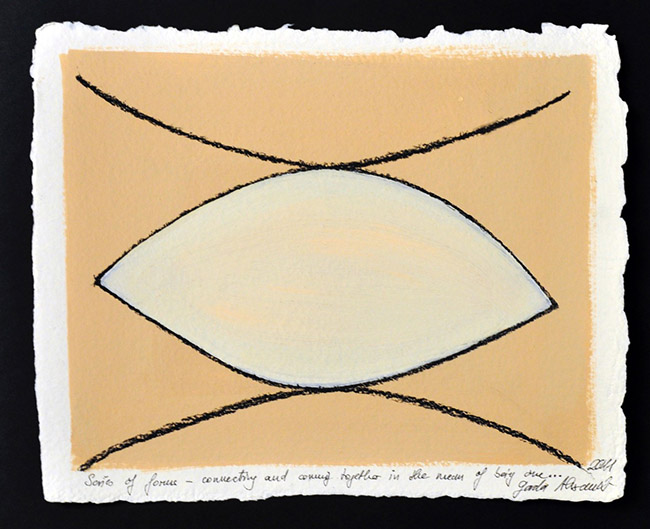
The ideas explored outdoors also continue in Alexander’s studio work. Her paintings and spatial concepts investigate the same relationship between perception and environment. Color relationships, structural forms, and spatial composition are used to shape atmosphere and guide the viewer’s experience.
In these works, color operates as more than a decorative element. It becomes a tool capable of influencing emotional response. Carefully balanced contrasts and compositional structures subtly shape how a viewer moves through the visual space.
Alexander believes that visual language works on both conscious and unconscious levels. Color, rhythm, and form can influence how people feel within a space even when they are not aware of it.
For her, these elements are part of a deeper investigation into human perception. By becoming more attentive to how color and form affect us, we can gain a clearer understanding of both our inner lives and the environments we create around us.
Across paintings, sculptures, and landscapes, Garda Alexander’s work offers a quiet invitation: to slow down, observe carefully, and rediscover the subtle dialogue between human awareness and the living world that surrounds it.
