

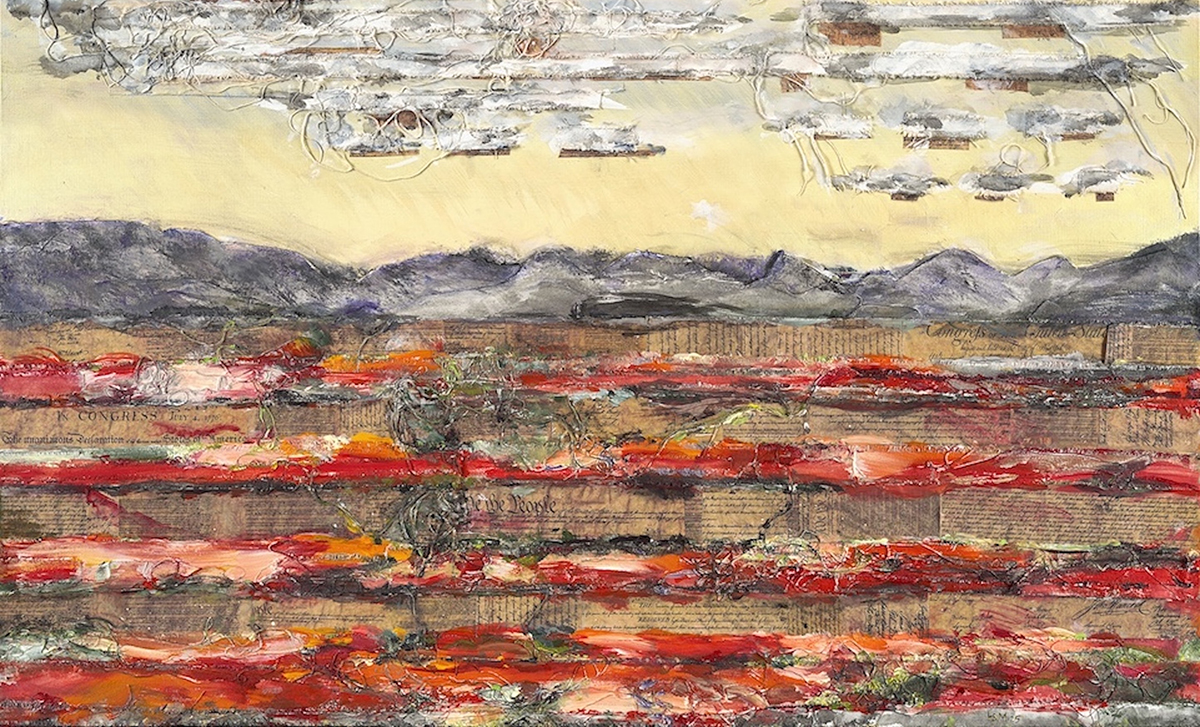
L. Scooter Morris doesn’t just make art you look at—she makes art you feel. A self-described sensory illusionist, Morris builds her work around the tension between what we experience in a moment and what lies beneath that moment. Her “Sculpted Paintings” don’t sit flat on the wall. They breathe. Built from mixed media and layers of texture, they pull light in and throw it back out, giving the viewer not only something to see but something to walk around and absorb. She’s not aiming for decoration. She’s aiming for connection.
Morris uses her art to open space—for questions, for conversation, for difficult truths. In a time when society is pushing against its own reflection, she asks us to look harder. Her work doesn’t preach, but it doesn’t flinch either. It’s about facing what’s right in front of us, what we’re made of, and what kind of world we want to live in.
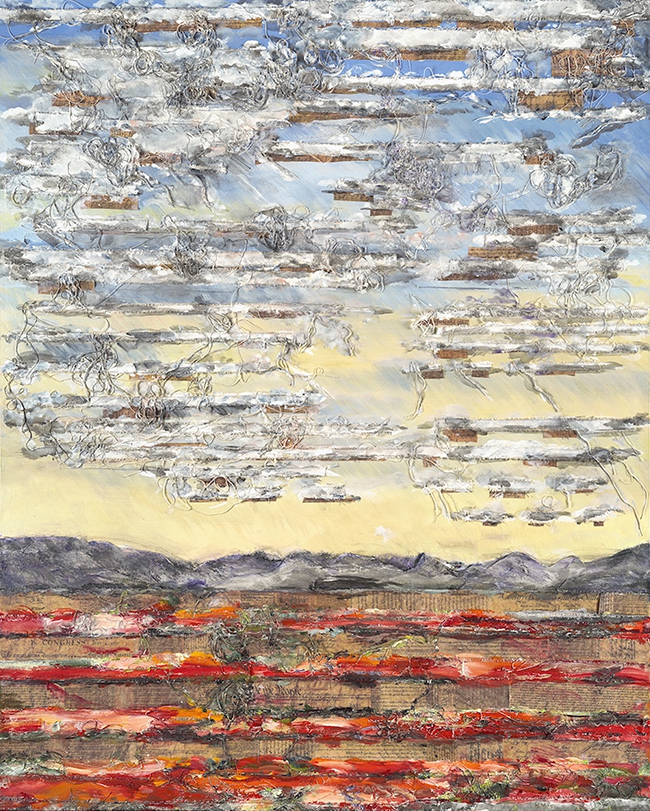
We Are The People (2025)
Acrylic and Mixed Media, 60” x 48”
This piece sits right at the center of Morris’s current direction. In it, she works directly with the U.S. founding documents—not just as symbols, but as material. The Constitution and the Declaration of Independence appear not as static relics but as living, textured layers in the surface of the work.
Morris isn’t trying to glorify these documents. She’s using them to show how ideas, even good ones, can get worn down or forgotten. The words are torn, folded, painted over, layered in acrylic and medium like sediment. Some parts shine through; others are buried. It’s not neat. That’s the point.
At this moment in American life, the question Morris is asking is simple and sharp: Who are “We the People” now? Her answer isn’t a lecture. It’s a challenge. This painting doesn’t predict the future—it reflects the stakes.
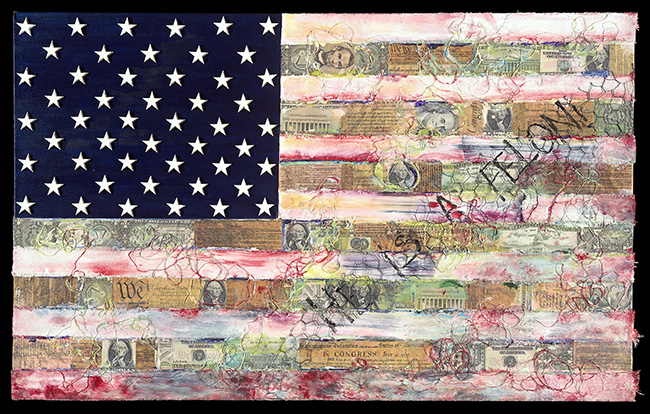
Felon (2025)
Acrylic and Mixed Media, 30” x 48”
Felon is quieter in scale but louder in tone. It’s about history—the way we write it, revise it, and sometimes just erase it. Morris is drawn to the gap between public record and private truth. She talks about this piece as a kind of confession: not of guilt, but of complexity.
There are faces in the layers. Not literal portraits, but traces—brushstrokes and textures that hint at identity, at past lives, at men and women who were shaped by ambition and broken by the systems they served or resisted. The painting feels both deliberate and haunted. Nothing is clean. The surface is scuffed and uneven, like something weathered by time and conflict.
Morris says it’s about leaders—some who rose, some who fell, some who lied. But she doesn’t judge. The work holds space for contradiction. There’s beauty here, but it’s tangled up in questions.
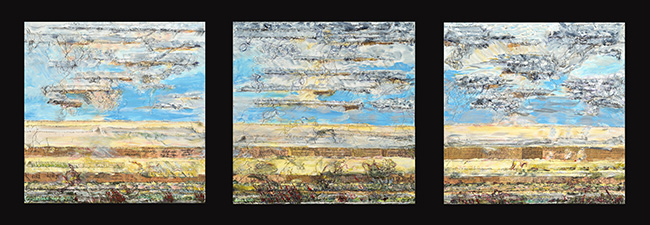
Time and Again (2025)
Acrylic and Mixed Media Triptych, 30” x 90”
This triptych pulls Morris’s themes into a panoramic form. Three connected panels act like windows—fragments of a single, larger thought. She’s using the founding documents again, but now they serve as the backdrop for a meditation on endurance.
Where We Are The People is about urgency, Time and Again feels like a long exhale. Morris is thinking about cycles. About how the country rises and falters and tries again. The triptych’s title says it outright—this isn’t the first time we’ve asked who we are. It won’t be the last.
The texture here is more spacious. The work reads like a landscape from a distance, but the closer you get, the more it dissolves into layers—scraped paint, hidden text, exposed grit. Morris doesn’t give you a road map. What she gives you is space to stand in, and maybe recognize something in yourself.
Scooter Morris’s work lives in the tension between abstraction and memory, between surface and story. Her “Sculpted Paintings” aren’t loud, but they’re impossible to ignore. They ask us not just to look—but to reckon. And if we’re honest, they give us back more than we were expecting.
