

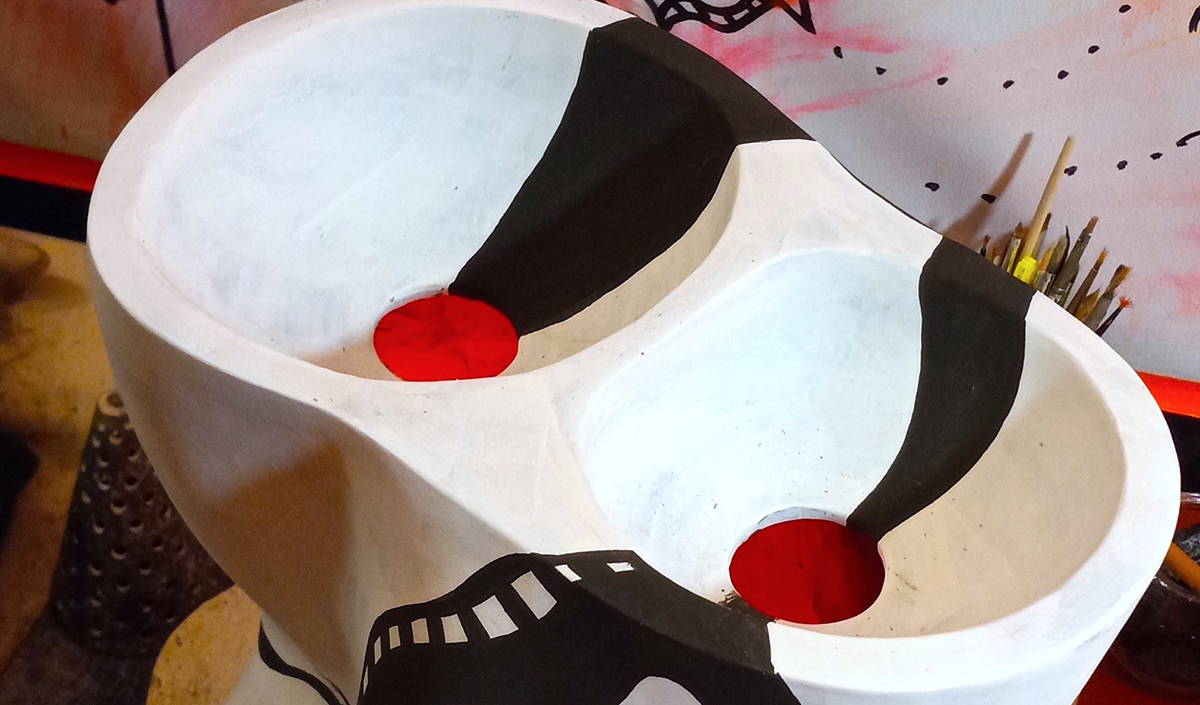
Sylvia Nagy’s work bridges the precision of industrial design with the intuition of spiritual exploration. Born and trained in Budapest, she earned her MFA in Silicet Industrial Technology and Art at the Moholy-Nagy University of Art and Design. Later, she continued her path in New York at Parsons School of Design, where she wasn’t just a student—she taught and even developed a course on Mold Model Making in Plaster. This balance between technical knowledge and creative instinct shows up in everything she does. Her practice has taken her from Hungary to Japan, China, Germany, and the U.S., with each place leaving a mark on her process. As a member of the International Academy of Ceramics in Geneva, she’s earned recognition not just for her refined technique but for the way her ceramics hold something deeper. Outside the studio, she draws inspiration from dance, fashion, photography, and design trends—always moving, always absorbing.
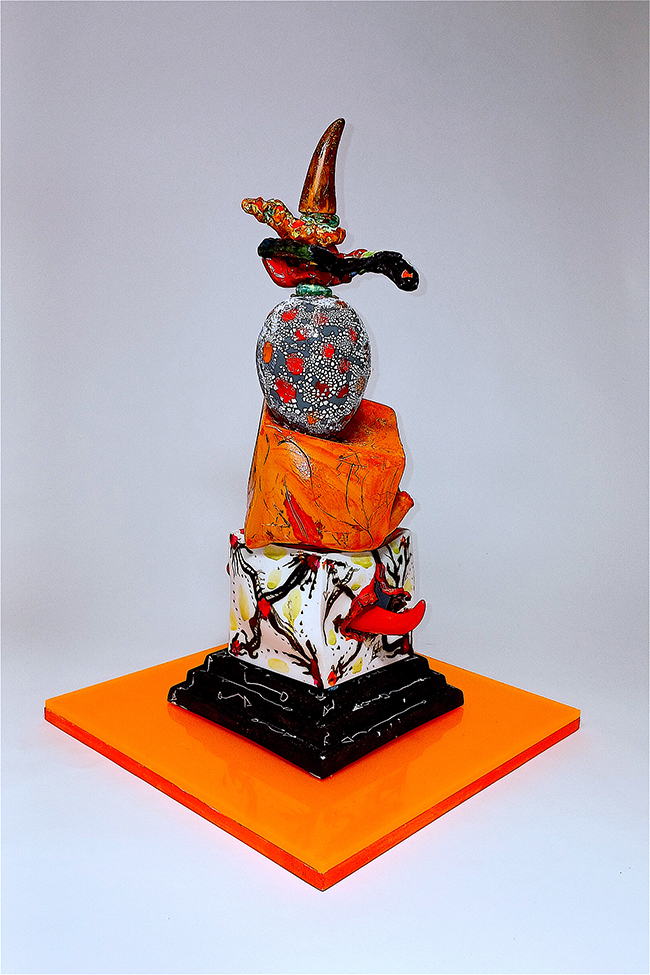
Sylvia Nagy’s relationship with clay goes far beyond form or function. She sees the process as a metaphor for being alive—for how we respond to a fast-moving, unstable world, and for how we process what we feel but can’t always say. She works from a place of intuition. As she puts it, “Intuition doesn’t speak English.” Instead, it speaks through symbols, through the weight and movement of energy, through time and space. Clay, in her hands, becomes a kind of quiet messenger.
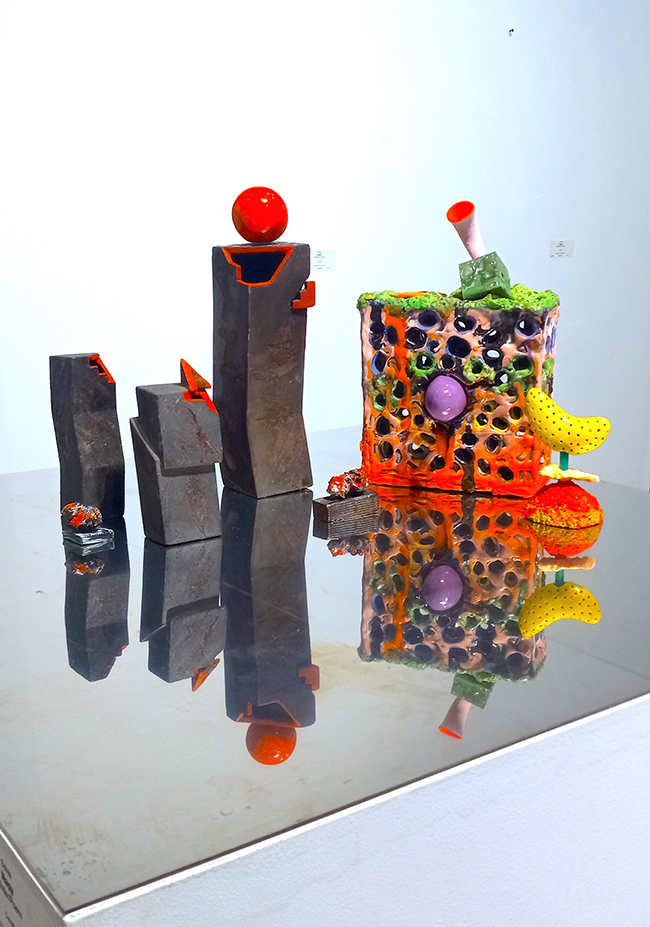
She doesn’t create just to make things. She creates to listen. She responds to what’s happening—politically, emotionally, environmentally. She’s deeply aware of how the world shifts around her: the wars, the natural disasters, the patterns we repeat. In her view, we often miss the red flags until it’s too late. Through art, she wants to capture those warnings and turn them into something physical, something we can reflect on and hold.
The pieces Nagy makes reflect this philosophy. They’re not just decorative—they carry frequencies. They carry ideas about healing, about presence, about energy flow. She’s interested in how art can soothe or expose, how it can bring clarity or remind us that we’ve veered off course. Her forms are often abstract, yet grounded—earthy, textural, sometimes primal. They speak to ancient traditions but don’t get stuck in nostalgia. Her work has something of the future in it, too. It’s informed by science and technology, by things like quantum entanglement and the search for deeper connections between thought and reality. She spends time with science documentaries, Gaia TV, and YouTube channels exploring everything from energy fields to consciousness.
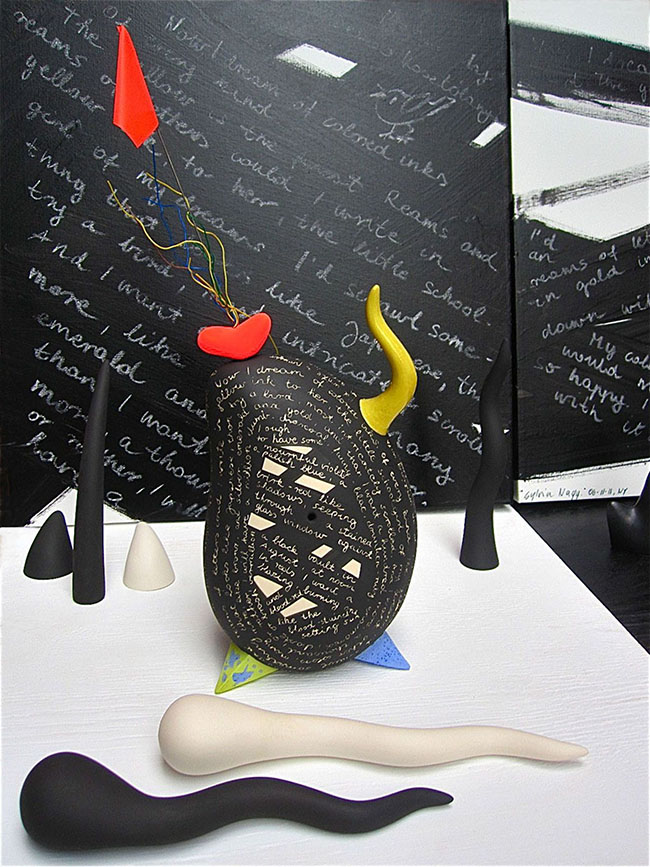
This open curiosity informs her teaching as well. Nagy has taught ceramic classes not only in academic settings but also through art therapy. She’s worked with people living with disabilities, with foster children, with the elderly, and with college students—using clay as a tool for expression, for understanding, for release. For her, the therapeutic aspect of clay is just as meaningful as the final object. It’s about the process—how hands move, how bodies respond, how minds settle.
In many cultures, clay has always been more than material. It’s been a way to carry memory, to mark spiritual practice, to pass down knowledge. Nagy honors that. Her work isn’t clinical or overly refined. It’s alive. Sometimes it’s raw. Always, it holds something invisible—something you feel before you even try to interpret it.
She often draws comparisons between creativity and survival. In a world that seems increasingly chaotic, she sees making art as a way of staying human. A way of slowing down. A way of turning the intangible—grief, fear, awe—into something real and grounded. One piece may echo the rhythms of a dance. Another might channel the sensation of watching history repeat itself. Sometimes her thoughts drift to Picasso’s Guernica, a painting she finds hauntingly relevant. She hopes we’re not repeating that path, but she can’t help but worry.
Still, her work is not about despair. It’s about noticing. It’s about shaping something new from what we’ve overlooked. About reattaching ourselves to the ground, and to each other. She doesn’t make grand statements. Instead, she lets the clay speak in its own language. One molded curve, one fired edge at a time.
Sylvia Nagy’s ceramics invite reflection without demanding it. They ask questions quietly, in the language of shape, texture, and energy. They remind us that intuition is still worth listening to, even in a world that often forgets how.
