

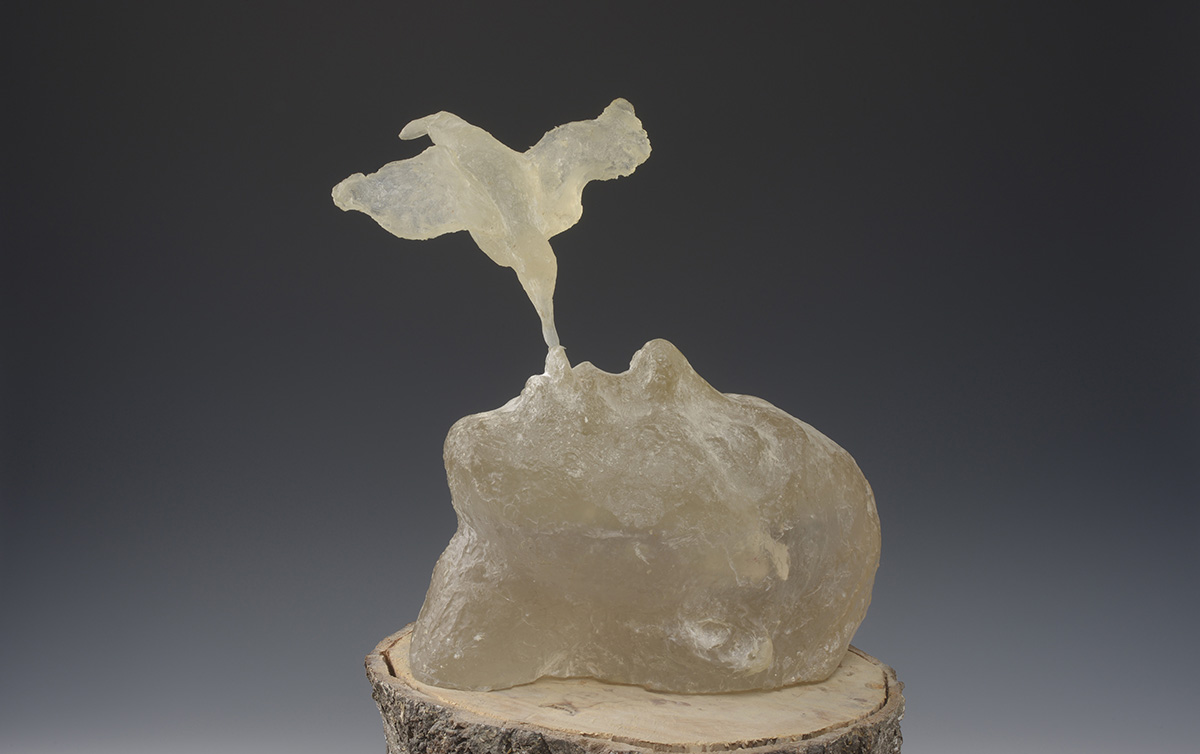
Caroline Kampfraath creates art that holds presence—works that contain memory, emotion, and fragments of lived experience. Based in the Netherlands, she builds 3D pieces using found materials like metal cans, glass bottles, and cast elements of the human body. Each object becomes part of a broader story—one shaped by personal history, curiosity about the world, and the ways we connect to our surroundings. Her sculptures feel like quiet exchanges between what’s tangible and what’s felt, between what’s been used up and what still holds meaning. Through this layering of form and feeling, Kampfraath creates something that stays with you.
At first glance, her work might seem unusual, even a little jarring. But that’s part of the point. There’s no interest in smoothing over life’s contradictions. Instead, she leans into them, pulling meaning from the tension between what we throw away and what we hold sacred. Her sculptures suggest a kind of recycling—not just of materials, but of emotion and memory. Things come back in new forms. Nothing is really gone.
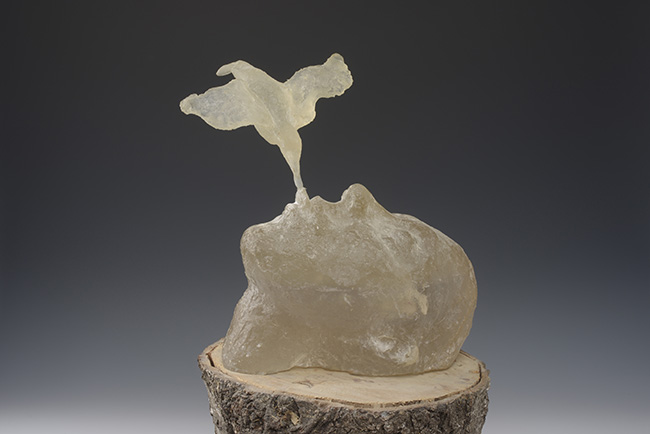
Take her piece titled Birds. It isn’t flashy. It doesn’t shout. But it lingers. The work is rooted in a childhood moment—lying in tall grass, watching clouds, imagining a bird might land on her outstretched tongue and tell her the secrets of nature. It’s a strange, tender image. And it holds a feeling that’s harder to describe: total openness, a kind of quiet surrender to the world. That deep trust, that sense of belonging to the environment without needing to explain or perform, is something Kampfraath says disappears as we grow older.
What’s striking is how she doesn’t try to recreate the moment in a literal sense. Instead, she builds a metaphor out of form and material. The bird isn’t just a bird—it’s a stand-in for meaning, for connection, for that fleeting clarity that sometimes hits you when you’re alone in nature. Her work doesn’t just describe experiences. It contains them.
And that’s a thread you see again and again in her practice. Each sculpture is a kind of vessel, both physical and symbolic. The objects she uses aren’t random. They carry their own histories and associations, but in her hands, they’re recontextualized. A metal can might become a chest cavity. A bottle could stand in for a voice, or a memory sealed shut. Human body parts, when they appear, feel less anatomical than emotional—like traces of someone trying to reach out or pull back.
Her choice of materials is also a statement. By using items that are often discarded or overlooked, Kampfraath brings attention to what we usually ignore. But rather than scolding the viewer or making a political speech, she lets the material speak for itself. The meaning is there, if you’re willing to spend time with it.
There’s something meditative about her approach. You get the sense that each sculpture is the result of long thought and careful listening. She isn’t trying to shock or overwhelm. She’s trying to find form for something elusive—grief, wonder, alienation, awe. The pieces ask you to slow down, to notice the details, and to consider what they might mean to you. The work doesn’t demand understanding; it invites it.
At the heart of her practice is a need to connect—to herself, to others, to the natural world. And yet, she never spells it out. She trusts the viewer to bring their own story to the work. That trust feels like an extension of the trust she describes in Birds—the belief that being present is enough, that just being has value.
It’s easy to categorize Caroline Kampfraath as a sculptor or installation artist, but her work resists neat labels. It’s emotional without being sentimental. It’s conceptual without being cold. It deals with real materials and imagined memories. It’s about bodies, but also about the spaces between bodies—what’s left unsaid, unfelt, or misunderstood.
There’s a quiet bravery in her work. She doesn’t hide behind polish or perfection. She’s interested in the in-between spaces—the overlooked, the unspoken, the almost-remembered. And through her art, she gives those spaces form.
In a time when so much art is about spectacle, Caroline Kampfraath offers something different: a chance to look inward by way of the physical world. Her sculptures are reminders that objects carry weight—not just physically, but emotionally. And through them, we can rediscover what it means to be part of something larger, even if only for a moment.
That moment—that fleeting openness—isn’t gone forever. It just takes a different form. And Kampfraath is here to show us what that might look like.
