

Tucked inside Germantown, Philadelphia, Oronde Kairi paints the pulse of the world around him. His canvases are alive with color, sound, and rhythm, pulling from the everyday scenes of city life. Music, sports, family, memory—they all show up, not as distant references, but as lived experience. His work doesn’t just look back. It carries those moments forward.
Kairi paints with clarity and emotional weight. His colors are loud, his lines are confident, and his scenes are full of warmth and humanity. A glance across his work reveals a kind of visual storytelling that feels familiar—even intimate. He doesn’t just paint what he sees—he paints what it felt like to be there. His subjects might be famous, or they might be a person on the block. Either way, he gives them space, and lets them speak.
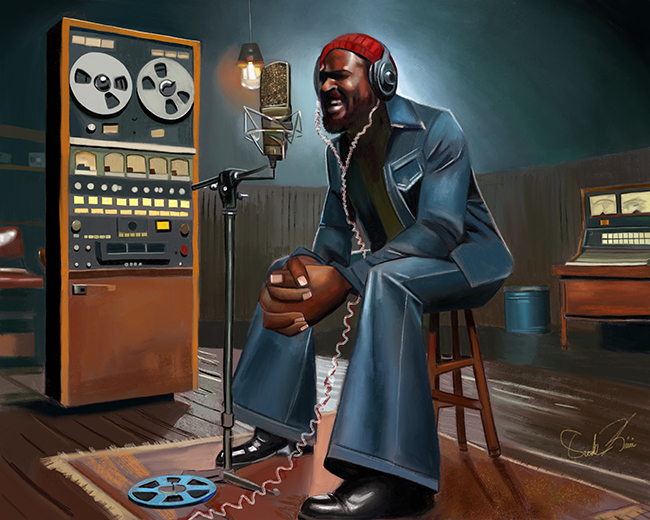
Marvin Gaye Studio Sessions 1
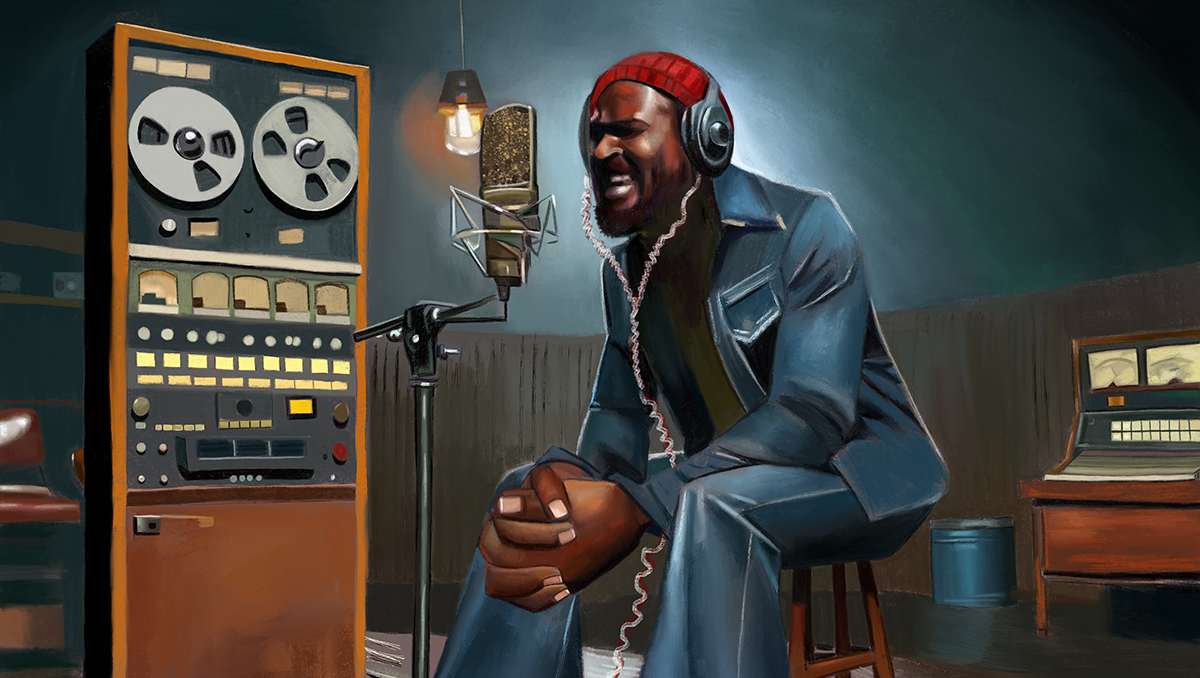
In “Marvin Gaye Studio Sessions 1,” Kairi captures a quiet storm. Marvin is shown seated in the studio, recording Let’s Get It On. He wears the red cap and denim jacket known from the album photos, but this isn’t just a snapshot. It’s a full mood.
The painting draws us into the recording booth—wood-paneled walls, vintage reel-to-reel spinning, and Marvin fully immersed, headphones on, hands clasped. He isn’t posing. He’s working. And Kairi paints that moment of emotional focus with tenderness. You get the feeling this isn’t just about Marvin—it’s about what it means to be deep inside your art.
It’s a still image, but it buzzes with presence. You feel the heat of the moment, the warmth of analog sound. Nothing flashy, nothing loud—just reverence for the act of creation.
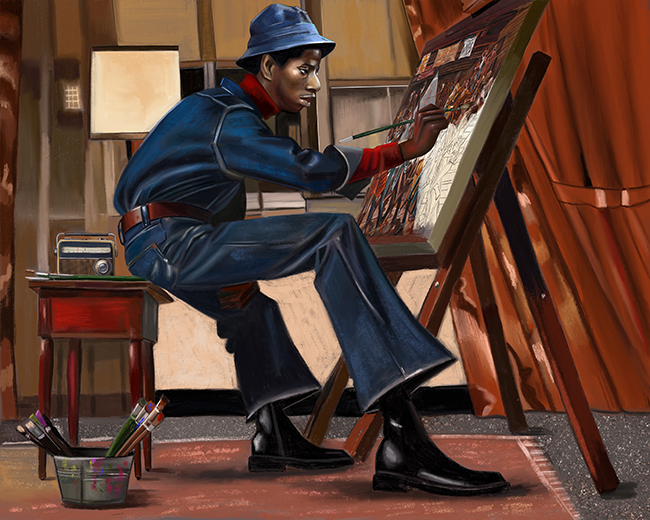
Sweet Prince of the Ghetto
“Sweet Prince of the Ghetto” revisits the 1970s with both affection and intention. Here, Jimmy Walker’s character JJ from Good Times is at the center—but not as the punchline. Kairi paints him mid-painting, recreating The Sugar Shack, headphones on, fully dialed in.
The influence of Ernie Barnes is obvious—the movement, the stretch of the figure, the way music flows through the scene. But Kairi puts his own stamp on it. JJ’s posture is focused, the room is filled with 70s textures, and there’s a seriousness to the energy. JJ isn’t goofing around—he’s making something real.
This painting flips the script. Kairi presents JJ not as a sidekick, but as a creative force. He uses this image to nod to Black artists past and present, and to spotlight the often-overlooked labor of making art. It’s a cultural homage that doesn’t just celebrate—it reclaims.
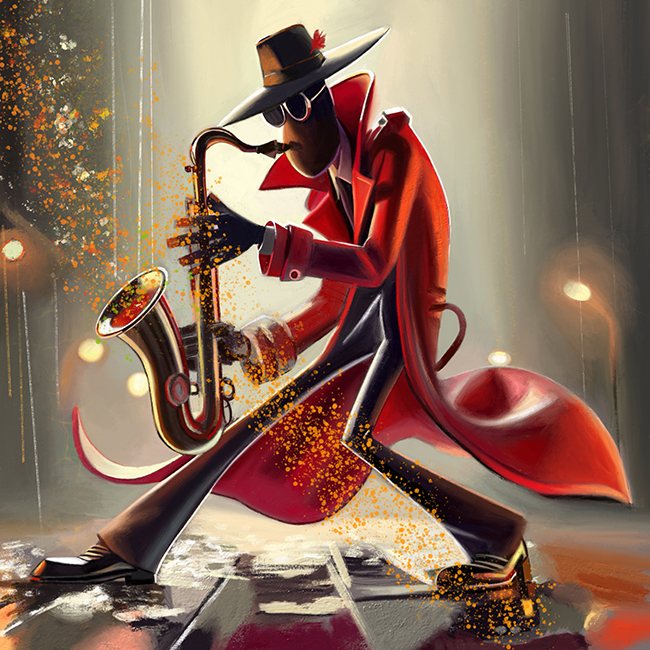
Midnight Melody
“Midnight Melody” moves slower. It’s a late-night kind of painting. A lone saxophonist stands beneath a streetlamp in an empty alley. He plays, but there’s no crowd—just the echo, the shadow, the stillness. Kairi doesn’t show the music, but he paints its atmosphere.
This is the kind of scene where silence does the heavy lifting. The brushwork is subtle, the color palette cool. The figure is almost more shadow than man. Still, there’s life here. A private rhythm. A kind of quiet persistence.
Kairi lets space speak in this work. Where other paintings of his burst with action, this one lingers. It asks you to pause. To listen. To sit with the music that drifts through empty streets and keeps moving long after the last note lands.
Kairi’s art doesn’t shout. It listens, remembers, and responds. He paints Black life not as performance, but as lived experience—layered, joyful, thoughtful, and full of rhythm. Each piece holds space for the stories that shaped it. And in every brushstroke, he reminds us that everyday moments are worth honoring.
