

Derrick Bullard found painting before he knew what to call it. He was a restless teenager, bouncing between distractions, struggling to stay still long enough for anything to take root. But the moment he started painting, something clicked. It wasn’t about rules or results—it was about getting quiet enough to make something. And that was rare. It gave him a rhythm. Something to return to. Something that stuck.
He never trained formally. No art school, no gallery mentorships, no roadmap. Just a slow, steady pull toward the canvas—over and over again. What started as a teenage habit grew into a daily practice. Twenty-four years later, Bullard has produced hundreds of pieces, maybe more than a thousand. He’s set himself a goal: 2,500 paintings. Not for acclaim. Not for sales. Just because this is what he does. It’s how he works through things. It’s how he listens. It’s how he stays.
His Work
What is the difference between me and you?
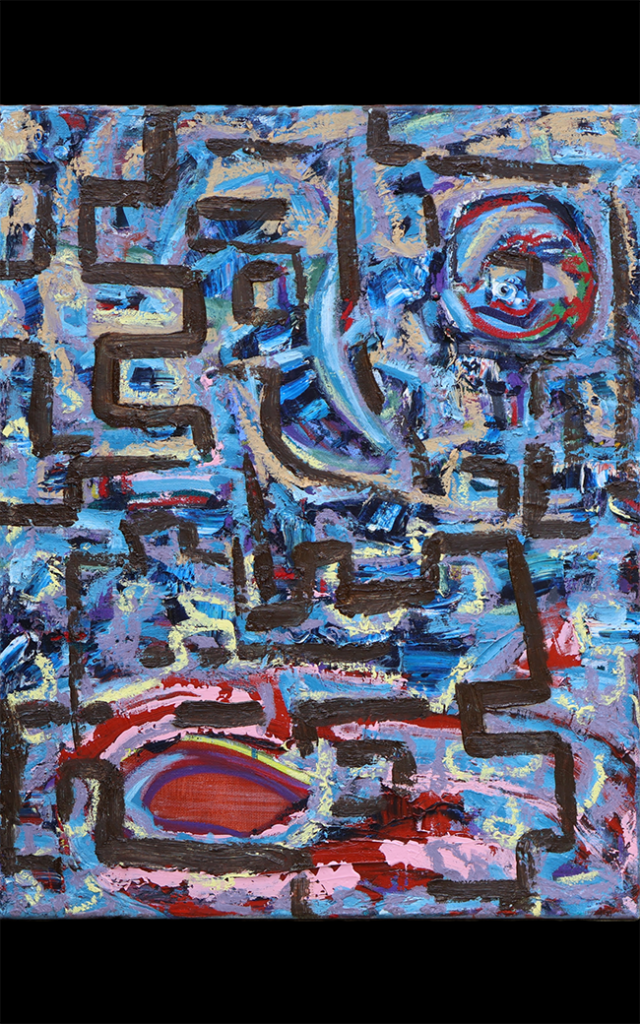
This oil painting feels like a question Bullard’s been carrying around for a while. It’s not loud. There’s no push for spectacle. It moves slower, asks you to slow down with it. The title says it all—this isn’t about answers. It’s about sitting with the question.
Bullard describes this work as a moment of self-realization. And you can feel that—it reads like a personal checkpoint. The colors, the composition, the energy—it’s all there to open a door, not to make a statement. It’s direct without being forceful. He’s not putting on a show. He’s showing you where he’s at.
The piece is set to debut in Venice, Italy—a moment that carries its own kind of weight. But the real gravity of this painting is internal. It’s about owning your own reflection. Even the parts that are messy or unclear.
Rooster
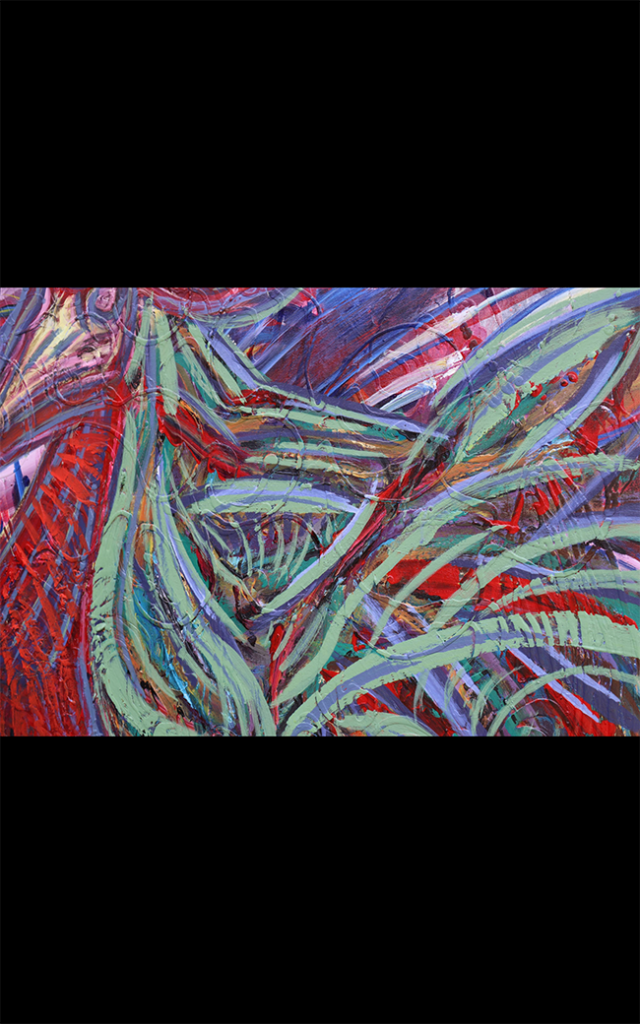
Rooster is grounded in Bullard’s past, but it isn’t nostalgic. It was painted on a found canvas—someone else’s abandoned work. He picked it up, reworked it, made it into something new. That gesture mirrors the chapter of life he was in: bouncing between cities, scraping by, surviving on trade, hustle, instinct.
He started it in New Orleans. He finished it in Atlanta. Somewhere in the middle, the rooster became more than just a subject—it became a reminder. Of how fast life can shift. Of how much you can live through in one day. Bullard once said, “You can live a lifetime in 24 hours.” This painting feels like that—like one long, dense breath from someone who didn’t know if tomorrow was guaranteed.
It’s not polished. It’s not trying to be pretty. It’s real. And that’s what makes it feel alive.
12 Postcards
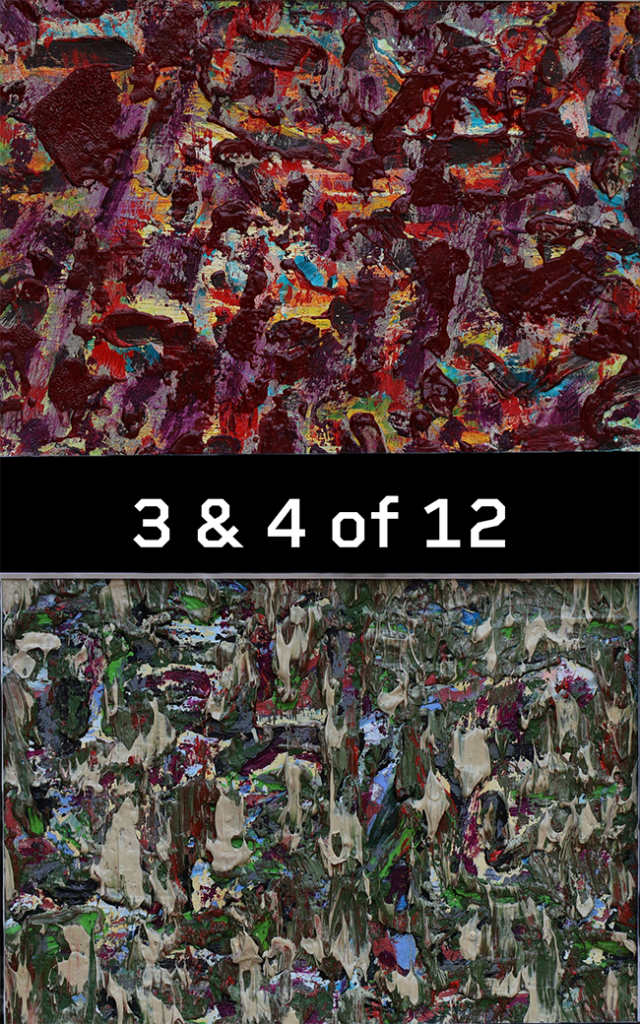
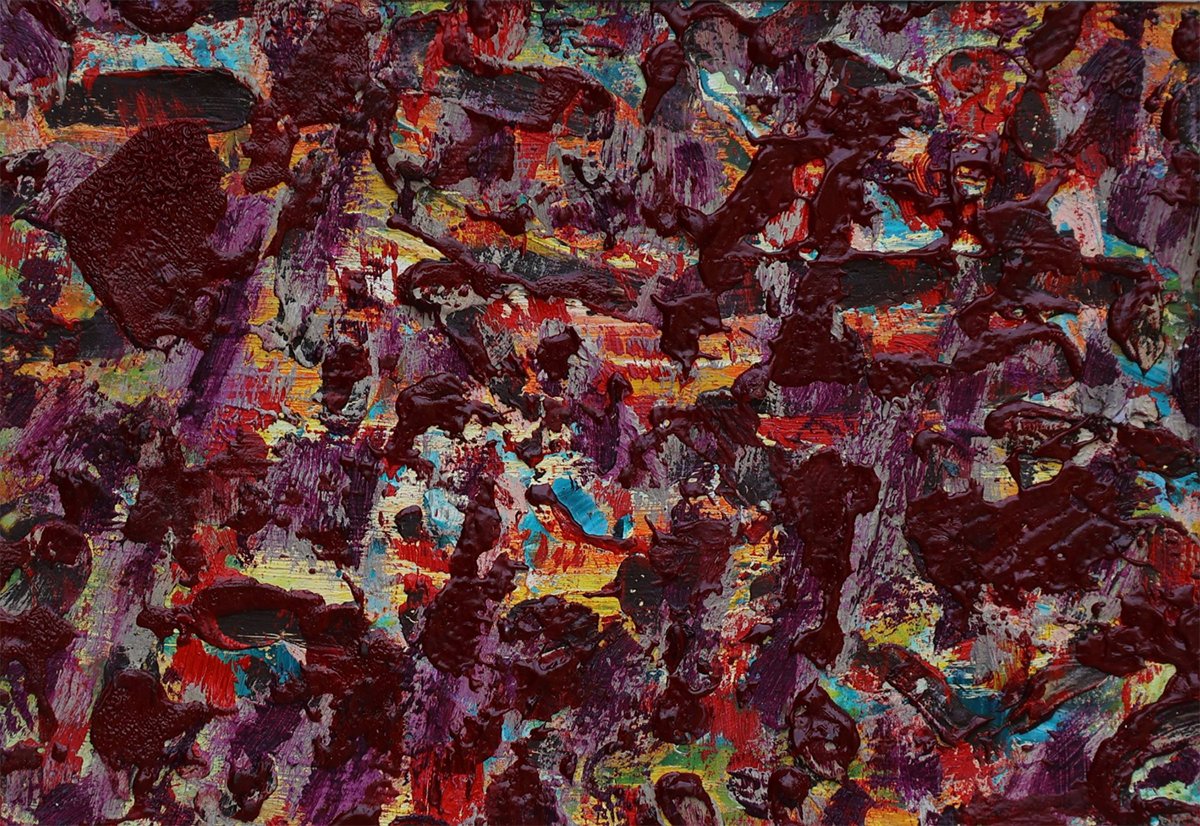
These paintings are tiny, but they carry weight. Bullard made them in between larger works, over a stretch of years. Twelve small paintings, each one its own world. The challenge was clear: can you hold your whole process inside something this small?
Turns out, you can. These aren’t afterthoughts. They aren’t studies. They’re full ideas, compressed and distilled. Bullard took his time. He didn’t rush. Each postcard was an exercise in slowing down, letting the work speak without shouting.
Seven of them are now on their way to Venice. It’s a big trip for something that fits in your palm. But that’s the point—meaning doesn’t have to come in large formats. It’s about what you bring to it.
Bullard isn’t chasing trends. He’s not trying to fit into a scene. His work doesn’t rely on gallery polish or art-world language. It’s direct. It’s emotional. It’s honest. That honesty might be the clearest thread running through everything he paints.
These aren’t just paintings. They’re records. Of struggle, curiosity, and persistence. Of a person figuring things out on canvas, one layer at a time. There’s no formula. No performance. Just a man with a brush, returning again and again, trying to stay present.
That’s the real work. And that’s what makes it matter.
