

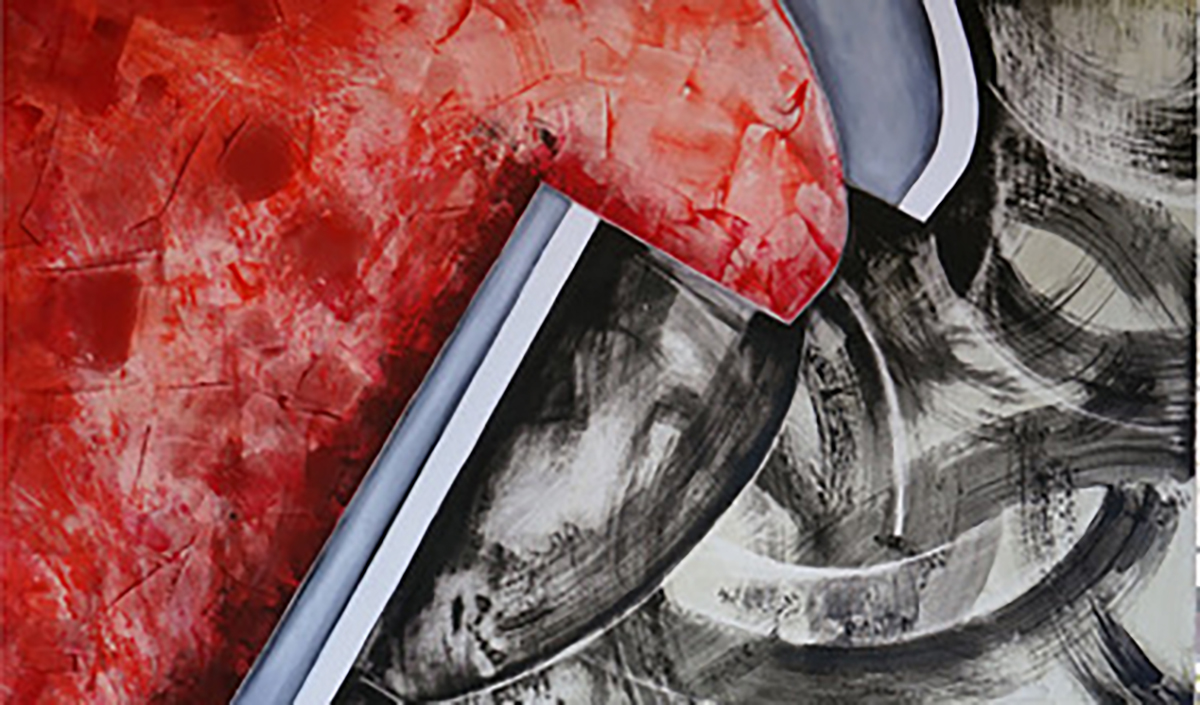
Samaj X doesn’t make art for spectacle. His work moves differently—quiet, sure-footed, and full of intent. It doesn’t lean on explanation. It doesn’t ask for approval. Instead, it sits with you, builds over time. His visual vocabulary isn’t tied to trends or movements. It comes from lived experience, from the body, from culture, from something older than paint. Samaj X creates from instinct. He listens inward, lets the forms rise up through process. What results are works that feel unearthed, not made. These aren’t images designed to impress—they’re constructions of presence. The kind of presence that doesn’t need to be loud to hold space. Texture, shape, gesture—these are the tools he uses to reflect back something deeply human.
On the Work
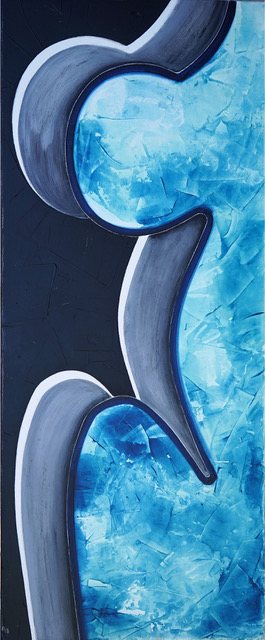
Start with Nubia X. A tall, vertical piece that feels like a marker or a spine. The right side is all layered blues—cold, fractured, luminous. It feels like something frozen mid-motion. Beside it, dark curved shapes bend in and around the blue, not clashing but containing. The overall form suggests something mechanical, but not rigid. There’s a softness to how everything meets. The title pulls in history—Nubia as an ancient reference—but it isn’t a literal map. It’s energy, echo, memory. You can feel it humming beneath the surface. The coolness isn’t detached—it’s contemplative. This isn’t an argument. It’s a balance.
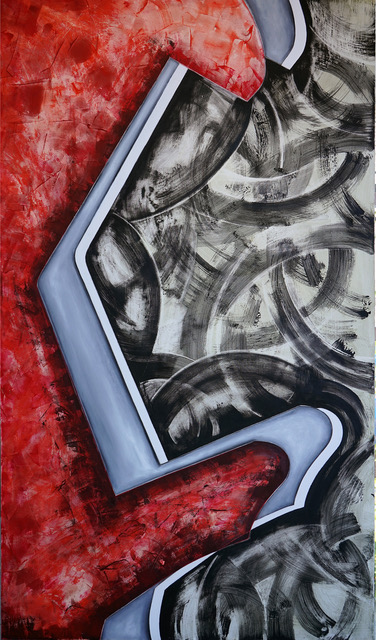
Papa the Coptic hits in a different register. Warmer. More immediate. The left half of the canvas is lit with deep reds and rust—intense but grounded. That energy is met with layered black and white arcs on the right, brushed roughly like wind or smoke. The forms in the center feel like armor or sacred cloth, folded in layers. There’s a suggestion of ritual here, maybe something liturgical or ancestral. You don’t need to know the backstory to feel the weight of it. The brushwork in the background feels restless, like spirit moving through space. The painting holds its own ceremony. It feels like something you witness, not just view.
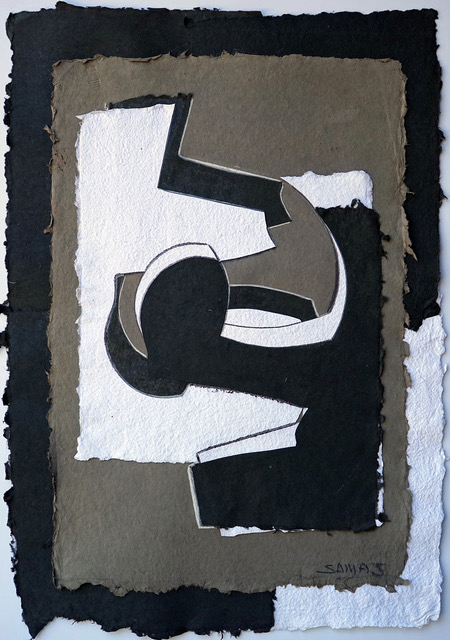
Then there’s The Offering. A shift in materials and tone. It’s not painted, but built—layered paper with jagged edges and raw texture. The forms are blocky, stacked, curved. Mostly earth tones: black, white, brown. It feels like something found, something held. There’s no gloss here. It’s dry, fibrous, quiet. The shapes fold into each other like folded hands or ancient glyphs. You’re not sure what it says, but you feel it’s saying something. The title clues you in—it’s a gesture. Not showy, not decorative. Just a simple act of giving. The whole piece feels devotional.
Taken together, these three works show a throughline. Samaj X is consistent in how he moves—he uses curved edges, weighted forms, and textured surfaces to speak in a language that’s his alone. He blends strength and softness, control and surrender. The shapes don’t explain themselves, but they carry something—maybe history, maybe emotion, maybe memory.
He’s not chasing categories. You can see pieces of architecture, a nod to spiritual symbols, a touch of street. But none of these define the work. The style doesn’t fit a box. It belongs to a lived context—shaped by the artist’s background, his intuition, and his need to translate something unspoken.
Samaj X isn’t making art to tell a story. He’s making it to transmit something—call it presence, call it recognition. The work doesn’t shout. But it lands. It lingers. It speaks slowly and clearly, without ever raising its voice.
