

Lidia Paladino is an Argentine artist working primarily in engraving and drawing, with a deep interest in textiles. She began her journey exploring textile drawing, using threads and fabric not just as materials, but as visual metaphors. This tactile start to her practice later evolved as she re-engaged with engraving—a form that demands a different kind of precision. In the early 2000s, she made a conscious decision to update her printmaking methods, bringing fresh energy to a tradition she had always admired. That shift proved fruitful. In 2003, she received the First Municipal Prize for Engraving, marking an important point in a long and steady path. Paladino’s work isn’t loud. It doesn’t clamor for attention. But it sits with you—carefully composed, quietly reflective, and deeply rooted in how we see, touch, and remember the world around us.
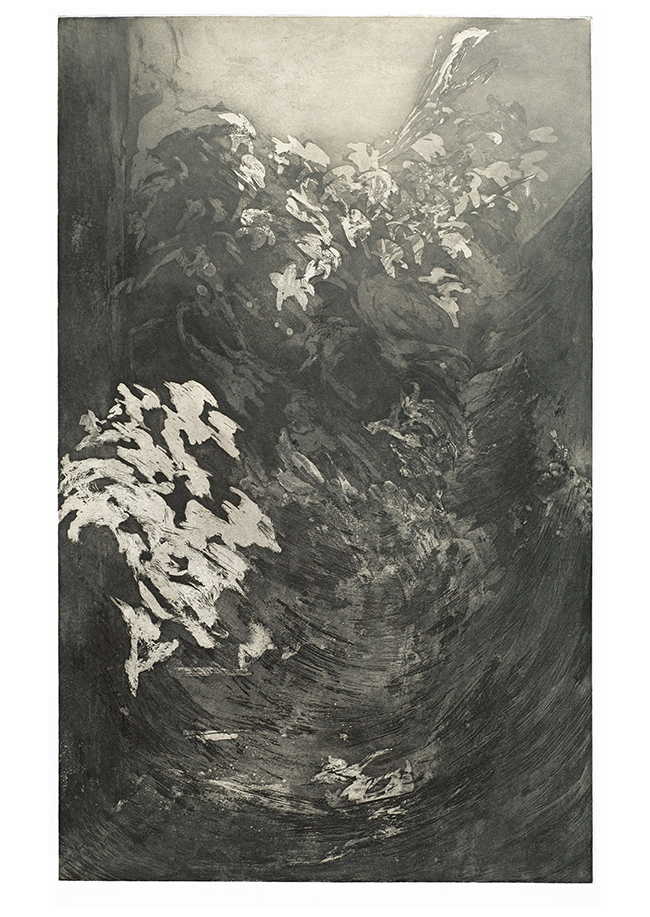
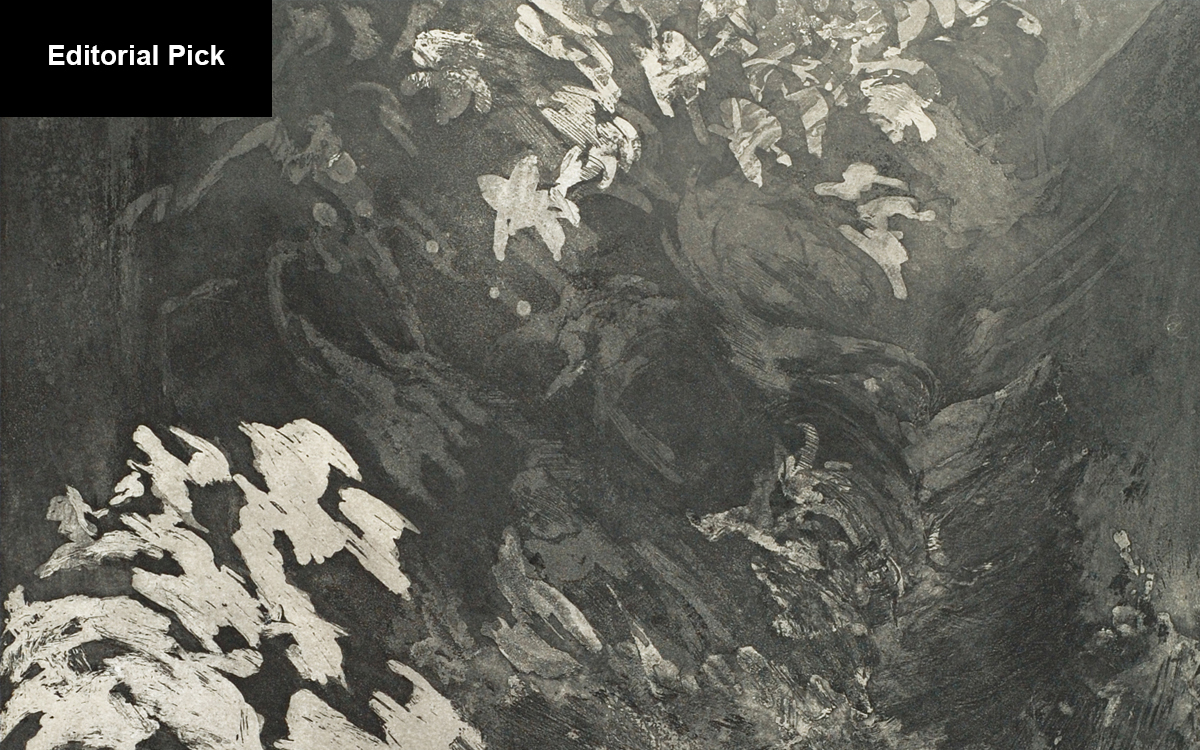
Let’s talk about her 1995 work, Rincones—a piece that still feels intimate, almost like you’ve stumbled into someone else’s memory.
The title translates to Corners, which already suggests something tucked away, off the main path. Made with the etching technique known as “poupée” (where colored inks are carefully rubbed into different areas of a single plate), the 80 x 50 cm print isn’t overwhelming in scale, but it’s rich with detail. Like many of Paladino’s pieces, it isn’t trying to shock or dazzle—it’s asking you to pause.
According to the artist, this work came out of a personal shift in how she saw the landscape around her. That shift wasn’t just aesthetic. It was emotional, even philosophical. She had been working with a certain kind of structure—a certain kind of vision of the land—and then that structure changed. Maybe it was travel. Maybe it was time. Maybe it was life. But Rincones documents that change in its lines, its textures, and its sense of enclosure.
Paladino is clear that experience is what conditions her work. You don’t make a piece like Rincones from theory. You make it after years of looking at the world, walking through it, letting it shape you. And then, maybe, you shape it back—on paper, with a press.
There’s a conversation happening in the print between nature and the self. Paladino isn’t trying to dominate the landscape or turn it into something abstract. She’s in dialogue with it. The etching becomes a kind of echo—a print of a print, in a way. Nature offers the raw material. Observation sharpens it. And then the body—the artist’s hand, her intuition, her lived experiences—translates it into lines and layers of ink.
The poupée method adds to this feeling. Because she’s applying different colors to one plate, the act of printing becomes almost sculptural. Each pass through the press is deliberate. The result feels less like a reproduction and more like a one-of-a-kind object. That fits the theme of corners, too. We don’t usually look closely at corners. They’re where things end. Where dust collects. But Paladino suggests that these hidden spaces hold something worth noticing.
What’s interesting about Rincones is that it came early in her renewed engraving period—before the 2003 municipal prize and before her later recognition. You can sense that it’s exploratory. But it’s also confident. She’s not showing off. She’s listening. And the print reflects that listening back to us.
There’s also a quiet sense of order in the composition. Even as she reflects a changing relationship with the landscape, Paladino still gives us structure. She wants us to see the shift, but not get lost in it. That restraint is part of what makes her work feel grounded.
Paladino’s connection to nature isn’t decorative—it’s structural. And it’s personal. She never claims to represent “nature” in some universal sense. She talks about her experience with it, her observation. That humility is rare, and it gives her work depth without pretense.
Rincones may not be her most famous piece, but it’s a kind of touchstone. It marks the moment when things began to shift—both in the way she saw the world and in how she chose to depict it. It’s a corner in her own practice. One that invites the viewer to step in, slow down, and stay awhile.
