


Vicky Tsalamata, an artist based in Athens, Greece, works at the intersection of history, critique, and personal exploration. Her art reflects a clear-eyed view of the human condition, one that carries the biting wit and deep introspection found in Honoré de Balzac’s La Comédie Humaine. Tsalamata doesn’t shy away from asking uncomfortable questions. She examines where we stand in the grand scale of time, society, and the natural world—and whether our cultural artifacts and ambitions hold up to the slow, steady forces of nature.
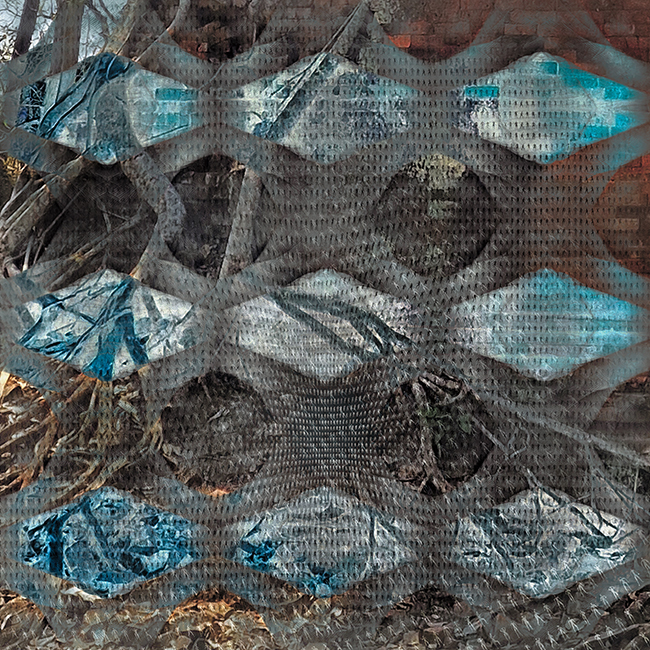
A Professor Emeritus in Printmaking at the Athens School of Fine Arts, Tsalamata has spent decades developing a practice rooted in precision, experimentation, and layered meaning. She works with intaglio and mixed media techniques, often on archival Photo Rag Hahnemühle paper. Her prints are less about decoration and more about excavation—uncovering the ways we live, falter, connect, and endure.
Her recent work from the 2025 series Interweaving Nature and Art carries these concerns further, folding in personal travel experience and ecological reflection. A visit to Angkor Wat, the vast Khmer temple complex in Cambodia, became the seed for this body of work. What she encountered there wasn’t just ancient architecture or spiritual grandeur—it was the overwhelming visual tension between man-made structure and untamed nature. The temples, majestic and enduring, are now partially overtaken by enormous tree roots. These roots don’t decorate the architecture. They dominate it. Wrap it. Press against it like a slow, deliberate force reclaiming its ground.
To Tsalamata, this collision of human ambition and natural growth isn’t just visual—it’s philosophical. Her art captures the way nature, left to its own rhythm, always returns. In this series, we see etched lines, layered textures, and printed forms that mimic the twisting, gripping movements of the roots. At times, the shapes look more animal than botanical—evoking the slow coil of a snake, or a creeping lizard tailing the walls of a forgotten temple. There’s something ominous about it. But also something honest.
By working with intaglio and archival printing processes, Tsalamata translates this encounter into a kind of fossilized dialogue. Her process isn’t quick. Intaglio requires patience and care—etching, inking, wiping, and pressing. It mirrors the themes of her subject: time, pressure, repetition. The result is a surface filled with tension and quiet energy. Her mixed media additions add further complexity—never flashy, but always deliberate.
Tsalamata’s commentary is not just visual. She writes alongside her work, describing what she felt and thought as she created each piece. In the case of this series, her reflections center around interconnectedness. The realization that nothing exists in isolation. That the roots pressing into ancient stone are not intrusions—they’re reminders of how everything is linked. The architecture of man and the structure of trees may seem at odds, but they both belong to the same unfolding story.
She says: “If we recognize that everything in the universe is interdependent, it follows that we are all connected to each other. The awareness of interconnectedness and interdependence is a key factor in the development of connections, social interaction, and environmental awareness.” This sentiment is the quiet core of her work. It’s not just about awe at the force of nature—it’s about realizing we are not separate from it.
What makes Tsalamata’s work compelling is her refusal to romanticize the past or idealize nature. Instead, she lays bare the conflict and lets the viewer sit with it. In Interweaving Nature and Art, she’s not mourning the erosion of man’s creations, nor is she celebrating nature’s “triumph.” She’s just showing it—balanced, real, and unresolvable. The trees will keep growing. The stone will keep cracking. And we, as observers and participants, are part of that cycle.
For Tsalamata, art is a space where this reflection becomes visible. Her prints are quiet but assertive, like the roots she depicts—moving slowly but with purpose. The series stands as a call to reconsider what we think of as permanence, strength, or progress. It asks: What does it mean to build? What does it mean to endure? And most of all, what does it mean to belong to a world where nothing stands apart?
In Tsalamata’s hands, the answers aren’t spelled out. They’re traced, pressed, and layered—waiting for us to look closely and ask again.
