

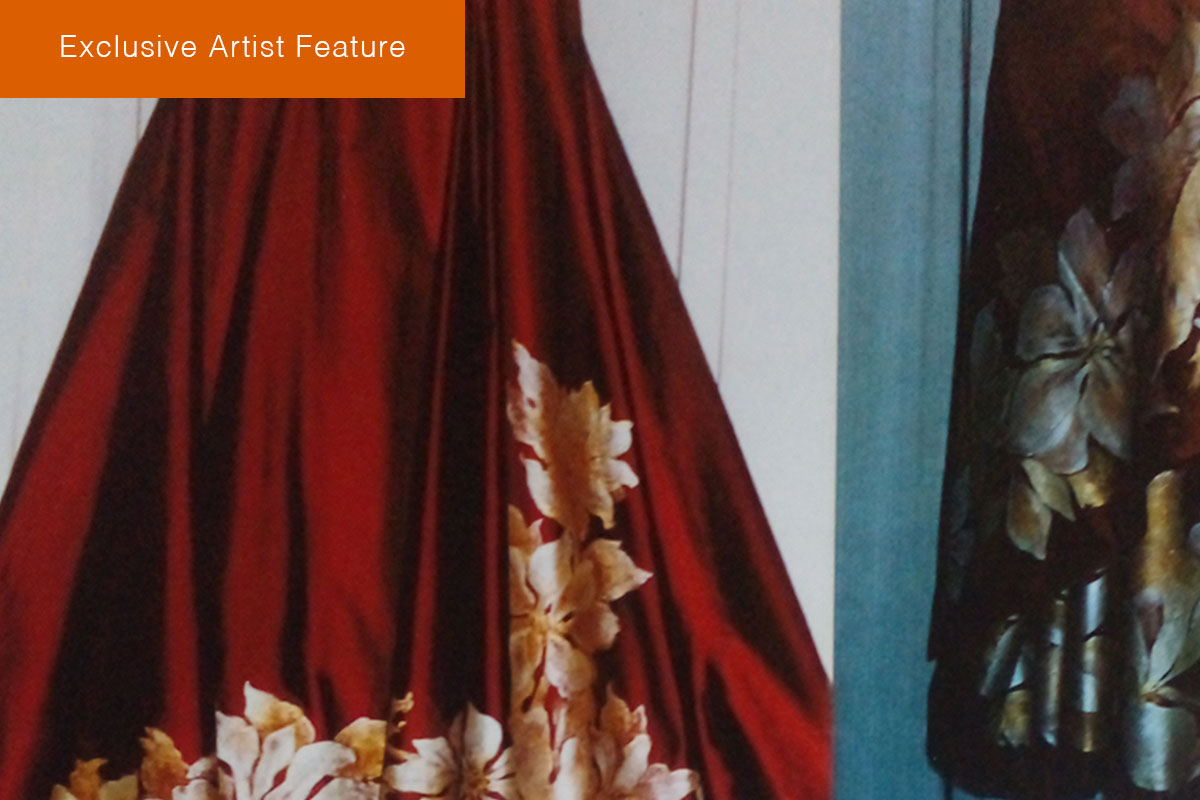
Lidia Paladino is an Argentine artist whose practice bridges engraving, drawing, and textile work. Her first steps were taken in the world of textiles, where she became fascinated with how cloth can carry memory, rhythm, and personal stories. Later, she turned back to engraving, updating her techniques and allowing both mediums to enrich one another. This shift marked the beginning of a steady, rewarding path—one that brought her recognition, including the First Municipal Prize for Engraving in 2003.
Her art exists between two poles: the enduring mark of engraving and the fragile, shifting life of painted silk. This balance gives her work its identity. Through textiles, she could paint directly onto a surface that lived with the body, while engraving offered permanence and control. Together they form a dialogue—soft fabric and firm line, motion and stillness—each revealing how material can hold feeling and perception.
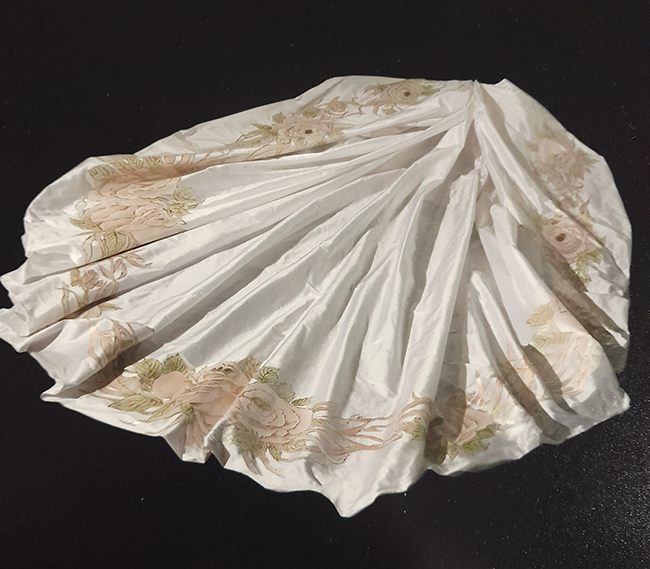
Across decades, Paladino has returned again and again to material as her source of inspiration. Textiles, with their intimacy and tactility, have been central. She sees a silk dress as more than fashion—it is a vessel for memory and imagination. She once wrote: “A hand-painted silk dress can awaken fantasy, magic, and the pleasure of feeling admired, even if only fleetingly. It’s like sealing a moment of happiness in a fabric.” In those words rests her vision: art as fleeting yet permanent, both deeply personal and open to others.
Between 1999 and 2016, she worked intensely with silk for haute couture. These garments were not simply designed but painted into being. Once worn, they became living artworks—fabric turning into a canvas in motion. Light shifted across them, color followed movement, and each piece told its own story through form and use. They were artworks meant to be lived in, to breathe with the person who wore them.
Alongside this, her engraving and drawing practice ran for over three decades. Using nib pens and India ink, she pursued a language of exactness and intimacy. Each stroke mattered. These were not sterile technical efforts but human, hand-drawn explorations. The discipline of line became her foundation, teaching her how to carry detail and weight into both engraving and textiles.
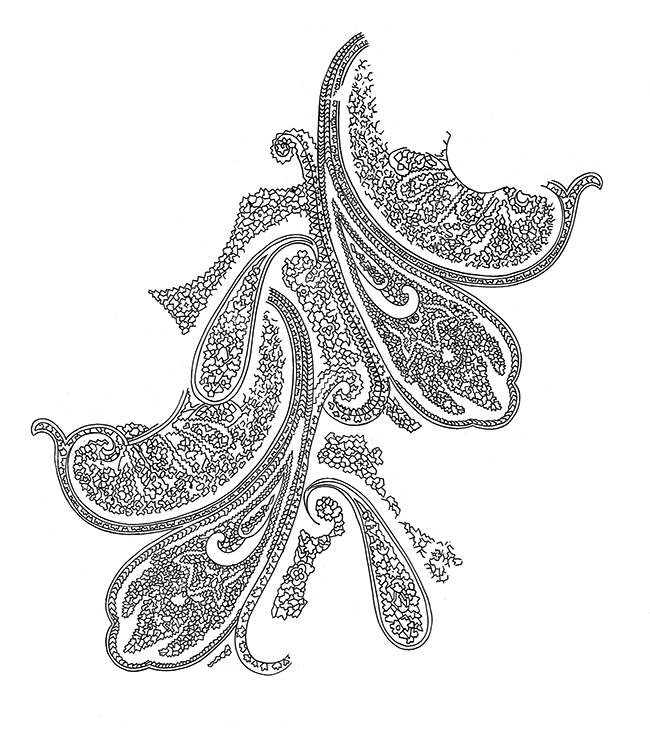
Her return to engraving marked a clear turning point. By renewing her methods, she stretched the medium beyond convention, reshaping surfaces with patience and experimentation. Engraving offered permanence, a way to hold gestures for years. Silk, in contrast, shimmered and vanished in motion. Together they became two distinct yet complementary voices—one fixed, one fluid—each amplifying the other.
For Paladino, these practices are not separate but connected. Textile speaks of touch, transience, and intimacy. Engraving carries time, weight, and endurance. She treats them as partners in conversation. The gravity of etched line is offset by the delicacy of silk; the lightness of fabric softens the strength of ink.
Recognition, such as her 2003 engraving prize, reflects the seriousness of her work. Yet her art is not defined by awards but by consistency. She has built a practice rooted in patience, craft, and respect for process rather than spectacle.
To encounter her work is to witness attention to detail. A hand-painted garment becomes a story of movement, color, and presence. An engraved line becomes a vessel that holds time in its grooves. Both invite reflection. Both remind us that material—cloth or paper, silk or ink—carries meaning beyond its surface.
Paladino’s art ultimately rests between two experiences: the fleeting moment and the lasting impression. A silk dress may catch the eye for only an instant, but the memory lingers. An engraving may remain on a wall for decades, quietly speaking to each new viewer. Her gift is in holding both worlds—making art that is delicate yet strong, ephemeral yet enduring, immediate yet timeless.
