

Iris van Zanten (1971) has always been drawn to what lingers beneath the visible. After graduating from the Academy of Visual Arts in Amsterdam in 1996, she continued her studies with a Master’s degree in Art History at the Vrije Universiteit. This dual training—making and reflecting—gave her both craft and context. It’s a combination that continues to guide her work.
Her paintings aim for essence. She strips away excess, searching for the single gesture, surface, or color that carries the weight of a story. Many of her themes are familiar—mythology, Biblical accounts, archetypes handed down through centuries. Yet rather than echoing tradition, she seeks new forms within them. To reach the softness she envisions, van Zanten devised her own technique: layers of sand, bone glue, and Van Dyck Brown serve as the base for pigments, ink, and acrylic. The resulting surfaces hold both the patina of age and the immediacy of the present.
Combs and Pencils
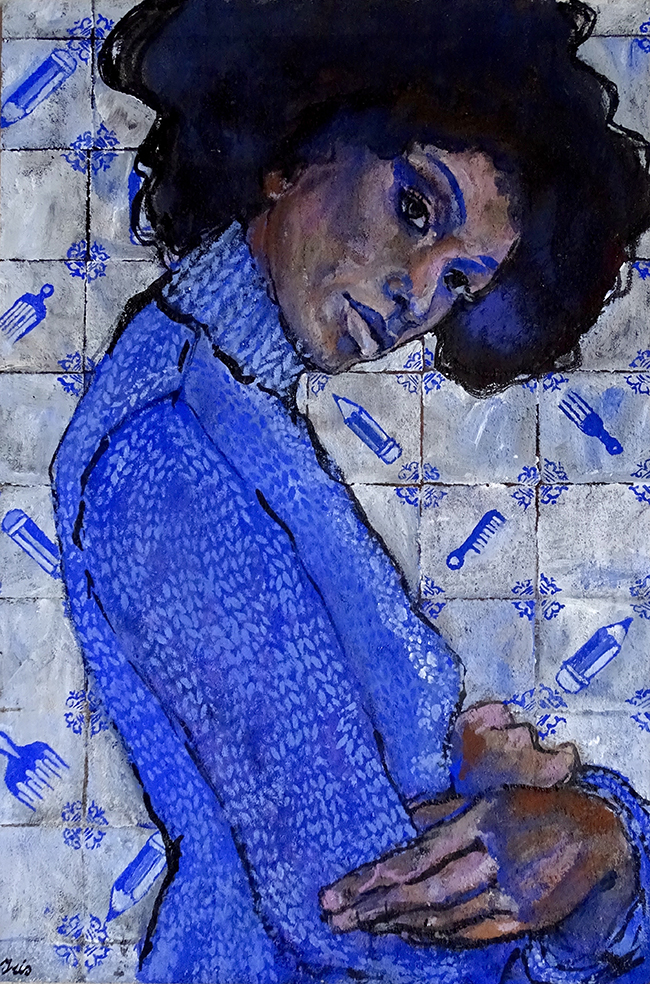
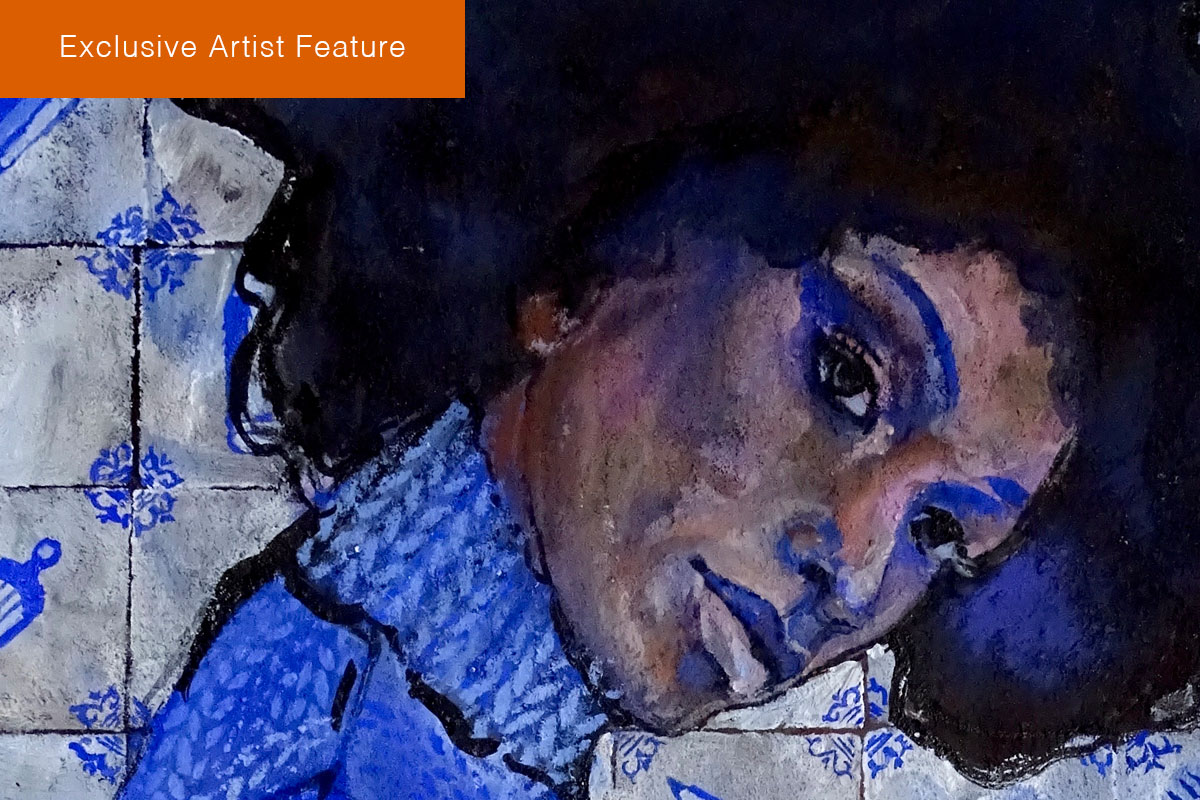
In Combs and Pencils, van Zanten turns toward a historical injustice. During apartheid in South Africa, authorities used the comb or pencil test to determine racial classification. A pencil slid through hair could mark a person as “white.” If it stuck, the same person could be labeled “colored” or “black.” From such arbitrary measures, entire lives were shaped—access to rights, land, and education either opened or denied.
Van Zanten doesn’t stage the act literally. Instead, she conveys its weight through form and surface. Pigments, ink, and acrylic applied on wood create density and resistance. The wood is deliberate: unyielding, cold, echoing the rigidity of apartheid’s rules. Her textured layering recalls both strands of hair and the scarred imprint of history.
The painting is not spectacle. It doesn’t dramatize. Instead, it reclaims an ordinary gesture—combing hair—and exposes how it was weaponized into exclusion. Repetition of lines across her prepared ground suggests tension: softness pressed against severity, the personal against the bureaucratic. In this friction, the piece reminds us how power hides itself in daily acts.
Be Careful What You Wish For
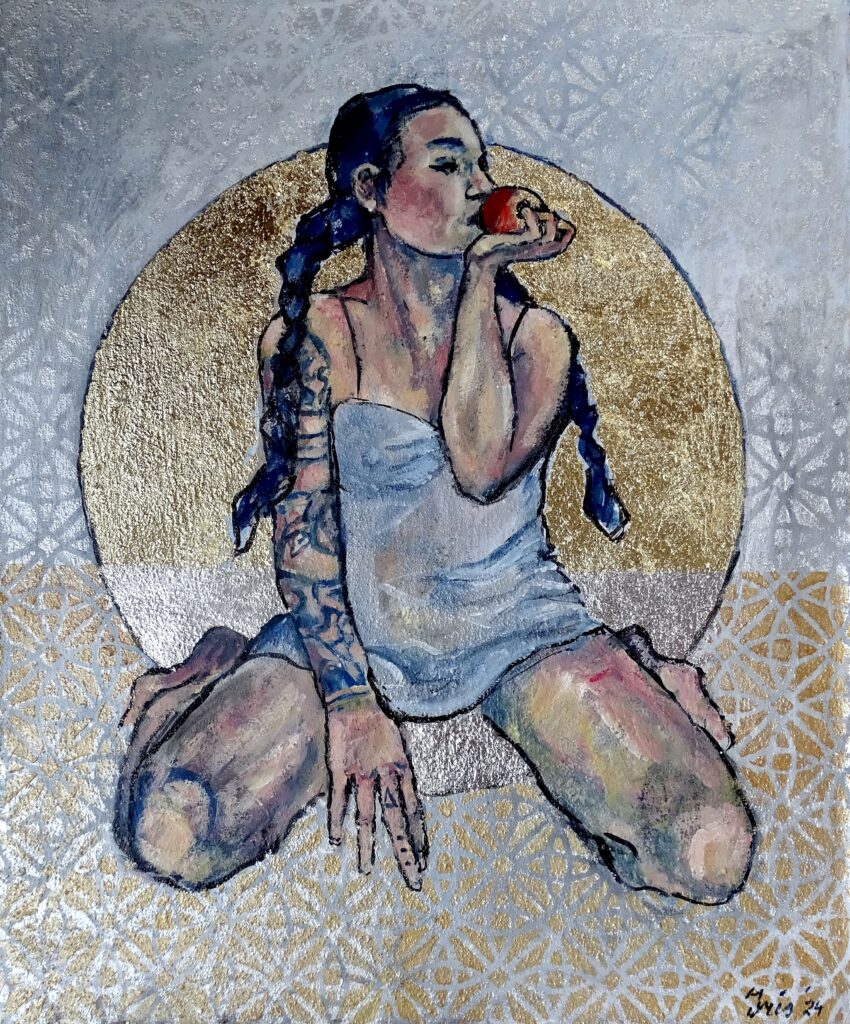
Be Careful What You Wish For shifts to myth. The story of King Midas is timeless—his wish that everything he touched become gold, and the curse that followed when food, drink, and even his loved ones turned to metal.
Van Zanten reimagines the tale with pigments, ink, acrylic, and the brilliance of goldleaf and silverleaf. Here, material is metaphor. The surface gleams with promise, echoing Midas’s desire. But behind the shimmer lies a sense of absence. The richness is dazzling yet hollow.
A woman holding an apple enters the scene, a nod not only to Midas but to other tales of temptation. Against the metallic glow, the apple becomes the fragile center of the work—ordinary, edible, and at risk of loss. The shine draws us in, but as we linger, the brilliance becomes isolating, an emblem of how desire can devour the simplest pleasures.
Between Past and Story
Together, these two works show van Zanten’s range. One confronts the bureaucratic violence of apartheid; the other retells an ancient myth of greed. Both rely on her distinctive surfaces—sand, glue, and Van Dyck Brown—that carry weight and depth, as though history itself were embedded in the ground of the painting.
What unites her practice is not subject but method. She pares images down to essentials: a mark, a line, a shimmer of gold. The restraint is deliberate, and in that spareness lies intensity.
Her paintings are filled with contradiction—fragile yet heavy, luminous yet cautionary, rooted in tradition yet urgent today. Van Zanten uses her materials not just to depict but to reframe, allowing stories, whether from history or myth, to breathe differently. Her art asks for pause, for reflection, inviting us to consider beauty alongside consequence, and memory alongside desire.
