

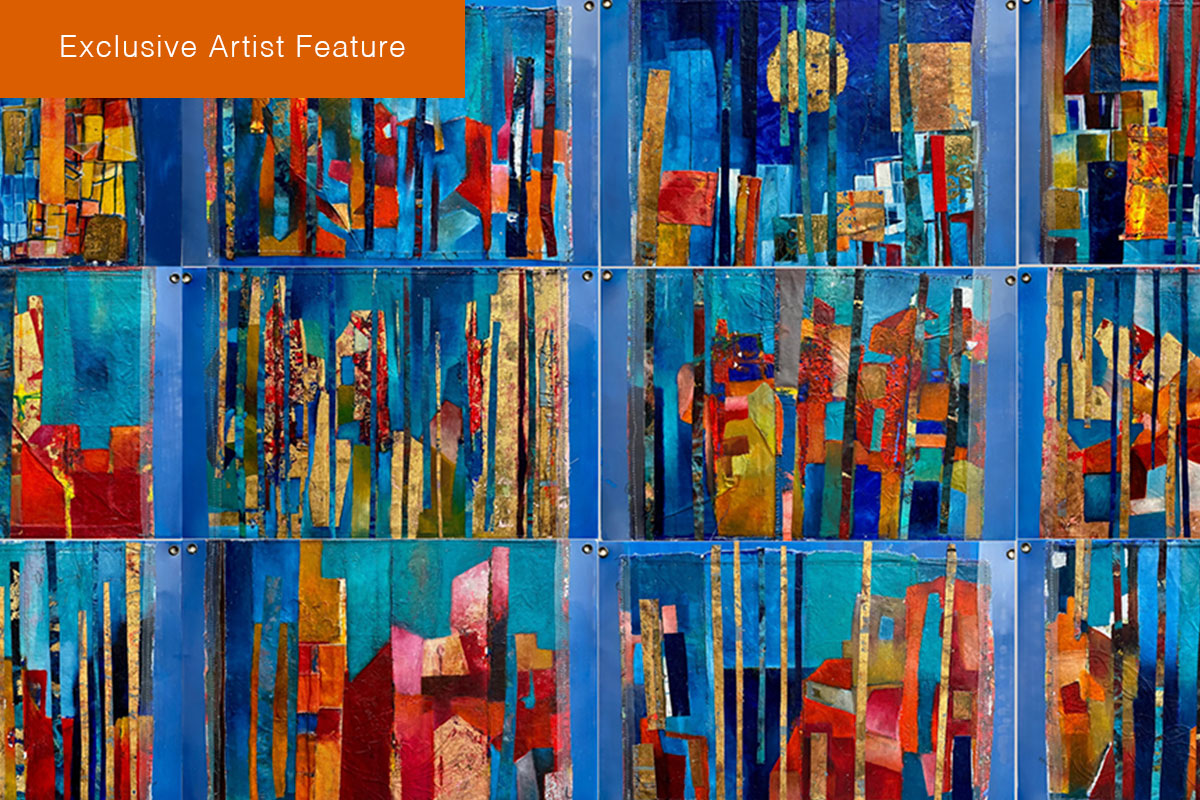
Miguel Barros paints with the weight of memory and the freedom of movement. Born in Lisbon in 1962, he carries the influence of three countries—Portugal, Canada, and Angola. Each has left its mark on how he sees and creates. When he moved from Angola to Calgary in 2014, he stepped into a new chapter, bringing with him both history and curiosity. His training in Architecture and Design at IADE Lisbon (1984) gave him a sense of order, but his art moves beyond structure. It is fluid, open, and deeply human. For Barros, painting is not about copying the world. It is about weaving together memory, place, and imagination. His canvases speak of origin and longing, always returning to Portugal, even while carried by the winds of the present.
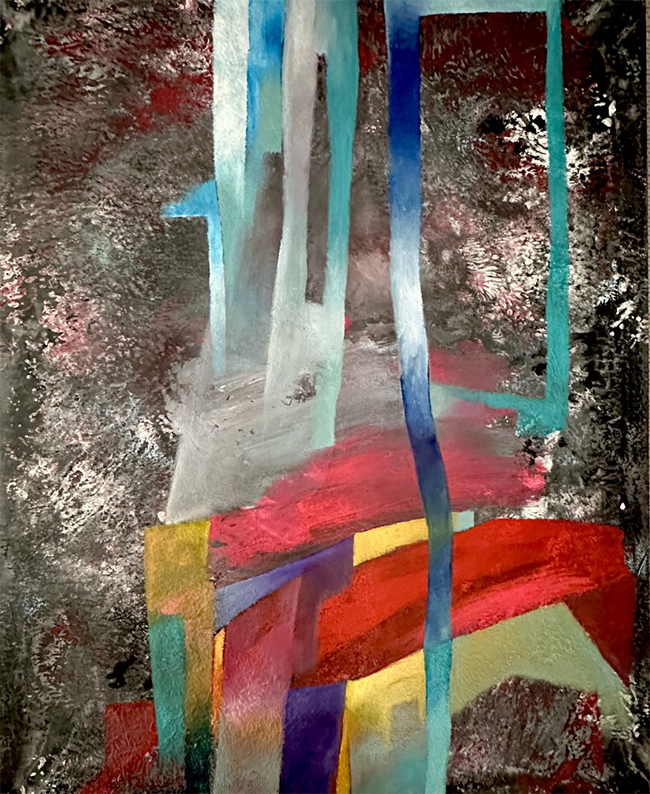
Colors of Lusitanian Lands
Barros’s collection Colors of Lusitanian Lands (2026) brings together 30 oil paintings on silk and cotton, created with mixed media. The works read less like traditional landscapes and more like woven cloth—threads of memory, dream, and desire.
A key choice defines the series: the paintings remain unframed. They hang loose, shifting with air currents, never fixed. This openness is a statement. Barros wants the works to breathe, to echo wind, tides, and the restless truth that nothing holds still. The absence of borders is as important as the colors themselves.
Imperfection drives the process. He embraces roughness, visible marks, and uneven textures. Scratches, exposed fibers, and fractured surfaces become part of the story. He calls this “perfect imperfection.” In leaving the process exposed, he leaves the truth intact. Nothing is smoothed over, nothing disguised.
The paintings are also personal acts of remembrance. They carry Portugal not as a map but as sensations: the heat of red rooftops, the horizon of Atlantic blue, the golden stone of sunlit walls. These are emotional geographies, evocations of belonging. Each work holds the memory of home, but not as something distant or abstract. It is lived, felt, carried forward.
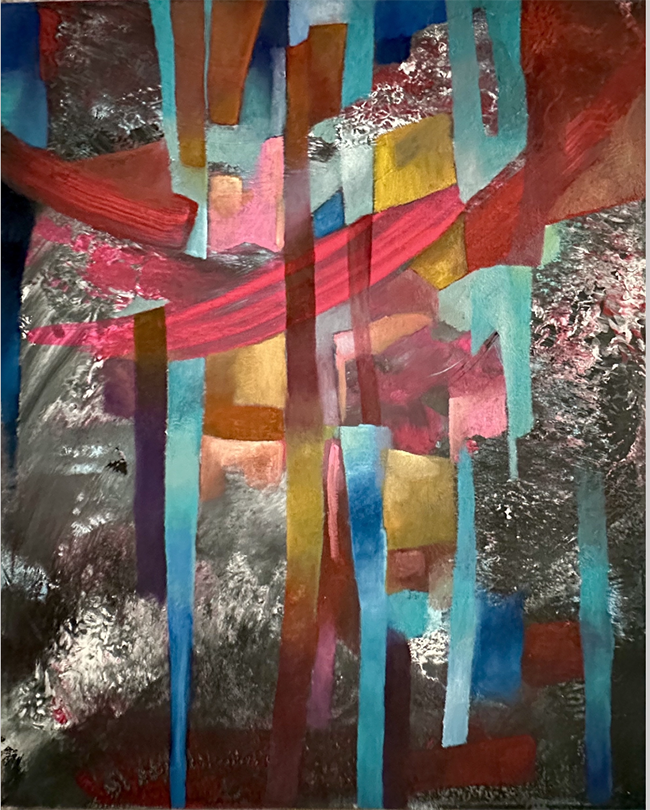
Distance has only intensified that connection. From far away, Barros has discovered that identity grows sharper, not weaker. Colors of Lusitanian Lands speaks to that paradox—being apart yet inseparable, distant yet bound. His art insists that culture and memory are not tied to geography. They exist in movement, in practice, in living.
At the same time, the work reaches beyond his personal story. Through silk, cotton, pigment, and oil, he creates a language anyone can feel. The unframed movement of cloth, the shifting layers of color—these speak without words. Viewers do not need to share his memories to connect with the freedom and fragility of the paintings.
The collection is less about nostalgia than about continuity. Each canvas is a ritual, a way of keeping the past alive without freezing it in place. Memory, for Barros, is not something to preserve under glass. It must move, breathe, remain unsettled. Like the sea, it endures through motion.
In Colors of Lusitanian Lands, the past does not fade. It trembles like fabric in wind, alive and imperfect. Barros paints not to capture memory but to let it shift, reminding us that the truest memories are the ones that refuse to stand still.
