

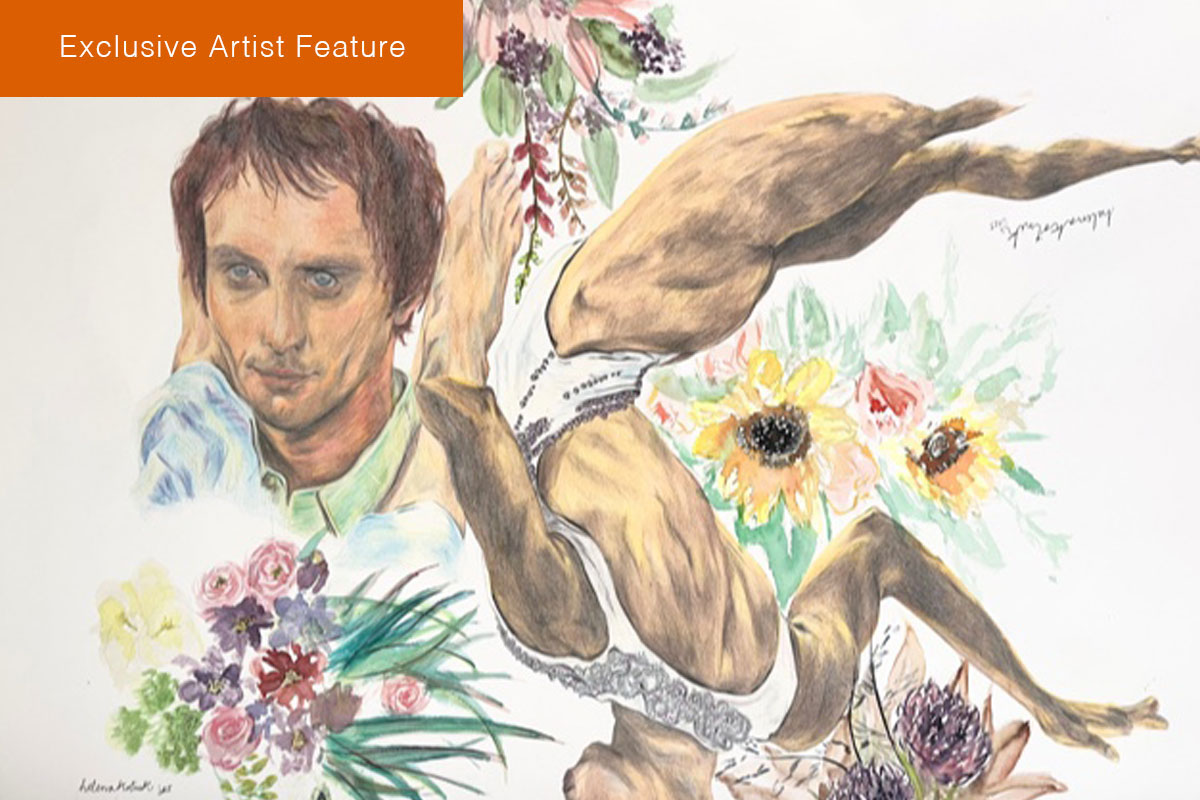
Helena Kotnik, educated at Barcelona University and the Akademie der bildenden Künste in Vienna, approaches art as a dialogue between feeling and form. Her paintings—often called “psychological human landscapes”—reach beyond surface impressions to uncover what moves beneath thought and emotion. With her vivid yet deceptively unguarded style, she captures the tension between chaos and calm, humor and fragility. Each mark feels intuitive, as if shaped by quiet reflection. Influenced by artists from many eras, Kotnik turns the canvas into a mirror—one that reflects the strange balance between connection and solitude that defines modern life. Her art is not an attempt to explain humanity but to sense it, translating the invisible rhythm of existence into something we can see, touch, and feel.
Women (2025, 70x50cm, Pencil colors)
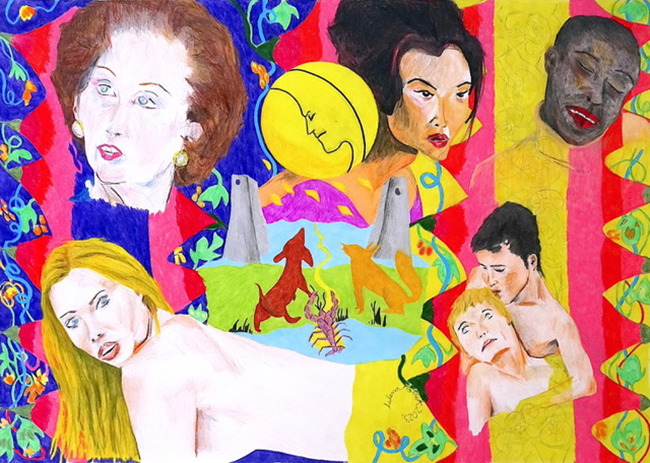
In Women, Kotnik builds a visual poem about femininity—layered, vivid, and alive. The work pulses with movement. Lines loop and cross in a dance of color that feels spontaneous yet deeply intentional. Each hue seems to hold a memory or emotion: the quiet strength of endurance, the tenderness of empathy, the spark of curiosity.
Rather than define what womanhood is, Kotnik allows it to unfold freely. She gives space to contradictions—boldness and gentleness, logic and intuition. The colored pencil adds texture and immediacy, showing traces of the artist’s hand and thought. Reds, yellows, and blues blend and collide like voices in conversation. Nothing is fixed; everything flows.
Her figures, when they appear, are almost suggestions—abstracted forms that merge into each other. They coexist rather than compete, each presence amplifying the others. This sense of togetherness becomes the heart of the work. Women is not about one story, but many overlapping ones. It’s a reflection of shared resilience—how strength is built quietly, through repetition, care, and persistence.
Though the piece radiates color and optimism, there’s also depth beneath its brightness. The energy carries both joy and weight, acknowledging the complexity of female experience. The vibrancy doesn’t erase struggle—it absorbs it, turning it into rhythm. Women doesn’t announce empowerment; it practices it.
For Kotnik, drawing becomes more than representation—it’s a ritual of awareness. Her use of color feels like breathing: an act of release, a way to connect what is internal with what is seen. Through her marks, she suggests that creativity itself can be a form of healing—a way to repair and reimagine what’s been fractured.
On-tempo (2025, 100x70cm, Pencil colors and watercolor)
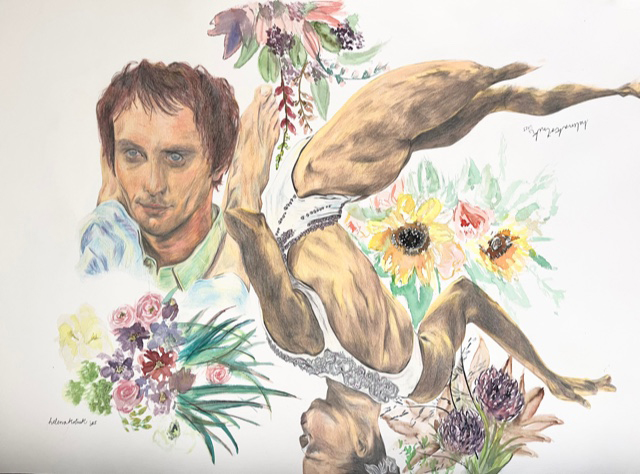
Where Women speaks in collective harmony, On-tempo listens inwardly. It’s about timing—finding one’s own rhythm and keeping faith with it. The painting feels like a deep inhale and exhale, a meditation on presence.
Kotnik blends pencil and watercolor, letting them play against each other. The watercolor drifts and pools freely, while the pencil brings form and intention. This interplay mirrors the balance between control and surrender—structure meeting flow. The result is both delicate and grounded, a quiet tension that feels alive.
The piece doesn’t tell a story; it holds a state of mind. The colors arrive softly, linger, then dissolve, like passing thoughts. The pauses between them feel just as meaningful as the pigment itself. Kotnik captures what it feels like to live consciously—to be neither ahead nor behind, but exactly where you are.
Her own words echo through the work: “Moving in rhythm with your own timing… staying on tempo then means adapting, not resisting.” This philosophy becomes visible in the composition. Even the empty spaces feel charged, allowing the eye to rest, the mind to settle. The painting encourages stillness not as silence but as attention—a kind of listening to oneself and to the world.
The tone is calm, almost whispered. On-tempo doesn’t push for emotion; it invites reflection. Its quiet confidence is its power. In a culture defined by speed, Kotnik’s work feels like a pause—a gentle refusal to rush.
Together, Women and On-tempo show Kotnik’s rare ability to translate emotion into rhythm. She paints with empathy and precision, but more importantly, with awareness. Her art doesn’t claim answers; it listens for the heartbeat beneath them. Through color and form, Helena Kotnik reminds us that to be human is to move, to adapt, and to stay true to the quiet tempo that carries us forward.
