

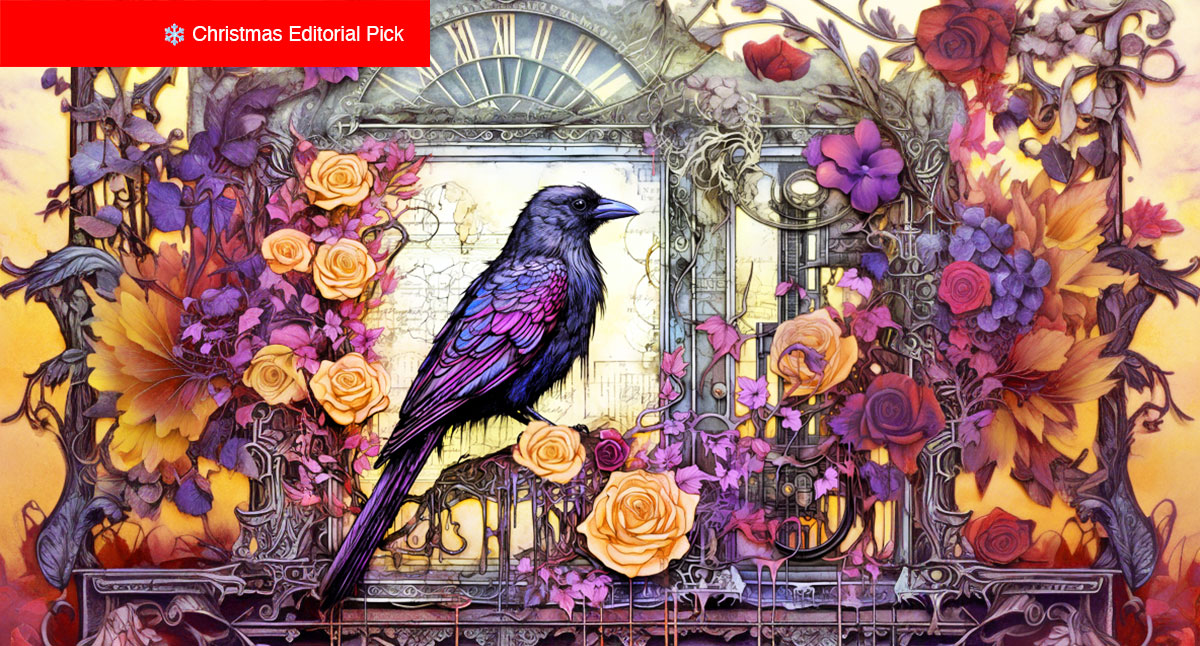
In a wide creative field filled with artists who make images, there are a few who do something more. They build stories, pull you into them, and hold you there without force. Kimberly McGuiness is one of those artists. Her work does not simply present a scene. It offers an entry point into a mental landscape where emotion and memory sit close to imagination. She works with a steady clarity, but her pieces feel open, like doors left unlatched on a quiet night. Kimberly brings a sense of wonder without leaning on theatrics. Instead, she threads her ideas through color, texture, and symbol, leaving room for the viewer to breathe. Her art invites curiosity rather than instruction, and that simple shift makes the work feel personal. It’s the kind of art that stays with you after you walk away—not because it demands attention, but because it lingers on its own.
Raven’s Alter
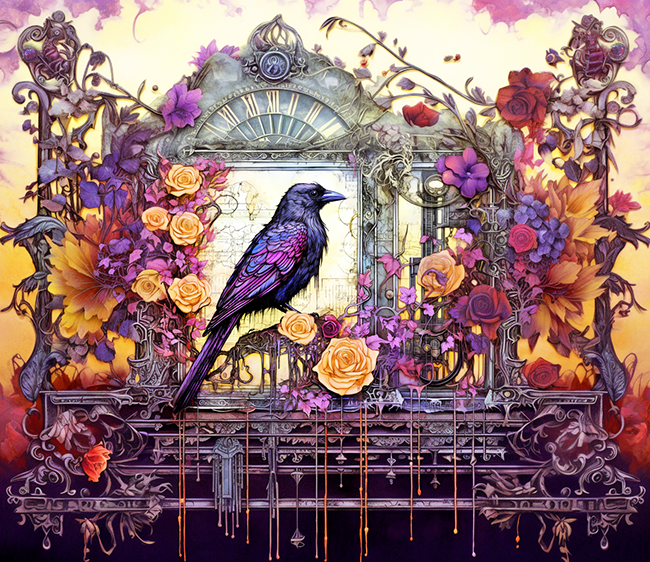
“Raven’s Alter” opens in a world that feels paused, as if time itself stepped out for a moment and left the scene untouched. Kimberly places the viewer inside the Veilwood, a place that exists between reality and dream. The altar at the center of the work stands like an old guardian. It is both forgotten and alive. At first glance, the flowers draw your eye. They spill across the altar in warm yellows, dark purples, and heavy reds. They look soft enough to touch, but they also suggest deep-rooted stories. These blooms are not decoration. They mark the altar the way memories mark a person—layered, bright in some places, shadowed in others.
Kimberly’s choice to surround the altar with cascading flowers creates a tension between beauty and mystery. The scene feels calm, but not simple. You feel that something important has happened here, or is about to. The flowers frame the altar like a crown, but also like a warning. They draw you in, yet you know enough to stay alert.
The frame itself pushes the story further. Kimberly uses clockwork vines and metal tendrils that twist with intent. These elements shift the piece from a woodland scene into something closer to a portal. The metal suggests human touch, invention, or past attempts to control what cannot be controlled. The vines, meanwhile, reclaim what the metal tries to hold. It’s a quiet tug-of-war, woven directly into the design. Kimberly uses this mix to speak about time, memory, and the ways people try to hold onto things that naturally change.
The altar sits at the center of this struggle. It’s sturdy, yet softened by the life around it. Kimberly gives it a presence that feels old without feeling abandoned. The idea that it “held secrets that had lured countless souls to their fate” turns the piece into a story about curiosity. Everybody knows the feeling of wanting to open the door you shouldn’t open, or reach toward something you don’t fully understand. The altar becomes a symbol for that inner pull. It’s an object that asks questions instead of answering them.
Kimberly does not depict a raven directly, yet its presence hangs over the piece. The name “Raven’s Alter” places the bird as a keeper, a witness, or maybe a guide. Ravens in myth are tied to intelligence, memory, and the crossing of thresholds. By keeping the bird offstage, Kimberly amplifies its influence. You feel watched in a gentle way, as if something in the shadows knows why you’re here.
The world around the altar feels suspended. Kimberly paints the Veilwood as a place beyond ordinary time, where stillness has weight. This gives the artwork a meditative tone. You find yourself leaning closer, waiting for something to shift. The flowers might rustle. The metal might hum. The air might move. The piece holds that kind of quiet tension.
What grounds the work is Kimberly’s sense of balance. She never overwhelms the viewer with too much detail or too much symbolism. The scene is detailed but not busy, rich but not crowded. The simplicity of her approach makes the altar feel even more important. It becomes a focal point that invites reflection. The longer you look, the more you feel the coexistence of beauty, danger, curiosity, and silence.
“Raven’s Alter” becomes a place where inner life meets outward form. It’s not a picture of an altar. It’s an experience of standing before one. Kimberly shapes this space with trust in the viewer’s imagination. She guides, but she never forces. The result is a piece that feels intimate while leaving enough room for personal meaning.
It’s the kind of work that stays in the mind like a whisper—soft, steady, and unforgettable.
