

Pasquale J. Cuomo’s relationship with photography starts in a simple, relatable place: a teenager experiments with a camera and realizes it isn’t just a passing interest. Born in the United States, Cuomo has spent more than fifty years working through the medium’s shifts and reinventions. He learned photography in the era of film and darkrooms, then carried that discipline into the digital age without losing what those earlier years taught him. That long stretch of time shows up in the work. You can feel the accumulation of practice—trying different approaches, recalibrating, making mistakes, refining, and returning with better judgment. For Cuomo, photography isn’t a phase he moved beyond. It’s a habit of attention he kept, one that keeps pulling him back outside to look carefully and make the world fit inside a frame.
There’s a grounded stillness to his photographs that comes from staying with the craft instead of chasing novelty. Cuomo isn’t leaning on tricks or flash. He’s focused on decisions that matter: where to stand, when to wait, and how to let light do what it naturally does. In his newer Hudson River Valley series, that mindset is front and center. Landscape and structure share the image without competing. The photographs aren’t trying to perform. They encourage a slower pace, as if the reward arrives only after you’ve spent a little time with them.
The two images here—one taken at Croton Reservoir Park, the other at Clermont State Historic Site—work well together. They don’t match in subject, but they align in spirit. Both give the scene room to breathe, both feel cleanly organized, and both avoid forcing a mood. Cuomo lets the Hudson River Valley set the terms. He doesn’t pack the frame with drama. He lets the place carry its own weight.
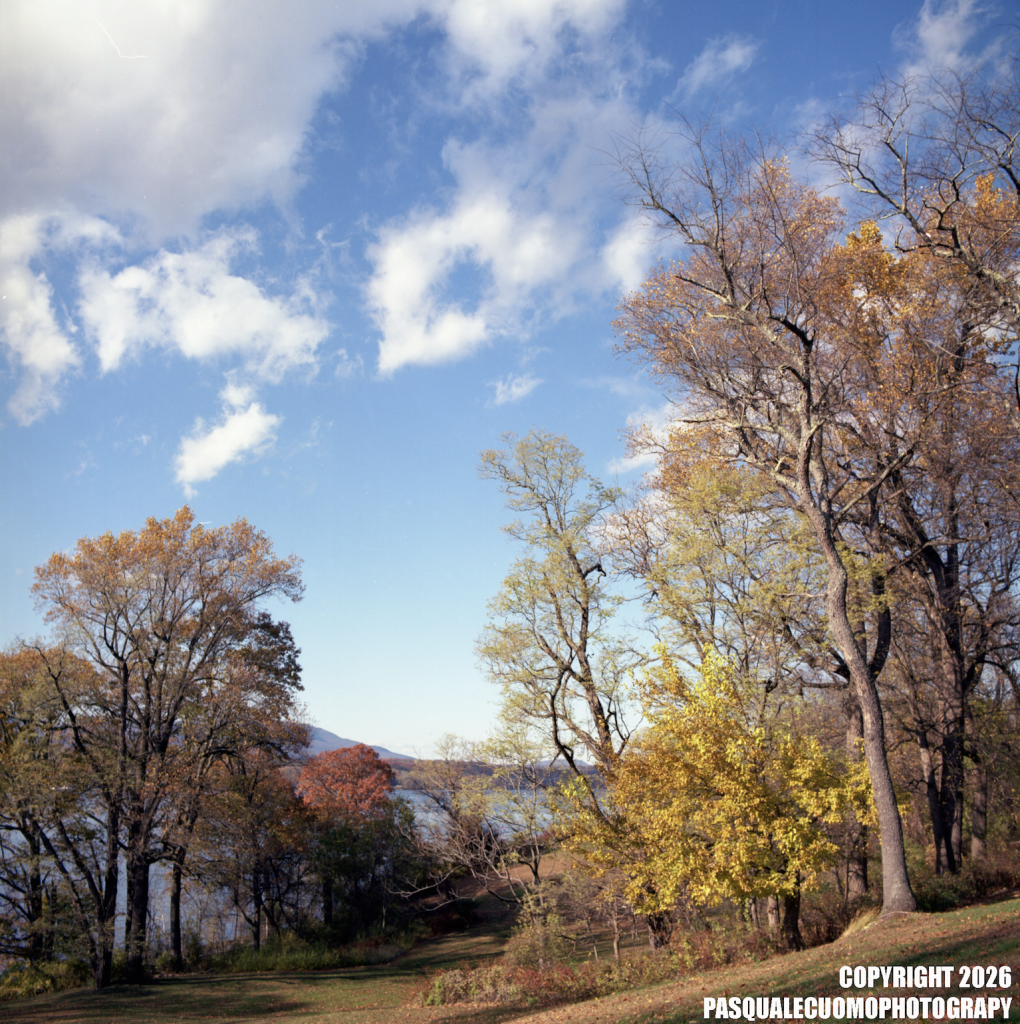
In the Croton Reservoir Park photograph, the sky takes up generous space, and that decision shapes the whole feeling. Soft clouds break the blue so it stays active, not flat, and the sense of openness becomes the atmosphere of the image. Beneath that, the trees sit in that in-between stage late fall often brings: some still holding onto color, others already bare. It’s not a tidy “peak foliage” postcard. It’s a more truthful moment—change happening unevenly, branch by branch.
Even though the composition reads as natural, it’s clearly thought through. The trees act like gentle brackets on the sides, guiding your eye toward the center distance where the land and water settle into a quiet horizon. Depth unfolds in calm steps—shadowed foreground, textured middle ground, then the far line of the landscape. The light stays bright without becoming harsh, giving the scene a crispness that feels discovered rather than constructed. You can almost sense the process: arriving, scanning, waiting, and pressing the shutter when the scene finally felt balanced.
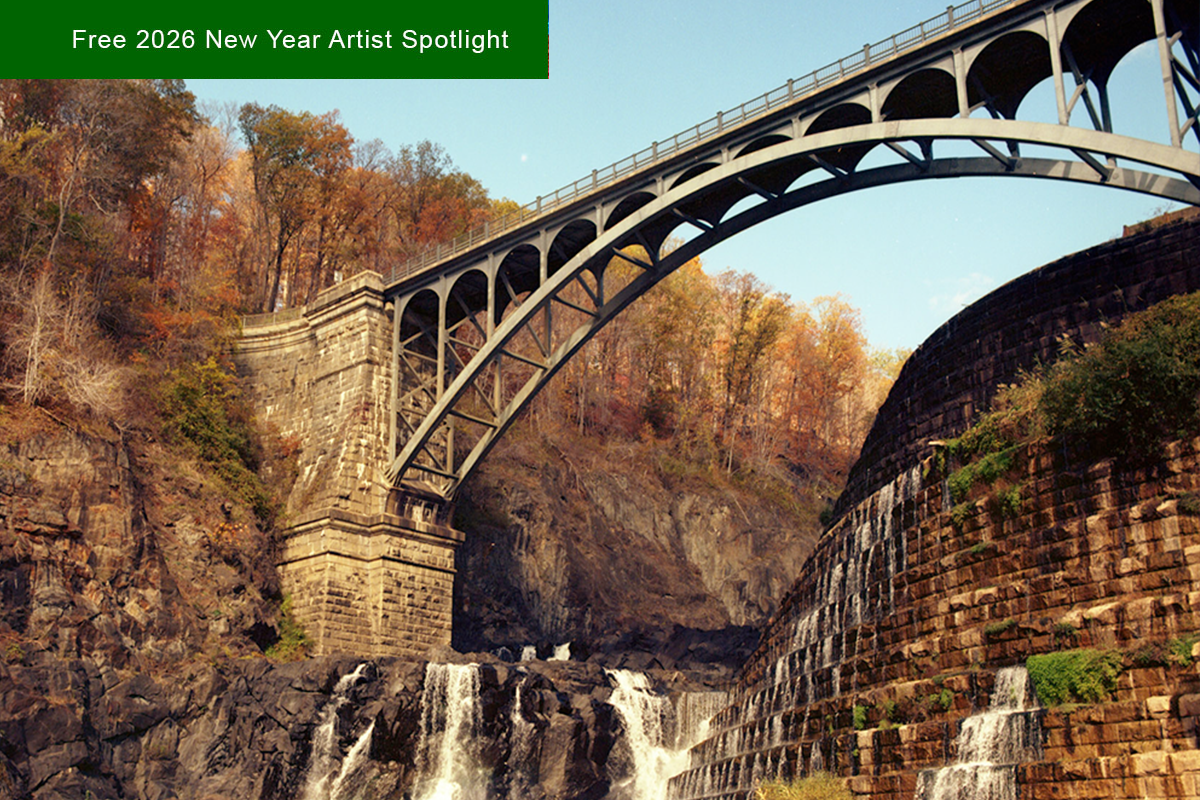
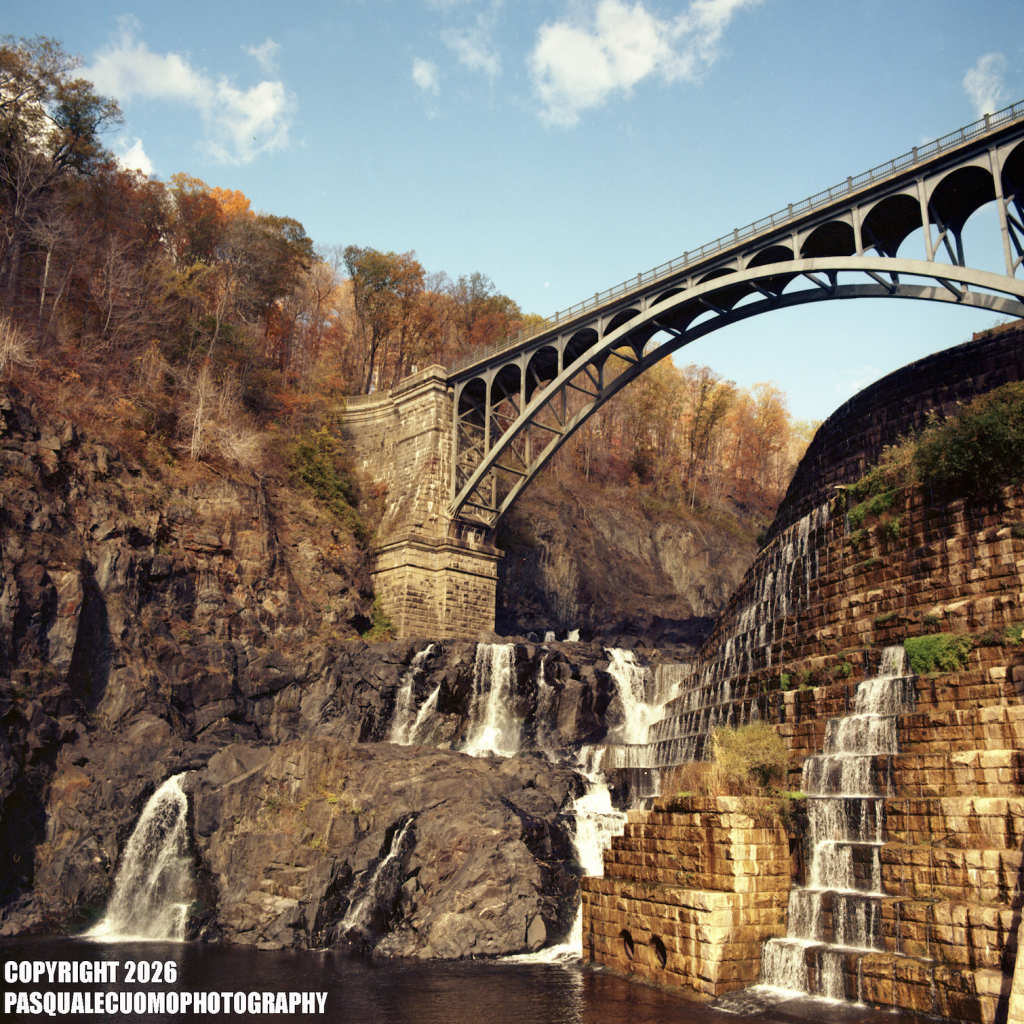
The Clermont State Historic Site photograph pivots from open space to built form. Here, the image is organized around structure—curve, mass, and the presence of something engineered. Cuomo frames a large arched bridge crossing the scene against a pale sky, with autumn trees gathered behind it. Below, the view drops into rock, water, and stonework, a dense mix of textures that could easily become chaotic. But the photograph stays readable because the bridge provides a strong, simple sweep that holds everything in place.
What’s compelling is how the image treats the bridge as part of the landscape rather than a disruption. It feels integrated, like one more element in the valley’s long story. On the right side, the stepped stonework carries water down in small cascades, adding a second rhythm that echoes the repeating arches above. Dark rocks at the bottom give the scene weight and keep it anchored. The water brings motion, but it stays in conversation with the rest of the frame instead of turning into the whole point. It’s there as a reminder that the valley keeps moving—quietly, constantly—even when the structures feel permanent.
Together, these two photographs suggest what Cuomo is shaping with this series: a portrait of place told through tone. One image leans into air, distance, and seasonal shift. The other leans into scale, architecture, and the way people leave their marks on the land. Both are rooted in direct seeing. They don’t depend on spectacle or heavy manipulation. They depend on the basics—light, structure, and patience.
And that patience feels connected to Cuomo’s long history with the medium. After decades, the motivation often changes. It’s less about proving you can make an image and more about deciding what deserves your attention. These photographs feel like they come from that stage: calm, spacious, and exact. They don’t rush you. They hold the door open and quietly suggest: stay a little longer. There’s more here than you noticed at first glance.
