

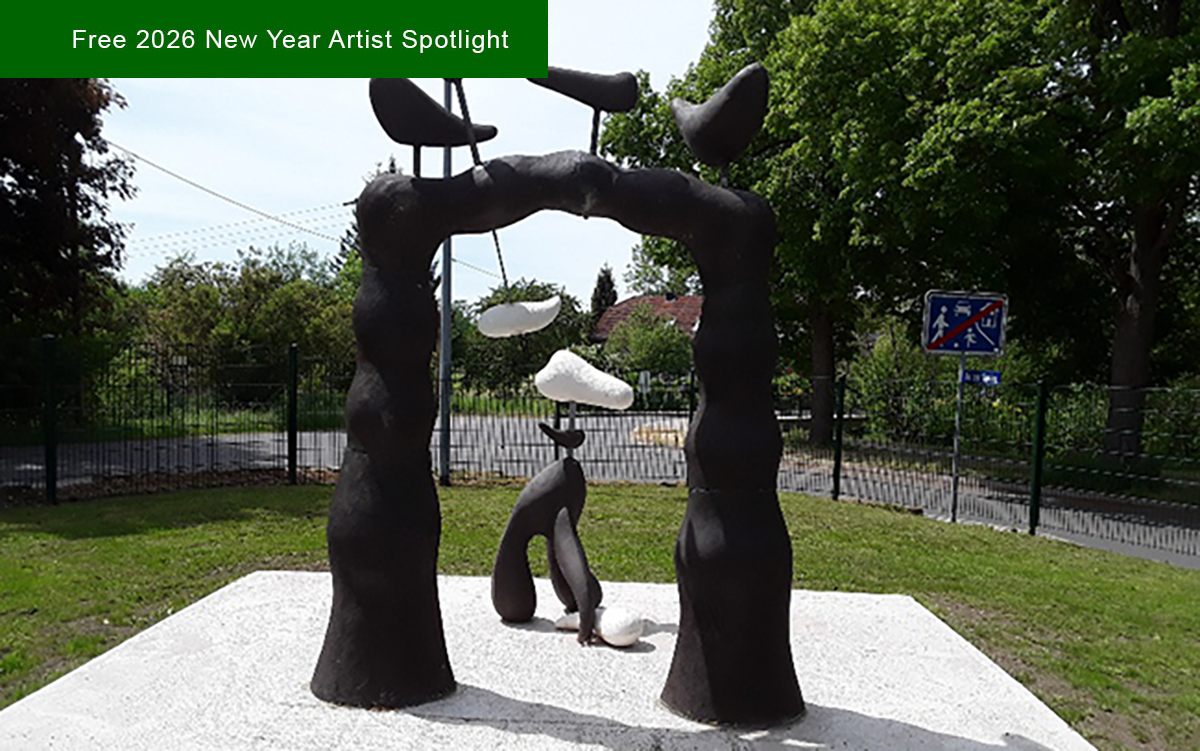
Sylvia Nagy makes work where touch and theory meet—where something built by hand can still speak to technology, process, and the way the world keeps shifting. Her training moves between industrial design and fine art, and that blend shows up in her materials: she respects structure, but she also leaves space for instinct. She studied at Moholy-Nagy University of Art and Design in Budapest, earning an MFA in Silicet Industrial Technology and Art, an experience that sharpened how she thinks about making—how a concept becomes a finished object through planning, fabrication, and material behavior. Over time, that foundation expanded, with ceramics becoming a more elastic language for her ideas, especially during her connection to Parsons School of Design in New York. There, she taught and also developed a course in plaster-based mold model-making, using a traditional studio practice to ask contemporary questions. The result is a practice that stays physical and grounded—built through hands-on work—while continuously reaching outward, tying together mediums, places, and lived moments as parts of the same larger map.
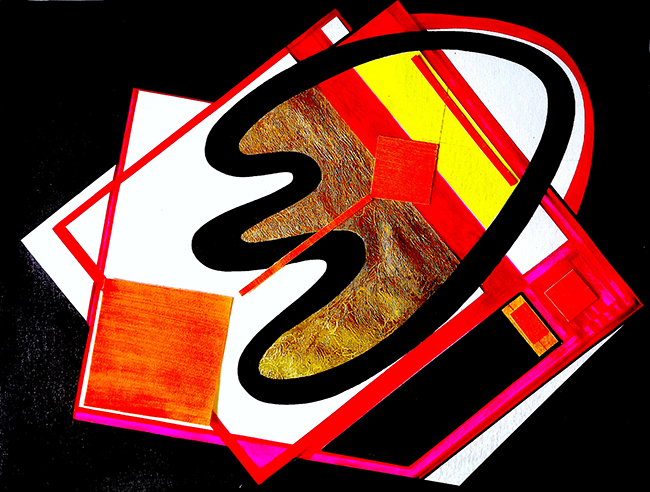
Square in Space
At face value, Square in Space sounds minimal: a basic form, a clean edge. But Nagy uses that simplicity as a starting point, not an endpoint. For her, the square becomes a framework for thinking about relationship—how pieces fit, how patterns rearrange, and how an artwork can carry multiple kinds of knowledge at the same time. She returns again and again to one guiding idea: everything links. Not as a poetic statement, but as a working rule. Painting, ceramic design, sculpture, dance, music, science, technology, nutrition—these aren’t separate interests she switches between. They cross over, borrow from each other, and build momentum together. Even the chemistry of glazes becomes part of a wider curiosity about mixing and transformation—how small changes create entirely different outcomes.
That way of thinking didn’t arrive overnight. Before clay took center stage, Nagy’s early education was grounded in mural traditions at the Budapest School of Fine and Applied Arts, where she studied sgraffito, fresco, and mosaic. These are slow, demanding processes—work that requires planning and commitment, images made to outlast the day they’re created. In that same setting, she encountered sculpture assignments and ceramic classes, and a new realization began to form: she didn’t want to stay inside one medium. Painting stayed important, but clay offered something else—weight, volume, surface, and the kind of presence an object holds when it occupies space with you.
Music also threads through her process. She remembers studying with sound turned up, even when people around her questioned how that could help. For Nagy, it wasn’t distraction—it was propulsion. She still works that way now, writing or making while music keeps rhythm in the room, moving between tasks without waiting for anyone to approve the method. In Square in Space, that same attitude becomes part of the work’s internal character: it makes room for complexity without trying to simplify itself for comfort. It allows friction—quiet focus alongside noise, discipline alongside freedom, solitary concentration alongside the weight of everything happening beyond the studio.
When she shifted from mural painting into ceramics at Moholy-Nagy University, she didn’t leave scale behind—she redirected it. She studied industrial ceramic technology while also working in large sculptural formats, and the combination is central to her approach. Industrial training teaches systems: repeatability, engineering logic, and how materials respond under heat, pressure, and time. Sculptural practice teaches something different: risk, intuition, and the ability to let form communicate without explanation. Nagy keeps both currents active, letting precision and feeling press against each other until the work finds its own shape.
She describes a period of extreme output—completing a multi-piece mural installation in just four weeks by working day and night. She remembers it as a personal record, an intense stretch of endurance. But what stays with her isn’t only the speed. It’s the delayed response. The outcome wasn’t immediate, and recognition didn’t arrive on schedule. The result reached her years later, after she had already stopped expecting anything. That gap—between effort and return—has become part of how she understands art and time. You don’t always know what you’re building while you’re inside the build. Sometimes the meaning shows up later, after distance, after life changes, after the work has had time to move through other hands and contexts.
This is where Square in Space starts to read like a model for transition. Nagy connects her thinking to the way societies cycle through upheaval—conflict, re-evaluation, repair, reinvention. She references the 1960s phrase “Love, not war” as a reminder that history repeats both pressure and hope. And in every cycle, there are missing pieces—blank squares in the larger grid: gaps in understanding, gaps in empathy, gaps in shared information. Her work doesn’t claim to fill every gap or finish the board. Instead, it pays attention to what’s missing and traces the relationships that still exist—how one square touches the next, how a pattern starts to form, how a small shift can change the entire field.
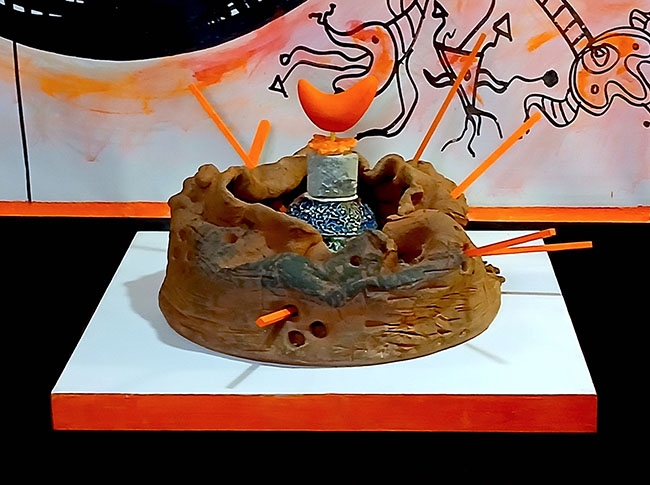
Her surroundings echo that sense of movement and scale. She speaks about living at Romhild Castle in Germany, a place shaped by history. A castle might suggest permanence, but it also reveals how unstable permanence really is—structures remain while meaning changes, again and again, across generations. In that environment, her movement from murals to sculpture to installation feels natural. The work becomes a form of spatial thought: not only objects to look at, but experiences—forms that shape how you move, pause, and connect ideas as you encounter them.
Underneath all the disciplines and references is a simple reason she continues: making helps her find calm. Nagy is clear that she doesn’t pretend to hold complete knowledge of every political or historical force behind global change. But she doesn’t need certainty to make. She needs responsiveness—the ability to build forms that hold curiosity, feeling, and repair. Square in Space becomes a container for that: structured but open, disciplined but breathable, grounded in material while still reaching outward.
In Nagy’s work, connection isn’t an added theme—it’s the engine. And the square is never only a shape. It’s a unit in a larger system: always relating, always shifting, always in motion.
