

Judit Nagy L. was born in Slovakia, a place shaped by layered history and cultural depth. From an early age, she approached the world visually, sensing form, color, and meaning in even the simplest surroundings. As a child in kindergarten, she already saw life as something to interpret through images. This early pull toward art led her to study in both public art school and private studios, where she developed her technical foundation. Yet her path did not remain linear. Life moved in other directions—she earned a Master’s degree in civil engineering, built a family, and entered the world of business. Still, something remained unresolved. Beneath these achievements, there was a quiet absence. Art was not just an interest; it was a necessity. Returning to it was not a decision as much as a recognition of what had always been there.
The Work
In Art Together – The Call to Unite, Judit Nagy L. brings her focus to a question that feels both personal and collective: how do we reconnect with ourselves while also finding genuine connection with others? The work does not approach this through narrative or direct representation. Instead, it builds its language through symbol, repetition, and intention, forming a space where emotion and reflection take precedence over explanation.
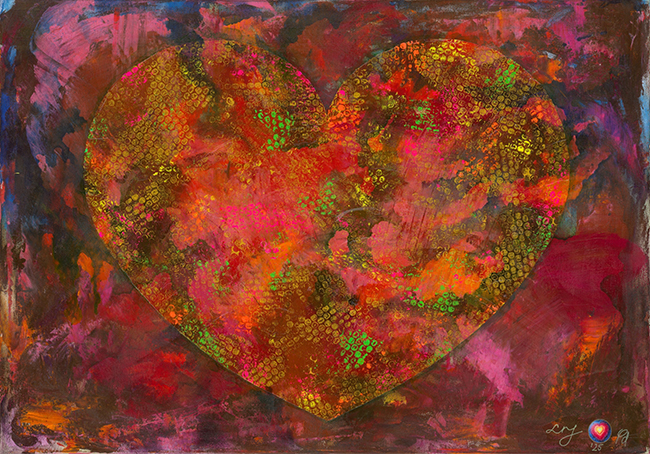
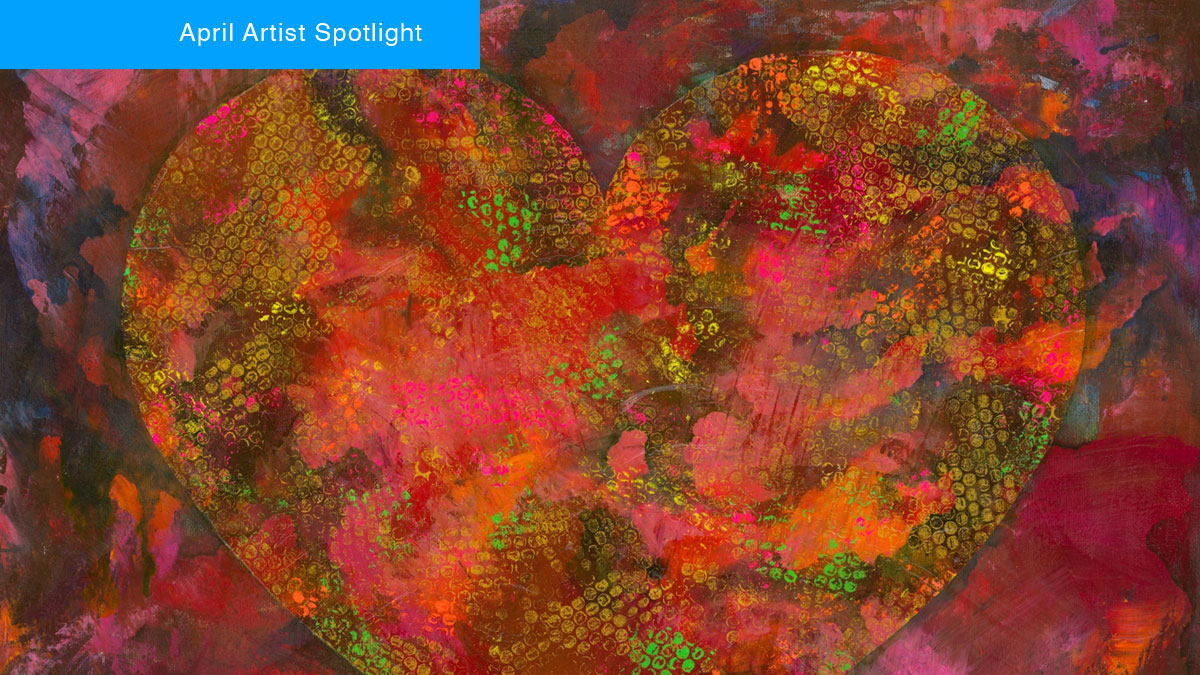
At the center of this body of work is the SHAKANA series, a group of seven heart-shaped artworks that function as both visual objects and emotional anchors. The use of the heart is immediate and familiar, yet in this context it is neither decorative nor sentimental. It becomes a structural and conceptual core. Each piece holds the same foundational form, but the variations within that structure open different emotional registers. The heart here is not fixed in meaning. It shifts, expands, contracts. It carries weight.
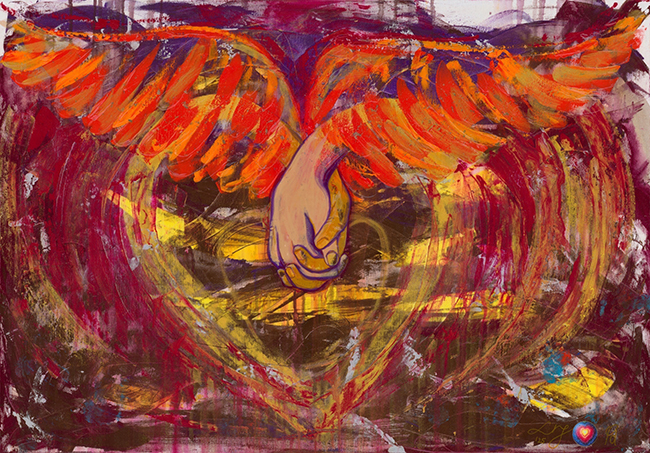
The repetition of this shape across seven works introduces rhythm. There is a sense of progression, though not in a linear way. Instead, the series feels like a cycle—returning to similar forms while allowing each piece to move through a different internal state. This creates a quiet tension between unity and individuality. Each work stands on its own, yet none feels complete without the others.

Materially, the pieces are primarily executed by hand, which reinforces the directness of the process. There is no attempt to distance the viewer through technical perfection. Instead, the emphasis remains on gesture, on the trace of the artist’s presence. The surfaces suggest an intuitive approach, where decisions are made in response to feeling rather than predetermined structure. This method aligns with the underlying idea of authenticity that runs throughout the series.
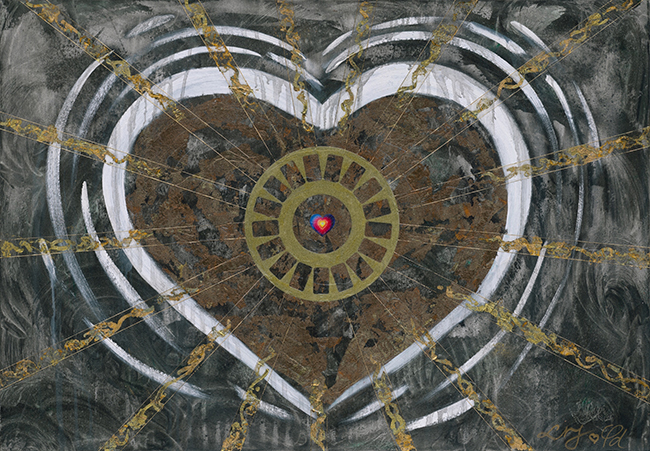
The concept of leadership appears subtly within this body of work, though not in a conventional sense. Rather than presenting authority as control or dominance, the work points toward a different model—one rooted in clarity, honesty, and emotional awareness. The idea that the future belongs to those who can unite people while remaining true to themselves is not presented as a slogan. It is embedded in the structure of the work itself. The repeated heart form becomes a symbol of this possibility: connection without loss of identity.

There is also an emphasis on communication, but again, it is not literal. These works do not “say” anything in a direct way. Instead, they create conditions for reflection. The viewer is not guided toward a specific interpretation. Instead, the pieces invite a slower engagement, where meaning develops through presence rather than instruction. This openness is essential to the work. It resists manipulation, allowing space for individual response.
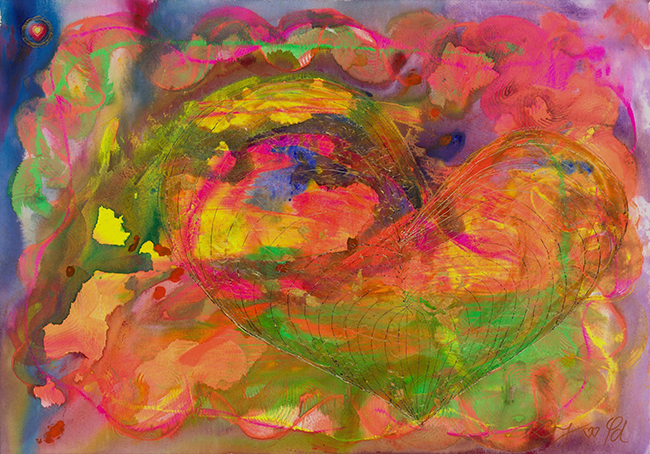
The idea of self-care and self-love is present, though it avoids the surface-level associations often attached to those terms. In the SHAKANA series, these concepts are treated as internal processes rather than external affirmations. The heart becomes a site of attention—a place to return to, rather than something to display. This shift changes the tone of the work. It becomes less about expression in the outward sense and more about recognition.
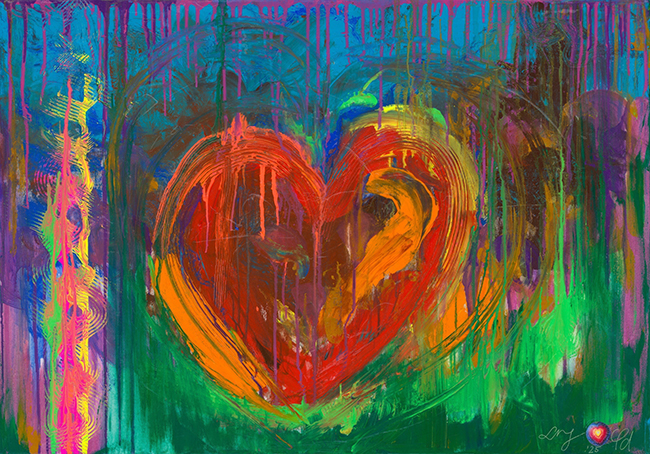
A key element within the series is the notion of “Ashaya,” a term rooted in Sanskrit that refers to intention or the inner dwelling of the heart. This concept introduces another layer to the work. It suggests that these pieces are not only visual forms but also carriers of a certain internal state. Whether one interprets this as symbolic or experiential, it adds a dimension that extends beyond the physical object.
Taken together, the seven works function as a unified exploration of emotional presence. They do not rely on complexity or spectacle. Instead, they return to something fundamental—shape, gesture, and intention. In doing so, Judit Nagy L. creates a body of work that is both restrained and open, grounded yet searching.
There is a quiet insistence throughout the series. It does not demand attention, but it holds it. The simplicity of the form allows space for depth to emerge gradually. What might initially appear direct begins to shift with time, revealing layers that are not immediately visible.
In this way, Art Together – The Call to Unite operates less as a statement and more as an invitation. It asks for presence, for attention, for a willingness to engage without expectation. And in that space, something begins to take shape—not fixed, not final, but real.
