

Nicola Mastroserio does not approach art as decoration, trend, or commercial product. His work moves in the opposite direction, away from the noise of the marketplace and toward deeper philosophical questions about existence, consciousness, and the hidden structure of reality. Rather than creating images designed to satisfy expectations, Mastroserio treats art as a form of inquiry — a way to examine what lies beneath ordinary perception. His practice is rooted in reflection and inner investigation, resisting fixed categories or simplified interpretations.
At the center of his work is a search for essence rather than appearance. He is less concerned with representing the visible world than with uncovering the unseen forces that shape human life. Through symbols, concepts, and metaphysical ideas, Mastroserio explores themes of identity, spirituality, human connection, and universal consciousness. His art becomes a meditation on what it means to exist within a larger cosmic reality.
This philosophical direction is fully realized in his work “Universal Humanity,” a project that extends beyond a single artwork into a broader vision of human existence. Through this piece, Nicola Mastroserio proposes a universal understanding of life grounded in love, peace, brotherhood, and shared human dignity.
“Universal Humanity” stands as one of Nicola Mastroserio’s most ambitious conceptual works. It is not simply a visual composition, but a philosophical statement about the meaning and value of human life. Through the work, Mastroserio attempts to redefine humanity within a universal and spiritual framework, where every individual life carries sacred significance.
At the core of the piece is the belief that every human being contains within themselves the essence of life — something absolute, inviolable, and universal. Mastroserio presents human existence not as fragmented or divided by nationality, religion, politics, or geography, but as part of a greater shared reality. In “Universal Humanity,” the individual becomes a symbol of collective human consciousness.
The artist describes each human life as sacred and indissoluble, deserving protection and elevation toward higher values such as Love, Knowledge, and Brotherhood. These concepts are not presented as abstract ideals detached from reality. Instead, they become the foundation of the work itself. Mastroserio uses art as a vehicle to propose another way of understanding human existence — one rooted in unity rather than separation.
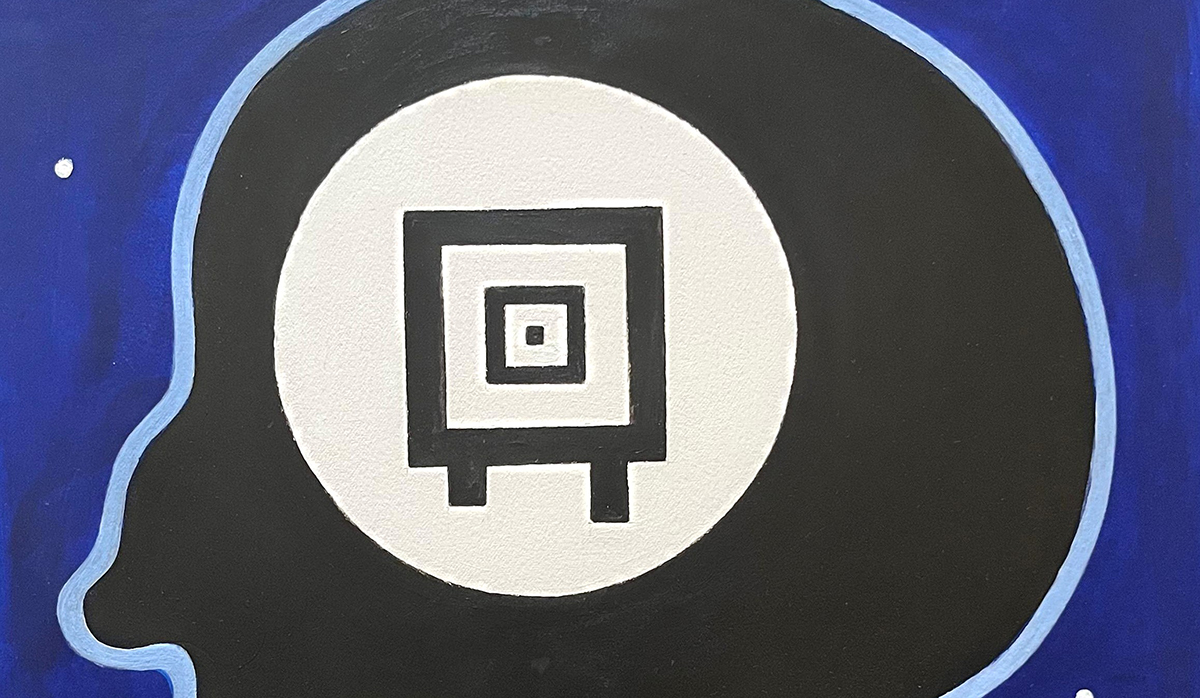
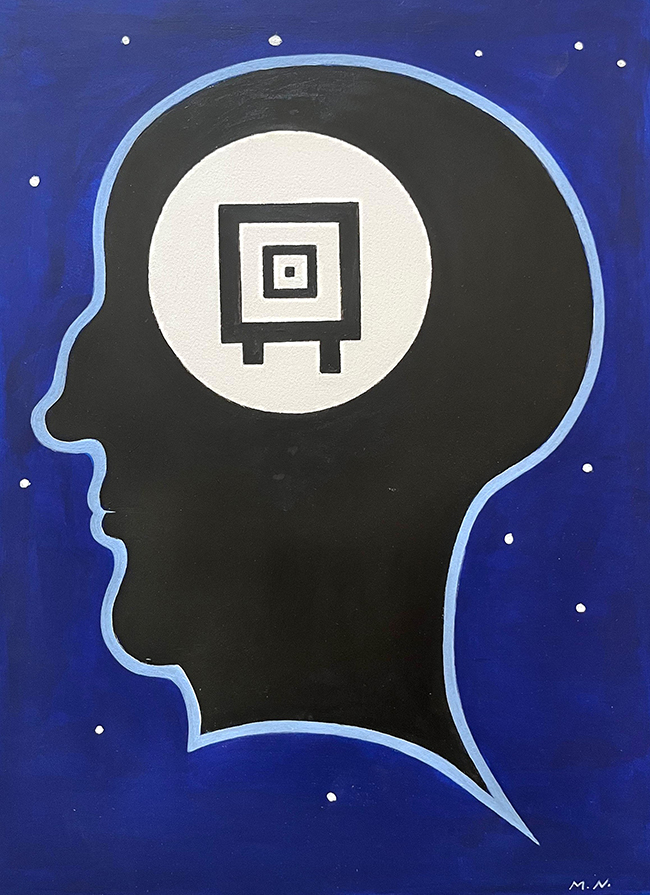
A central symbol within the work is the human profile, which the artist describes as containing the “Universal Symbol of Life.” This image becomes more than a representation of the body or identity. It transforms into a metaphysical emblem, suggesting that every person carries within themselves a sacred essence connected to a larger cosmic order. The human figure is therefore not isolated, but linked to something universal and timeless.
This idea expands further through Mastroserio’s concept of “Cosmic Universalism,” introduced through “Universal Humanity.” Cosmic Universalism proposes a borderless understanding of existence in which all human beings, and even all living creatures, share a sacred bond. The philosophy moves beyond social systems and political structures, envisioning humanity as part of an interconnected universal reality.
Rather than promoting division or hierarchy, Mastroserio’s vision insists on the equal value of every life. His work becomes an argument for human dignity on a universal scale. In this sense, “Universal Humanity” carries both philosophical and spiritual dimensions. It asks viewers to reconsider the meaning of identity, not through external labels, but through the shared essence of life itself.
The accompanying manifesto, “Imperishable – Cosmic Universalism,” reinforces these ideas with direct and meditative language. The manifesto speaks of recognizing in every human life “the universal value of life, unique, sacred, and indissoluble.” These words function almost like a declaration of principles, positioning the artwork as both artistic creation and philosophical proposition.
There is also a spiritual atmosphere surrounding the project. Mastroserio does not frame spirituality through organized religion or doctrine, but through a universal understanding of existence. Love, peace, and cosmic knowledge become recurring concepts throughout the work, suggesting that humanity has the potential to move toward a more conscious and unified state.
Visually and conceptually, “Universal Humanity” operates through symbolism rather than narrative. The work avoids literal storytelling, allowing its ideas to unfold through contemplation. This openness invites viewers to engage with the piece personally and philosophically. Rather than dictating a fixed interpretation, Mastroserio creates space for reflection about life, consciousness, and the human condition.
In many ways, the project reflects the broader direction of Mastroserio’s artistic practice. His work consistently searches for what exists beneath appearances. He approaches art not as entertainment or spectacle, but as a form of philosophical exploration. Through “Universal Humanity,” he transforms the artwork into a symbolic bridge between the individual and the universal.
Nicola Mastroserio’s vision ultimately proposes that humanity shares a deeper connection beyond the visible structures of the world. “Universal Humanity” becomes both artwork and manifesto — a meditation on sacred existence, universal identity, and the possibility of a more conscious human future.
