

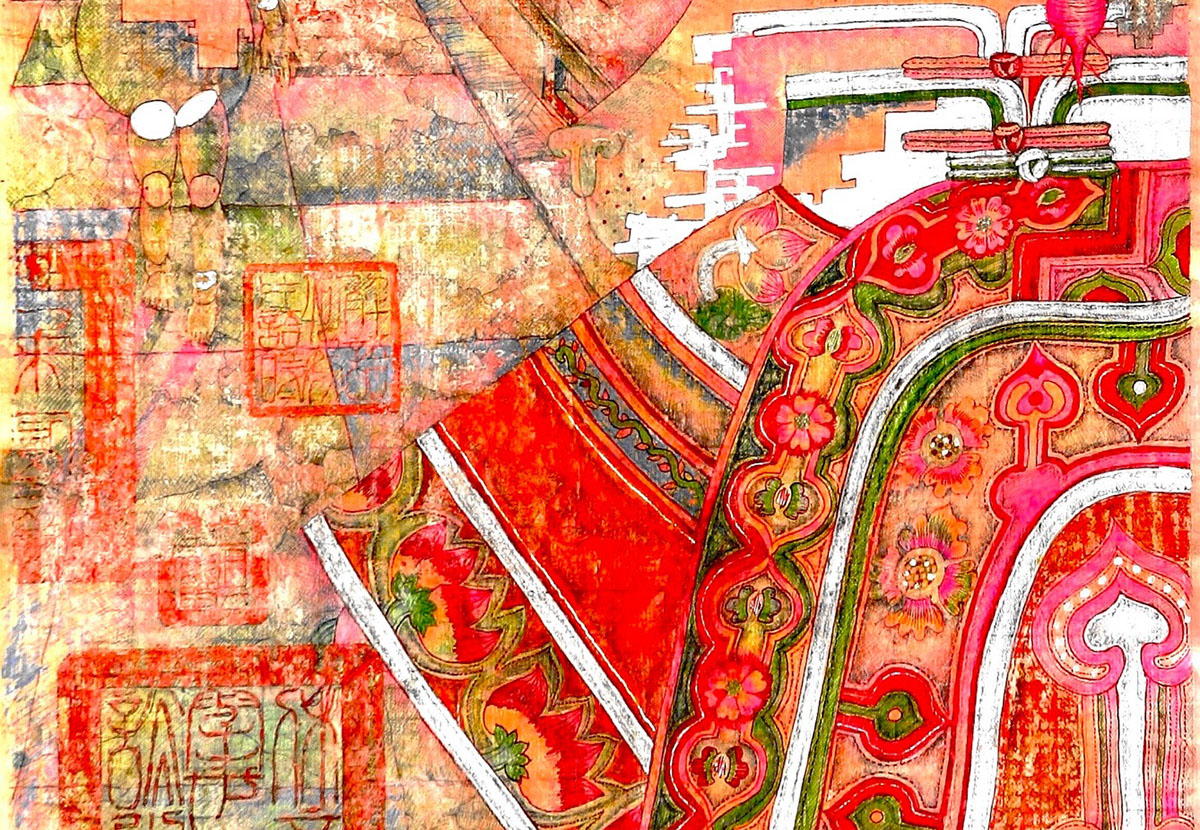
Growing up in China during a period of sweeping political and social change, Huang YI Min developed an artistic perspective deeply connected to memory, atmosphere, and emotional reflection. Born in 1950, she witnessed a society in constant transformation, experiences that continue to inform the emotional foundation of her work. For Huang, painting is not simply about depicting the visible world. It serves as a space where history, imagination, personal experience, and psychological reflection can exist side by side. The shifting cultural climate of her early years left a lasting impression on how she interprets both reality and human emotion.
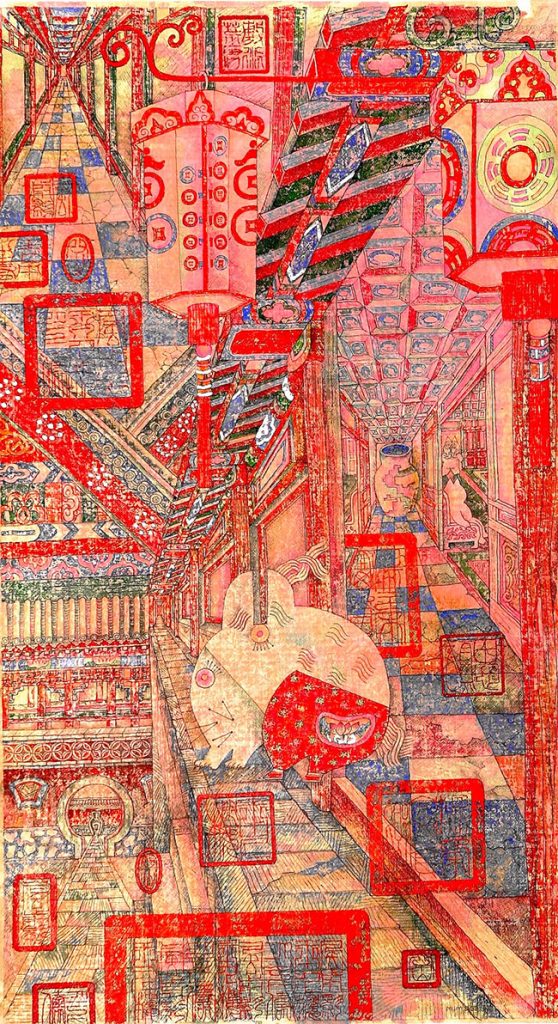
Throughout her work, Huang moves fluidly between the tangible and the imagined. Rather than drawing a clear line between reality and fantasy, she allows both states to overlap naturally. Her paintings often carry the sensation of remembered dreams, where fragments of lived experience blend with symbolism, emotion, and literary reference. Architecture, folklore, memory, and introspection become intertwined within the same visual language. Over the years, her practice has increasingly focused on the way memory reshapes itself over time — how places absorb emotion, and how history survives through mood, atmosphere, and personal recollection as much as through recorded events. This creates paintings that feel contemplative and layered, where the past quietly continues to inhabit the present.
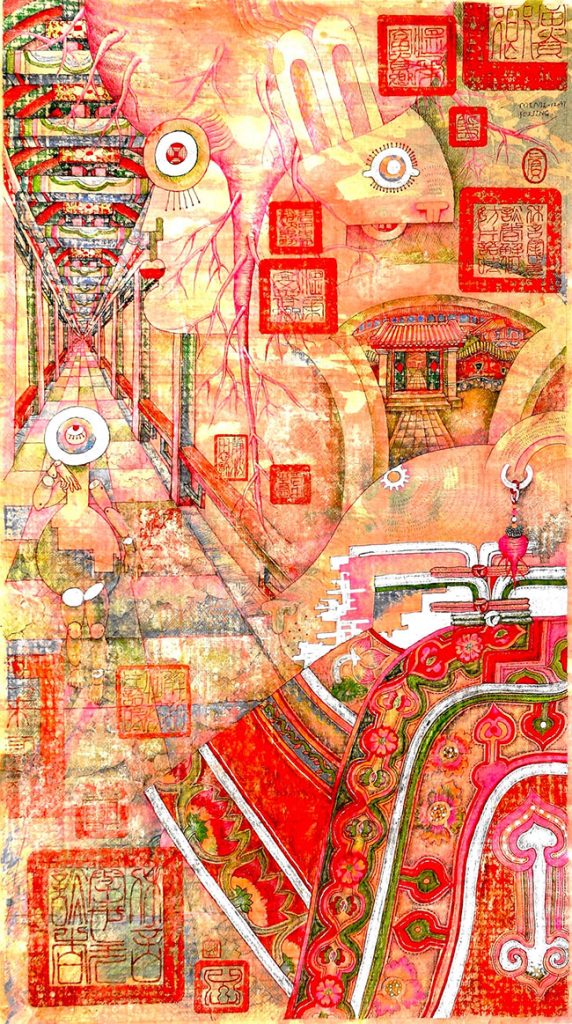
Among Huang YI Min’s most intimate and reflective series is The Red Chamber in My Dream of Painting. The body of work grew from her enduring relationship with the Chinese literary classic Dream of the Red Chamber, written during the Qing Dynasty by Cao Xueqin. Huang first read the novel as a teenager and continued returning to it throughout different stages of her life. Each reading revealed new emotional and philosophical meanings. What initially began as admiration for the novel gradually transformed into a deeper reflection on illusion, longing, memory, and the impermanence of human experience.
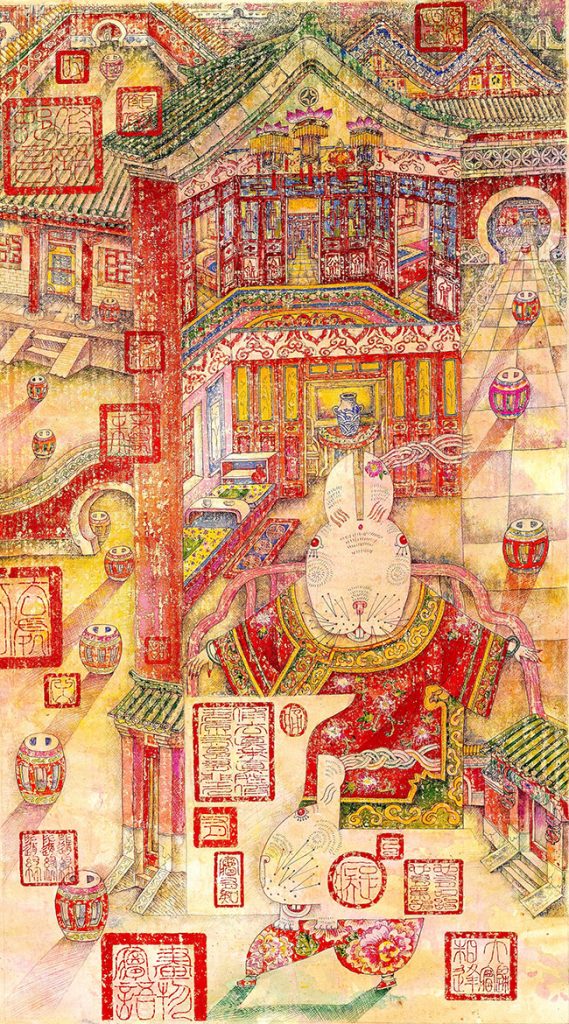
Within Chinese culture, Dream of the Red Chamber holds an almost mythic position. Cao Xueqin completed only the first eighty chapters before his death, while the remaining conclusion was finished later by an unidentified writer. That sense of incompletion deeply resonated with Huang. Rather than seeing the novel as fixed literature, she experienced it as an emotional world that changed alongside her own life experiences. Eventually, the boundaries between her personal reflections and the symbolic world of the novel began to dissolve, leading naturally toward the creation of this painting series.
An important source of inspiration emerged from Prince Gong Mansion in Beijing’s Shichahai district, a place some scholars believe may have influenced the fictional Jia Mansion described in the novel. Huang became captivated by the estate and visited it repeatedly, wandering through its gardens during both daylight and nighttime hours. The quiet atmosphere of the courtyards affected her deeply. The stillness, interrupted only by birdsong, created the sensation of entering another era. The mansion appeared suspended between reality and memory, carrying traces of a vanished world that still lingered within the architecture.
Her connection to the estate gradually became immersive. Huang formed a friendship with the caretaker and persuaded him to light every lantern throughout the garden at night. Under the warm lantern glow, the mansion transformed in her imagination into the living world of Dream of the Red Chamber. Fiction and physical space began to merge together. Stories shared by local residents further intensified the atmosphere surrounding the estate. Tales of wandering spirits and legends connected to the tragic character Qin-shi added another emotional layer to her experience of the place.
These stories became inseparable from Huang’s creative process. During winter, gatekeepers spoke of white foxes appearing in the snow-covered grounds. At a nearby Fox Immortal Shrine, local residents burned incense and prayed quietly for protection. Such moments reinforced Huang’s growing sense that the mansion existed simultaneously within history, folklore, and imagination. The estate became more than architecture; it evolved into a psychological landscape shaped by centuries of storytelling and emotional residue.
Over time, Huang became intimately familiar with every corner of the grounds. The pathways, gardens, and pavilions settled so deeply into her memory that she could envision them without physically being there. It was during her third reading of Dream of the Red Chamber that the concept for the series fully materialized. The paintings emerged from a space suspended between understanding and uncertainty, where emotional clarity and ambiguity coexist.
Huang often describes the atmosphere of the series as resembling a distant veil of pink light stretching across the horizon — an image of worldly beauty seen from afar. Yet upon closer inspection, the Red Chamber itself feels strangely hollow despite its appearance of activity and splendor. This tension between magnificence and emptiness lies at the center of the work. Celebration exists alongside loneliness. Beauty quietly carries the presence of decline.
The philosophical undertones of the novel also deeply influenced the emotional structure of the paintings. Huang recalls being haunted by passages concerning illusion, attachment, truth, and emptiness. These ideas remained with her long after reading the novel, eventually becoming central to the emotional landscape of the series. Rather than offering certainty or resolution, the paintings embrace instability and contradiction. Human emotions — desire, sorrow, love, ambition — appear fleeting and fragile, yet profoundly consuming.
Through The Red Chamber in My Dream of Painting, Huang bridges the emotional world of eighteenth-century literature with contemporary human experience. The final image she returns to is that of Baoyu walking away into an endless white landscape after abandoning worldly life. In her interpretation, this becomes more than a literary ending; it reflects the condition of humanity itself — searching, restless, burdened by longing, and moving toward an uncertain horizon. Her paintings do not attempt to solve these contradictions. Instead, they inhabit them fully, transforming literature, memory, and lived experience into quiet meditations on the fragile and passing nature of life.
