

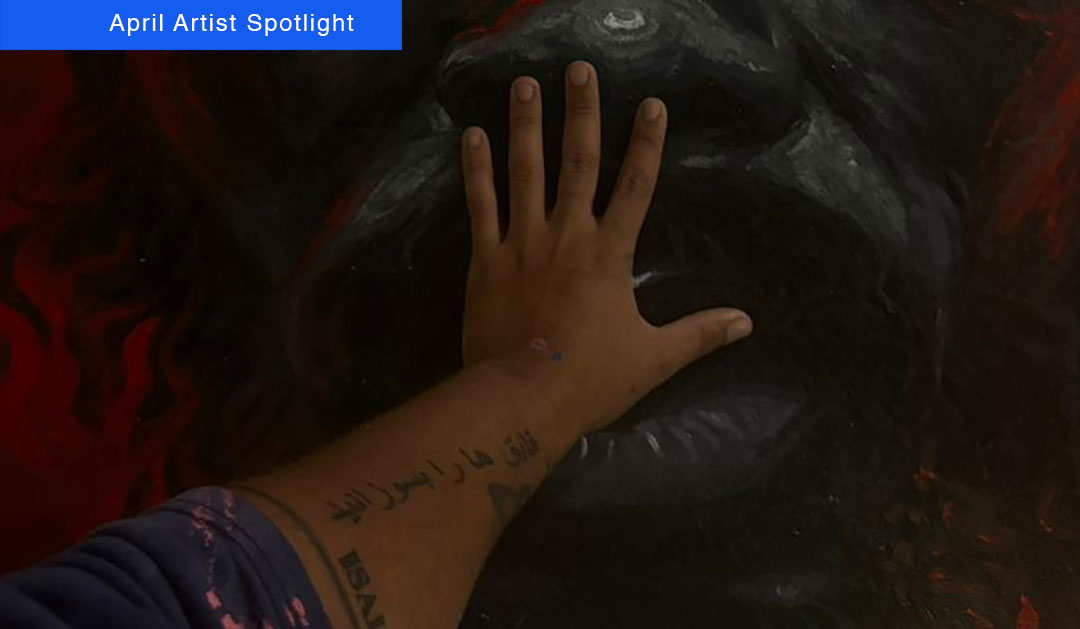
Tinashe, born in 2001 in Mutare, works from a place shaped by movement rather than stability. His life has unfolded between Zimbabwe and the United States, and that ongoing shift informs how he understands identity. Nothing in his work feels fixed. Culture, race, and gender are present, but they are not explained directly. Instead, they sit inside the image, carried through gesture, color, and atmosphere.
His paintings feel lived in. They hold experience rather than concept. Memory appears throughout, but not as nostalgia. It lingers, closer to something that stays in the body. There is also tension running through the work. It is not loud or dramatic, but it is steady. That tension is balanced by moments of care, by a softness that does not disappear even when pressure builds.
Growing up between two different environments shaped his sense of belonging. It is not anchored to a single place. It moves. That movement becomes part of the work itself. Tinashe does not try to resolve it or make it clear. He allows contradiction to remain. His paintings carry traces of leaving and returning, of distance and connection. They do not offer answers. They create recognition. Something in them feels familiar, even when it cannot be fully named.
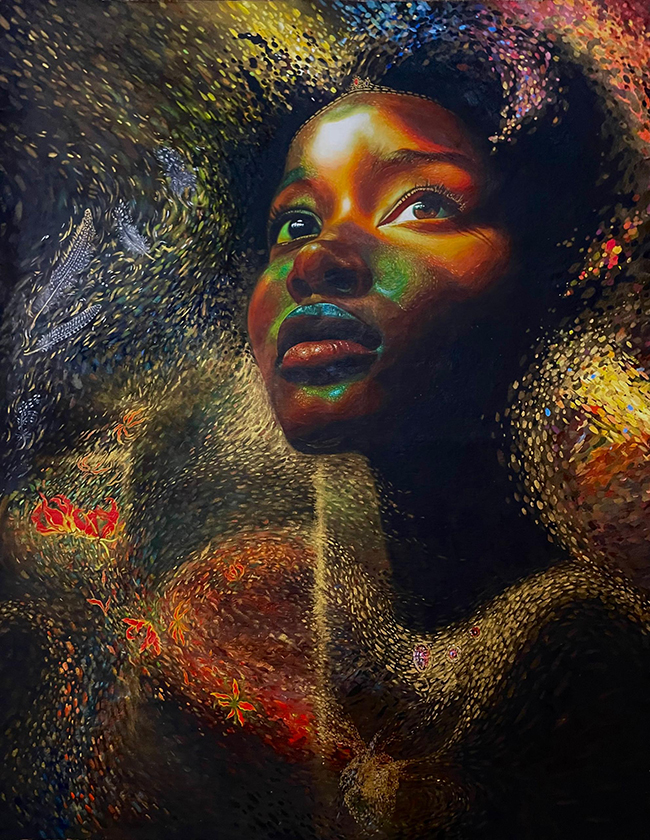
“The Smell After Rain” sits within this space of memory and connection. The painting centers on a woman whose presence feels inseparable from the land around her. She is not simply placed within the landscape. She seems to rise from it. The boundary between body and earth begins to dissolve.
The moment comes just after rainfall. That timing matters. In Zimbabwe, rain signals continuation. It marks survival. The scent that rises from the soil is not just physical. It carries memory and time. It holds what has been planted, what has grown, and what has endured. Tinashe treats the land as something active, not a passive setting.
Details within the painting ground it. Mbira music. Mango trees. Hands working the soil. These are not decorative elements. They connect the work to lived experience. The reference to magwere being planted ties the image to labor and care. It speaks to cycles that continue across generations.
The woman’s body reflects this connection. Her skin holds traces of rain and gold, but it is the red earth that defines her. She becomes part of that soil. Not in a distant symbolic way, but almost physically. She stands as growth after drought. That drought can be read in different ways. It can be environmental, but also emotional and generational.
There is a quiet sense of lineage in the work. Women before her are felt rather than shown. Mothers, grandmothers, those who carried weight and still moved forward. The idea of braiding appears as a subtle thread. It suggests care and structure. Something shaped by hand and passed down over time.
The tone of the painting remains restrained. The storm has already passed. What remains is stillness. The earth breathing. The figure held within that moment. Home appears here, but not as a fixed place. It feels closer to recognition. A sense that identity is tied to origin, even when life moves elsewhere. Tinashe does not force this idea. He allows it to settle.
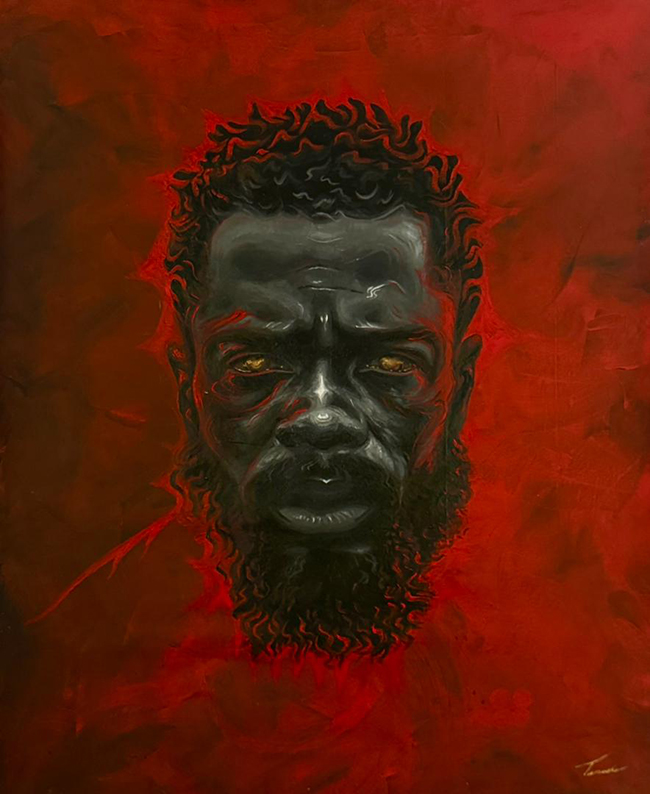
If “The Smell After Rain” leans toward connection, “man” turns toward pressure and containment. The shift is immediate. The figure does not open outward. He holds everything in.
There is tension in that stillness. The figure is not relaxed. He is controlled. That control feels learned over time. The painting suggests expectations tied to masculinity. Strength. Silence. Endurance. These ideas are not written out, but they are present in the body, shaping posture and expression.
The red background intensifies the atmosphere. It does not sit behind the figure. It surrounds him. It becomes an environment filled with weight. The pressure feels both personal and inherited.
Silence becomes central here. Not as absence, but as restraint. The sense of a scream that never leaves the body sits within the work. That silence carries grief, fear, and tension all at once. It is dense rather than empty.
The idea of carrying love like a wound shifts the emotional tone. It introduces vulnerability, but one that cannot be expressed openly. Softness exists, but it is hidden, treated as something that must be controlled. This creates a divide between what is shown and what is felt. The exterior remains composed, while the interior continues to build.
The eyes interrupt that control. There is a flicker there. Not simple hope, but something more layered. Anger, tenderness, resistance. A refusal to fully shut down. That detail keeps the figure from becoming static. It suggests something remains active beneath the surface.
The work does not resolve this tension. There is no release offered. That feels intentional. Tinashe allows the pressure to remain. He asks the viewer to sit with it rather than move past it. The recognition the painting received, including the Bests Art Awards, brings visibility, but it does not define the work. Its strength sits in its directness.
Across both paintings, the body becomes a place where larger ideas are held. In one, it merges with land, memory, and continuity. In the other, it carries expectation, silence, and pressure. Together, they show a range rooted in experience rather than style.
Tinashe does not simplify what he is exploring. He keeps it layered. That is where the work holds its presence.
