

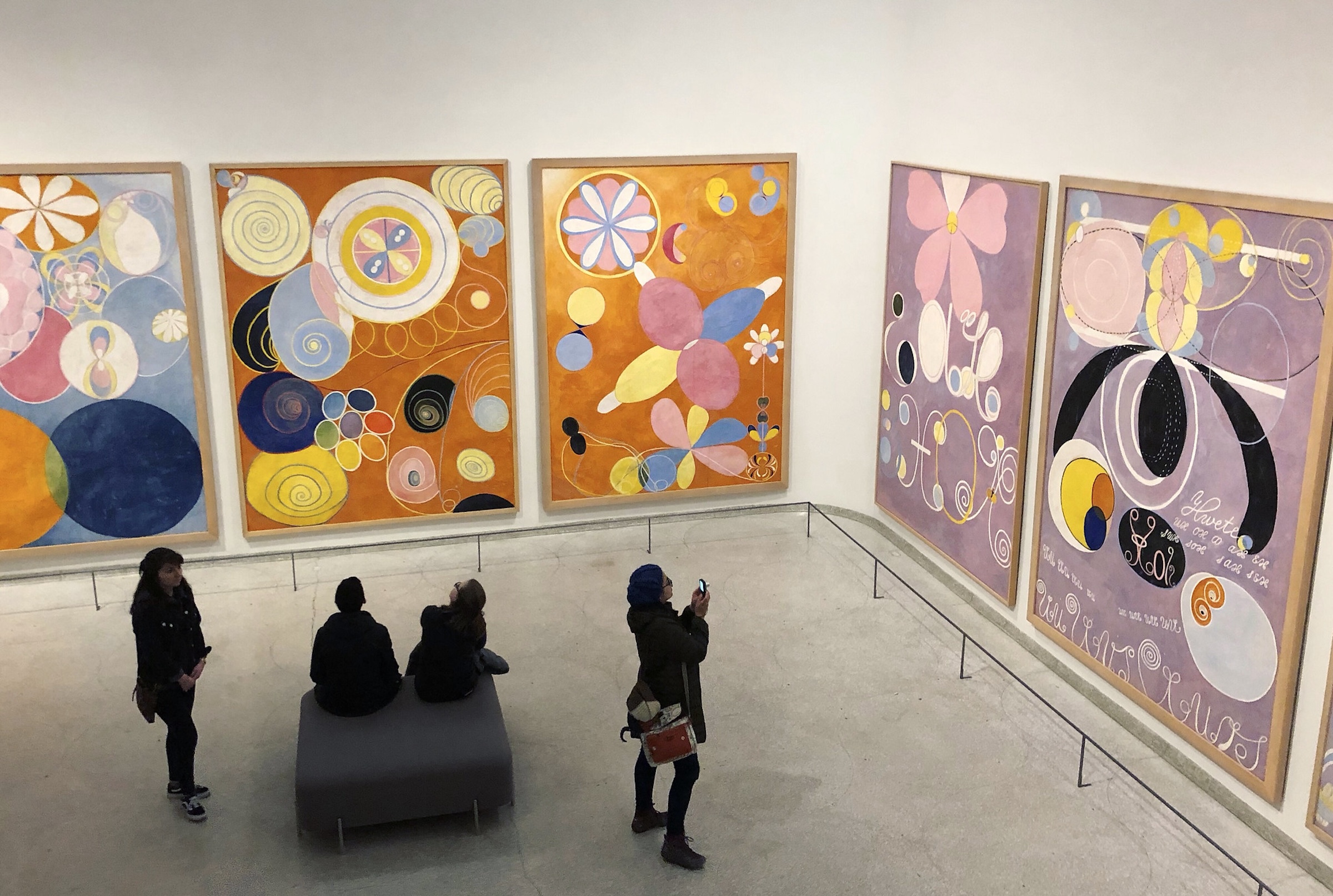
Descendants of late Swedish abstract painter Hilma af Klint have expressed concerns about a possible deal between the foundation that manages her artistic estate and David Zwirner Gallery, citing There is a risk of “commercialization” in her work. Erik af Klint, chairman of the board of directors of the Hilma af Klint Foundation and the artist’s great-grandson, called the deal a “hostile takeover” and initially Reported by the foundation guardian.
Eric was the only one of the five board members to vote against Zwirner’s proposal to become the foundation’s representative gallery. In 2022, Zwirner orchestrated the acquisition of a series of eight Hilma paintings by the Glenstone Museum knowledge tree (1913-15) after exhibitions at the gallery’s New York and London locations.
The foundation’s charter when it was created in 1972 outlines af Klint’s 193 activities temple paintings (1906-1915) series cannot be sold or distributed at any time, but works dating from 1916 to her untimely death in 1944 may be sold with consideration in order to fund the preservation of the 1,300 works held in the trust of the Foundation.

Erik and Johan af Klint, the artist’s grandnephew and former chairman of the foundation, told the media guardian Hilma’s series of works have a spiritual dimension that differs from those of her colleagues and upcoming abstractionists, and therefore must be preserved and viewed together as intended.
Hilma af Klint is closely associated with Theosophy, Anthroposophy, Rosicrucianism, mystical practices and mysticism for the geometric and biomorphic themes of her work, elements of the natural world, and illustrations The juxtaposition of imagery with the natural world is widely considered a precursor to abstraction in visual art. Automatic tagging. The artist rarely exhibited her work because she believed the world was not ready for her subject matter and practice, and she stipulated in her will that her paintings could only be exhibited 20 years after her death.
“The paintings are related to each other, and selling some paintings in a series interrupts that relationship,” Eric told the New York Times. guardianwhile John claimed the potential deal was a “plunder of the foundation.”
David Zwirner refuted the accusations, telling the outlet, “There was a power struggle within the board – a standoff between four board members and one board member who was trying to undermine them.”


Right: Hilma af Klint, “Altarbild Group X, No. 1, Altarbild Group X, No. 1” (1915)
(Both images are from Wikimedia Commons)
in response allergicIn response to a request for comment from Zwirner, a spokesperson for Zwirner said it was in “intensive discussions” with the foundation to represent the artist’s legacy and “form a long-term partnership aimed at further expanding Hill’s legacy.” The Global Legacy of Ma’Af Klint.”
The spokesperson also noted that new research and publications surrounding Hilma’s practice are in progress, including an upcoming English translation Hilma Af Klint and Wassily Kandinsky: Dreams of the Future 2025 Catalog.
In recent years, Aph Klint’s descendants have objected to the commercialization of her work. In 2022, Johan and the artist’s great-granddaughter Hedvig Ersman spoke out against the creation and sale of 162 NFTs temple paintings series, despite the Foundation entering into a non-commercial agreement with one of the entities participating in the project.
The Hilma Af Klint Foundation has not responded yet allergicinquiry.
