

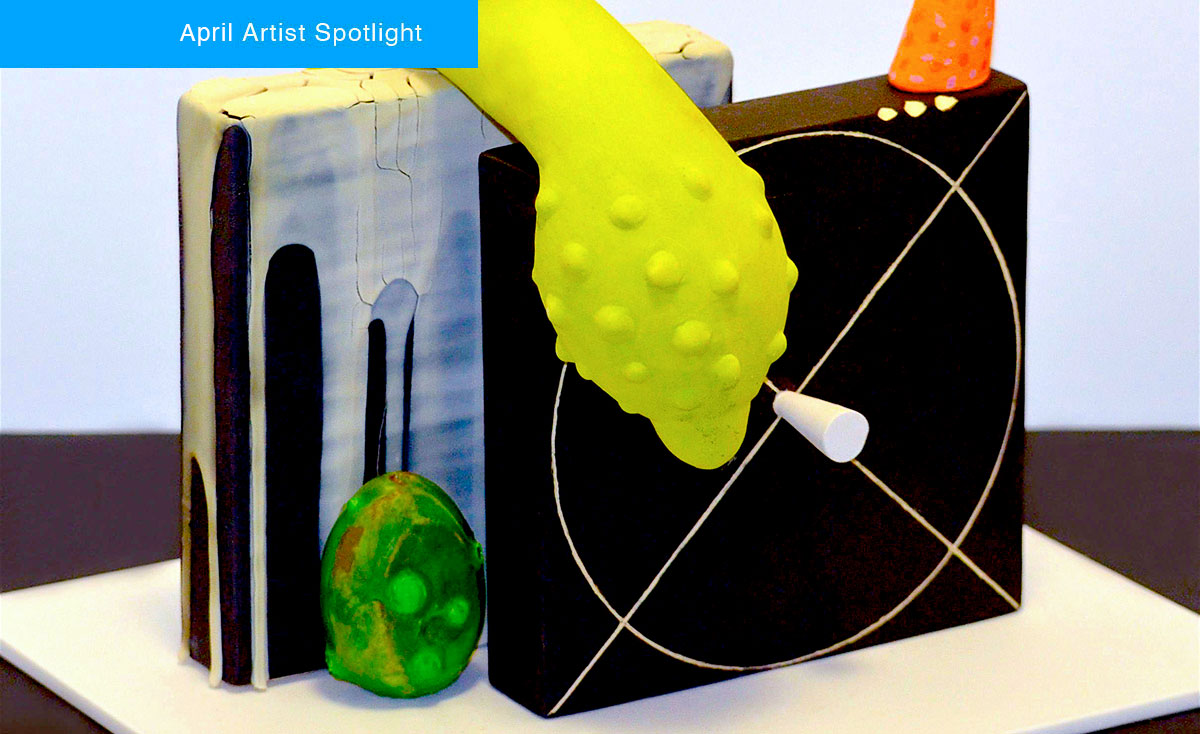
Sylvia Nagy works in a space where making and thinking are inseparable. Her practice brings together the clarity of design with the openness of fine art, allowing precision and intuition to operate side by side. With a background spanning industrial design and ceramics, she approaches material not just as a physical medium, but as a way of testing ideas. Her studies at Moholy-Nagy University of Art and Design in Budapest, where she completed an MFA in Silicate Industrial Technology and Art, gave her a strong grounding in fabrication and process. That technical base later extended through her involvement with Parsons School of Design in New York, where she taught and developed a course on plaster mold model-making. In that context, a traditional technique became a platform for contemporary thinking. What runs through her work is this balance: a hands-on, material-focused approach that remains rooted in the studio while opening outward to questions about perception, systems, and a world in constant motion.
The Work
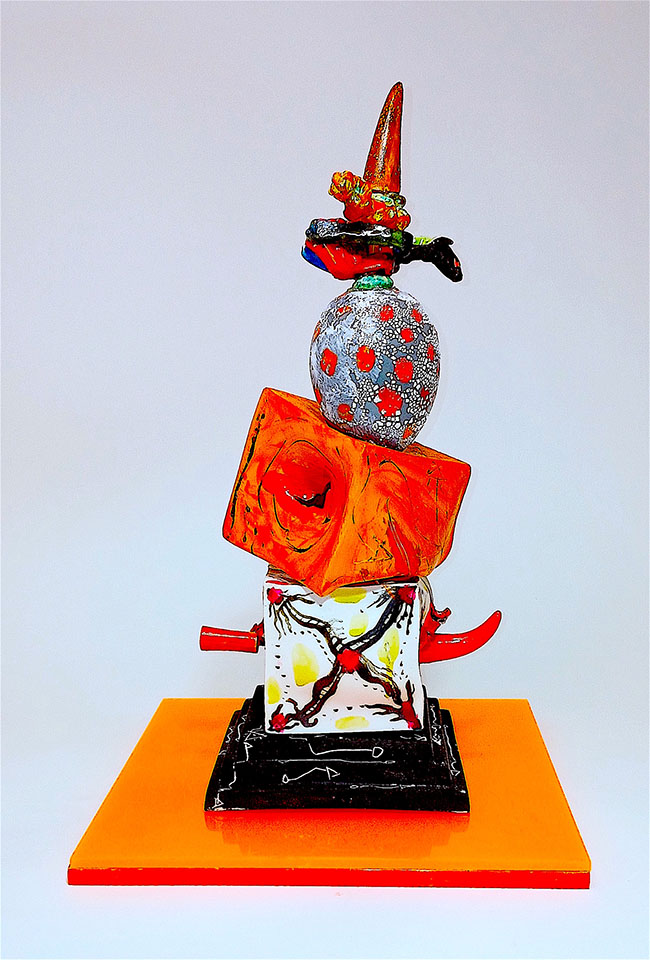
Sylvia Nagy’s work revolves around an ongoing effort to grasp how reality is constructed, disrupted, and reshaped. The phrase “work in progress” extends beyond a simple description—it reflects a broader way of seeing the world. Her pieces often appear as fragments, parts of something larger that remains incomplete or unseen. What is presented is only one layer within a more complex structure, suggesting that reality itself is never fixed, but continuously shifting under the influence of memory, perception, and external forces.
A key idea in her practice is that we rarely encounter anything in its entirety. Instead, we work with partial information, filling in gaps with assumptions, imagination, or belief. This becomes central to how her works are experienced. Like an unfinished puzzle, they invite viewers to complete what is missing, to build connections that are not explicitly given. Meaning does not arrive fully formed. It develops through engagement, shaped by the viewer’s own perspective. In this way, her work avoids a single, stable interpretation and remains open, changing with context and viewpoint.
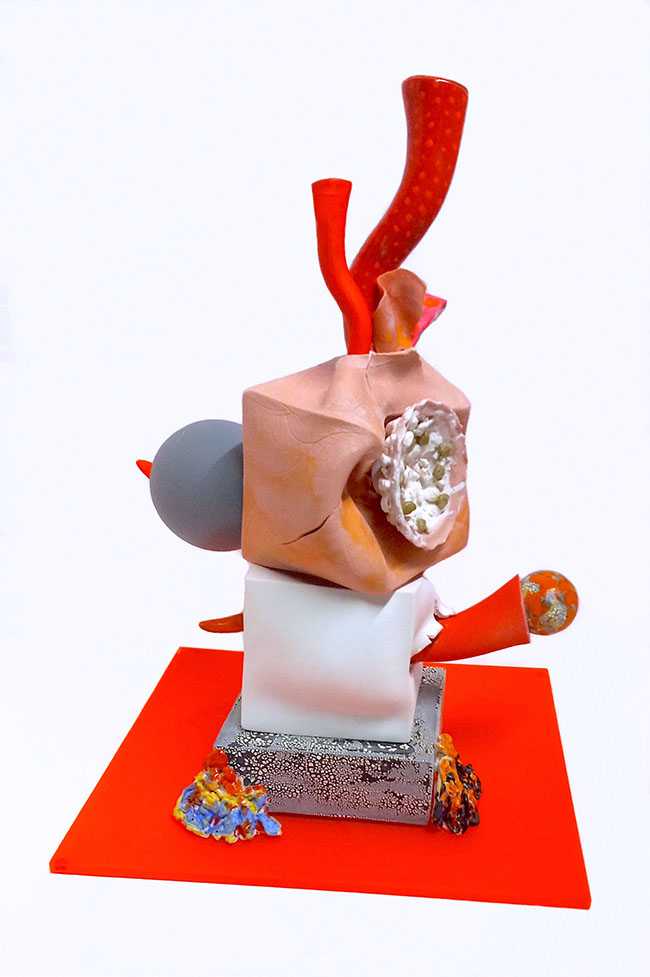
This openness reflects how Nagy understands the world itself—as a network of overlapping systems that include personal experience, cultural frameworks, and global forces. These systems do not align neatly. They intersect, conflict, and produce unexpected outcomes. Rather than simplifying this complexity, her work allows it to remain visible. The forms she creates hold these tensions, reflecting the uncertainty and instability that define contemporary life.
Perspective is central to this approach. Nagy often considers how the same subject changes when viewed from different positions—whether from above, below, or within. Each viewpoint reshapes understanding. What once seemed stable becomes fluid. This shift is not only visual but conceptual, suggesting that meaning is always tied to position. A landscape seen from afar carries a different sense than one experienced up close. Her ceramic and sculptural works operate in a similar way, offering different readings as the viewer moves around them.
Language follows this same instability. Words shift meaning depending on context, culture, and experience. What appears clear in one situation can become uncertain in another. Nagy does not try to resolve this ambiguity. Instead, she incorporates it, allowing uncertainty to remain part of the work. This reflects her interest in how information is formed, interpreted, and transformed as it moves through different systems of communication.
Her work also responds to the pressures of a rapidly changing world. Social tensions, global events, and shifting conditions enter her process not as direct subjects, but as underlying influences. These forces are absorbed and translated through abstraction. The act of making becomes a way to process emotional responses to these changes. Rather than depicting specific events, her works create spaces where these experiences can be sensed in a more indirect and open way.
Within this, Nagy occupies a dual position. She is both involved in and distanced from the systems she examines. She observes, trying to understand broader patterns, while recognizing that complete understanding remains out of reach. This position allows her to step back and consider larger structures, while still remaining connected to personal experience. Her work moves between these states, balancing closeness with distance, and reflection with observation.
Material plays a key role in expressing these ideas. Her use of ceramics and sculptural processes is closely tied to her thinking. Clay, with its capacity for change and responsiveness, mirrors the instability she explores. Each stage—forming, casting, firing—introduces variations that cannot be fully controlled. These shifts become part of the final work, reinforcing the sense that outcomes are never entirely predetermined.
Her earlier works often take on new meanings when revisited. This return reflects her sense that history does not repeat exactly, but reappears in altered forms. What once carried a certain meaning can shift under new conditions. Her practice allows for this ongoing reinterpretation, where works remain open and capable of change over time.
In the end, Sylvia Nagy’s work does not attempt to define reality, but to engage with its uncertainty. Her sculptures and ceramic forms become meeting points where perception, memory, and external systems intersect. Rather than resolving these layers, they hold them in tension. The result is a space for reflection, where the viewer is invited to consider not only what is seen, but how it is formed—and how it continues to shift.
