

From an early age, Der Poeck discovered the joy of drawing through the encouragement of his mother, who introduced him to art when he was just ten years old. Although drawing became a familiar part of his childhood, color entered his creative life much later. Looking back, he sees his father’s passion for oil painting during the 1990s as an important influence. Although family responsibilities eventually required his father to set painting aside, his dedication left a lasting impression. Fascinated by color but not yet ready to pursue it himself, Der Poeck waited until 2010 before beginning his own journey as a painter. Entirely self-taught, he developed his artistic voice through experimentation, reflection, and the writings of psychologist Carl Gustav Jung. Jung’s exploration of symbols, the unconscious, and personal transformation became an important source of inspiration, helping him approach painting not simply as image-making but as a way of exploring inner experience. Today, his paintings invite viewers into contemplative spaces where emotion, intuition, and imagination merge into expressive abstract compositions.
Healing Pictures / Series 1
The works in Healing Pictures / Series 1 unfold like emotional landscapes rather than traditional abstract paintings. Instead of presenting clearly defined subjects or recognizable forms, Der Poeck creates immersive fields of color that encourage viewers to slow down and experience the paintings on an emotional level. Each composition feels organic, as though it has grown naturally across the canvas, with colors gently overlapping, dissolving, and reappearing in new relationships.
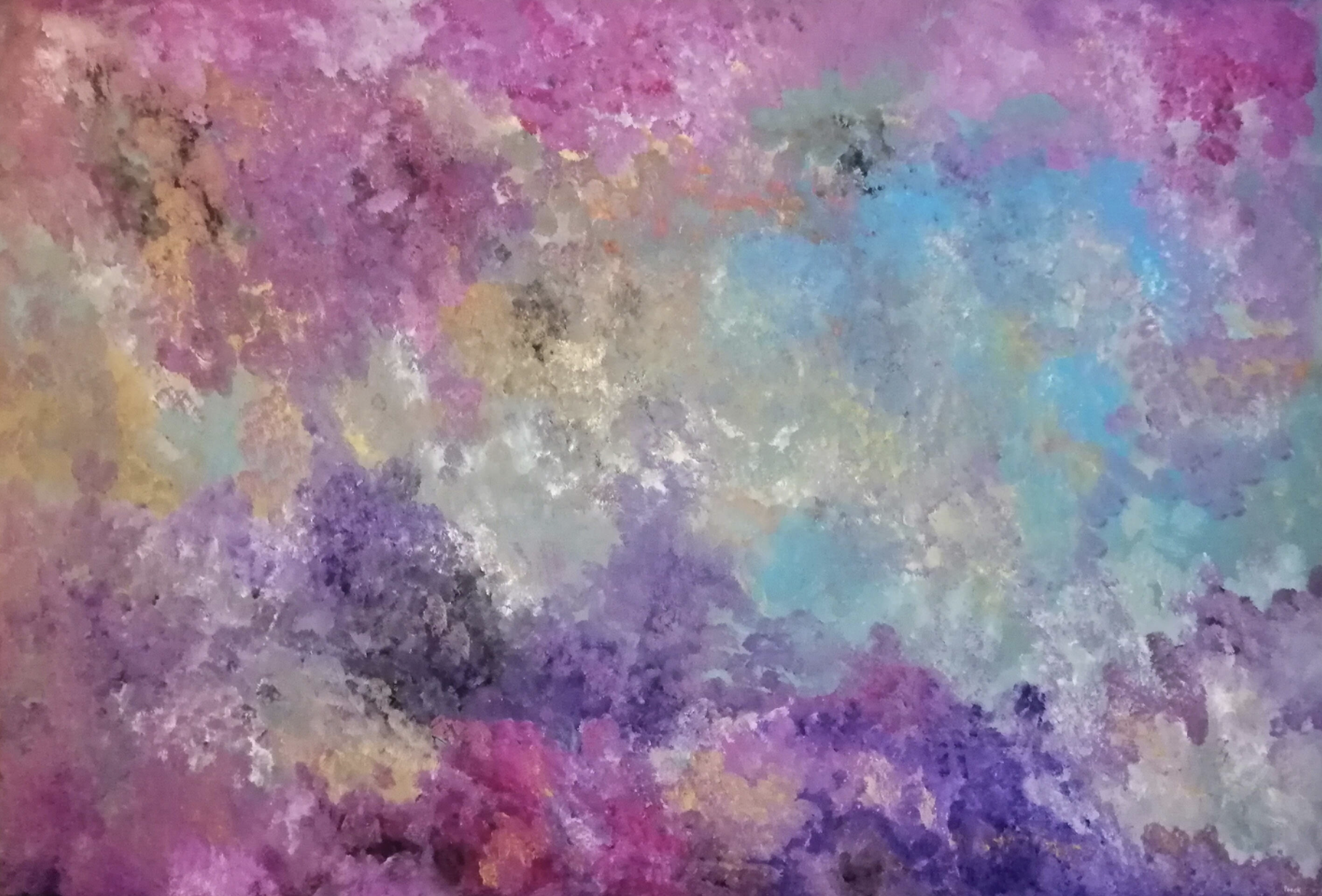
One of the defining qualities of this series is its remarkable use of color. Soft violets, luminous pinks, delicate blues, muted golds, pale greens, and gentle greys blend into one another without harsh boundaries. Rather than relying on strong geometric structure, the paintings breathe through countless layers of translucent color, creating surfaces that feel atmospheric and alive. This gradual transition between tones gives each work a quiet rhythm that encourages prolonged observation.
Texture also plays a significant role throughout the series. The layered application of paint creates subtle depth, allowing areas of the canvas to appear as though they are emerging from mist while others quietly recede into the background. Instead of dramatic contrasts, Der Poeck builds visual interest through accumulation. Every mark contributes to an evolving surface where no single element dominates, creating an impression of continuous movement and gentle transformation.
Although completely abstract, the paintings often evoke natural associations. Viewers may imagine flowering gardens, drifting clouds, underwater currents, mineral formations, or distant galaxies. These suggestions are never literal, allowing each individual to bring personal memories and interpretations into the experience. The paintings remain intentionally open, making space for emotional reflection rather than directing a fixed narrative.
The title Healing Pictures offers an important clue to the intention behind the work. Healing is approached not through illustration but through atmosphere. The soft transitions, balanced compositions, and harmonious color relationships create an environment that feels calm and restorative. Rather than demanding immediate attention, the paintings invite quiet contemplation, encouraging viewers to pause, breathe, and become aware of their own emotional responses.
This reflective quality echoes the influence of Carl Gustav Jung on Der Poeck’s artistic development. Jung believed that symbols and images could provide access to deeper layers of the unconscious, revealing aspects of the self that words alone cannot fully express. While Der Poeck’s paintings avoid direct symbolic imagery, they embrace this psychological openness by creating visual experiences that encourage introspection. The abstract forms become spaces where viewers may encounter their own thoughts, memories, and emotions without predetermined meaning.
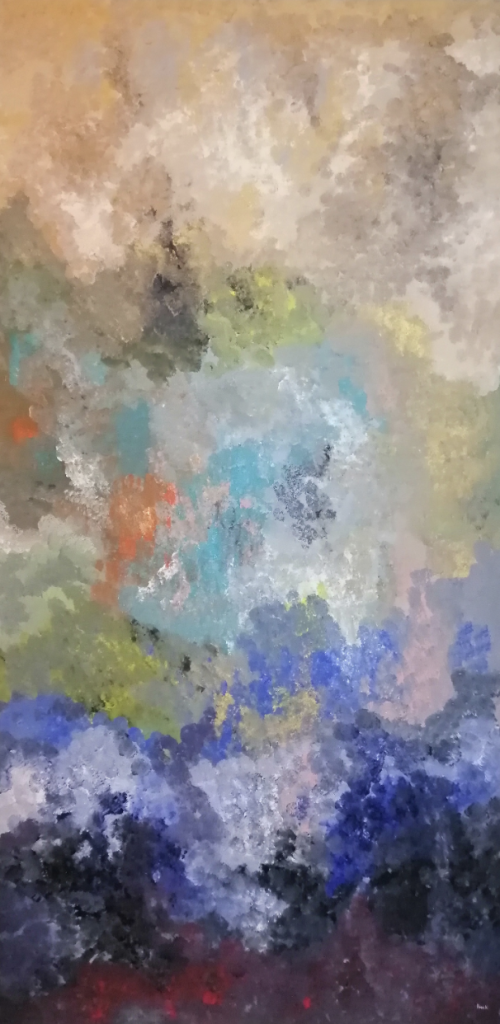
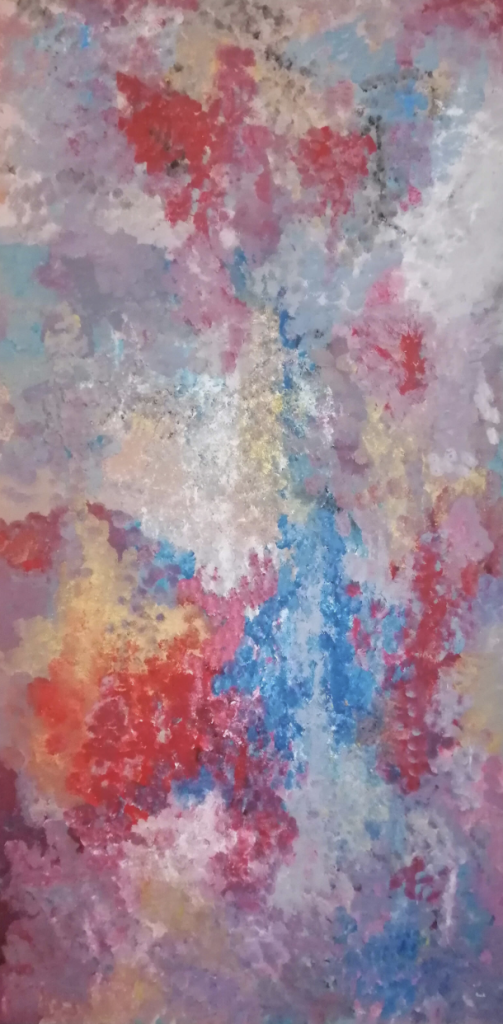
Across the three works in this series, there is also a noticeable variation in emotional tone. One painting is filled with luminous pinks and purples that generate warmth, softness, and optimism. Another introduces more muted earth tones and cooler blues, producing a quieter, meditative atmosphere that feels grounded and reflective. A third composition incorporates vibrant reds and brighter turquoise accents, bringing greater energy while maintaining the overall sense of harmony. Together, these variations demonstrate Der Poeck’s sensitivity to the emotional qualities of color and his ability to communicate different states of feeling without relying on representational imagery.
The paintings possess a remarkable balance between spontaneity and control. Their cloud-like formations appear intuitive, yet the distribution of color, light, and texture reveals thoughtful compositional decisions. Areas of brightness naturally guide the eye across the canvas before dissolving into softer passages, creating a visual rhythm that feels both fluid and carefully considered.
Perhaps the greatest strength of Healing Pictures / Series 1 lies in its generosity toward the viewer. These works do not require specialized knowledge or theoretical explanation to be appreciated. Instead, they offer space for personal reflection, allowing every individual to experience the paintings according to their own emotions and memories. Some may discover comfort, others renewal, and still others a sense of peaceful contemplation.
Through delicate layering, intuitive abstraction, and a deeply personal exploration of color, Der Poeck transforms painting into a quiet visual meditation. Healing Pictures / Series 1 demonstrates how abstract art can move beyond representation to create meaningful emotional experiences, reminding us that healing can sometimes begin with nothing more than color, light, and the willingness to simply look.
