

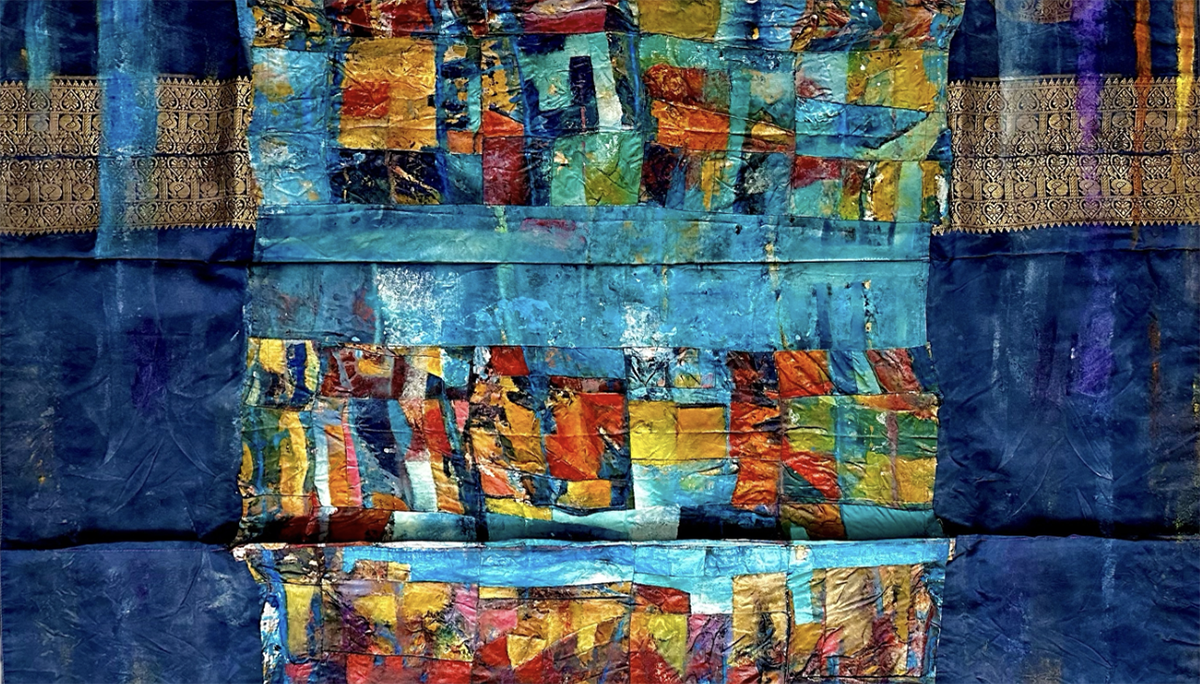
For Miguel Barros, art serves as a way to explore the connections between humanity, nature, and the changing world around us. Born in Lisbon in 1962, he has lived across cultures and continents, holding citizenship in Portugal, Canada, and Angola. In 2014, he settled in Calgary, Alberta, where new surroundings influenced the continued development of his artistic practice. Having earned a degree in Architecture and Design from IADE Lisbon in 1984, Barros approaches painting with an eye for balance, form, and spatial relationships.
We are delighted to speak with Miguel Barros and explore the experiences, influences, and ideas that have shaped his artistic practice.
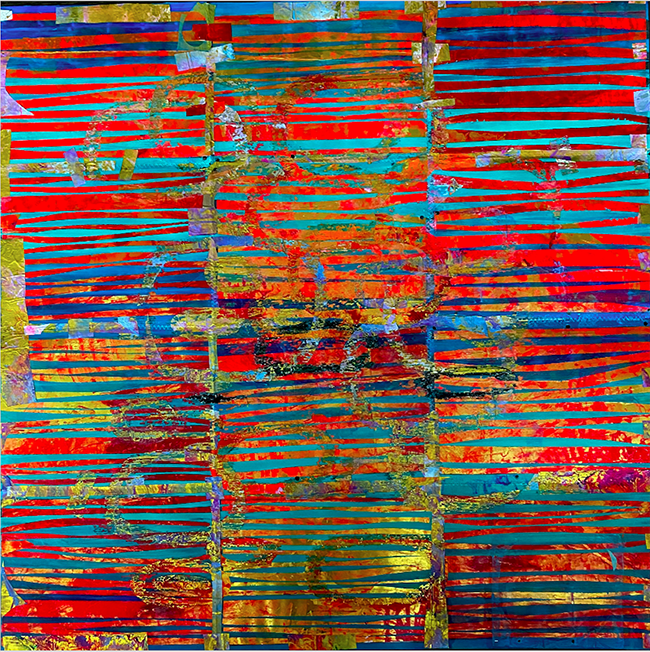
1. Can you tell us about your artistic journey and what first inspired you to become an artist?
From my earliest childhood memories, I have always felt a kind of magic in color. It was an attraction that was difficult to explain: when I picked up colored pencils and drew or painted, my sense of satisfaction was such that I would forget everything around me. It was as if I were flying on a magic carpet, in a fantasy world that filled me with immense inner joy, immersed in a universe I was constantly inventing, made of stories and imagination that always accompanied me.
Perhaps that is why I have never truly felt alone, even while living in a house full of siblings, family, and friends. What I truly enjoyed was that space of color, where, today, I can better understand the reasons behind my world and my refuge.
Perhaps what led me to dedicate my entire life to painting was a deep feeling of searching for inner and personal fulfillment. A path in which pleasure, harmony, and the overcoming of conflicts are part of the very act of creating, of reinventing worlds and seeking the essence of the human being, in an endless quest that leads me to believe that each of us carries a goodness and a uniqueness that should never be underestimated.
Through painting, I can reach moments of contemplation and meditation, in which I find answers to essential questions about life, about people, and about the lack of affection that so often generates suffering and emptiness in the soul.
Color, to which I owe so much of who I am today, was decisive in the conscious choice to live my life around art. I reinvent realities and, in each painting, I create, I always take a journey into my deepest memories and everything I have lived through.
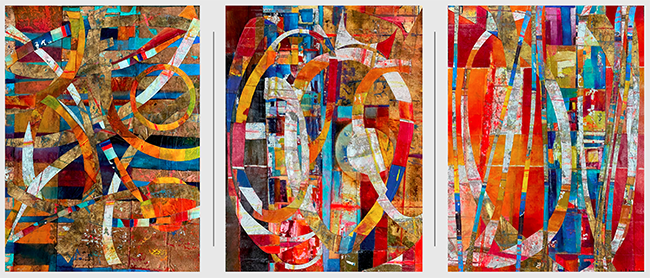
2. What themes, ideas, or experiences most influence your work, and how do they shape your creative process?
The different cultures and traditions of human beings around the world reveal an immense richness of experiences, knowledge, and ways of living. The possibility of learning from this diversity, from such distinct customs among peoples, is based on a common desire that runs through all societies: the pursuit of peace and the well-being of each family unit.
In every culture there exists a universal longing that unites humanity, the desire to live in harmony, sharing life with joy, color, and the emotional memory of those who have already passed away, remembered with longing and love.
Within this universal concept, a profound, almost aesthetic beauty can be recognized, made up of balances and contrasts, where, despite differences, the idea of “good” tends to prevail. This invisible aesthetic of similarities and differences is, for me, an inexhaustible source of inspiration, feeding the hope that one day we will be able to fully respect the diversity that, in truth, complements and enriches us internally.
Nature is part of the human being, just as the human being is part of Nature. This relationship is, for me, essential in the development of my artistic practice as a painter. If we consider that each of us is only a small part of a universal whole that is Nature, perhaps we can imagine a more balanced world, where conflicts and wars give way to a deeper awareness of a shared belonging.
Human beings and Nature are, without a doubt, my greatest influences and sources of inspiration in my artistic process. It is from this relationship that I develop and explore my personal experience, built through knowledge of the world, travel, social connections, and the constant desire to find love among all of us, in caring, respecting, and sharing.
3. Can you share the story behind one of your recent artworks and what it means to you?
The Painting “Pilgrimage Across the Universe”
In this painting, the act of painting becomes a space of observation and attentive listening to the human condition. Life, in its experiences, marks, and lasting traces, constitutes the essential material of the pictorial gesture.
The work emerges as a fragment of memory, in which lived experience is transformed into visual language. The depicted faces and bodies do not ask for compassion nor call for judgment; instead, they affirm the presence of time inscribed in signs of abandonment, in gazes, and in expressions shaped by a deeply human temporality. Among these figures, shadows emerge, souls in passage, crossing their destinies as if moving through invisible landscapes, leaving behind traces of memory and experience.
The characters inhabiting this painting also reflect the richness of the different origins, cultures, and traditions that compose humanity. In the diversity of their paths, distinct yet equally valuable stories can be recognized, interwoven into a shared narrative of belonging and exchange. Each face carries cultural heritage, knowledge, and lived experience that enrich the human fabric and remind us that difference is not a barrier, but a source of encounter, dialogue, and learning.
My work is drawn to the tension between the passage of time and the persistence of an inner vitality, still perceptible in the wrinkles that reveal depth, resilience, and lived experience. The figures and shadows present in this painting are not isolated individuals, but reflections of a shared human condition, shaped simultaneously by pain and joy, loss and fulfillment.
More than an individual portrait, this painting invites reflection on our condition as travelers through time. The encounters expressed through hands, gestures, and embraces emerge as essential manifestations of belonging, resistance, resilience, and courage, the courage of those who persist despite adversity and moments of darkness, where hope ultimately restores color to life.
In a world marked by the plurality of identities, beliefs, and traditions, this work seeks to affirm diversity as a path toward mutual respect, dialogue, and harmony among peoples. By recognizing the dignity present in every human experience, it celebrates what distinguishes us, but above all what unites us, the capacity to understand, embrace, and build bridges between different cultures, transforming coexistence into an expression of shared humanity.
4. What are you currently working on, and what do you hope people take away from your art in the future?
At this moment, I am developing my next artistic project, scheduled for 2027 and to be presented in Lisbon, Portugal, dedicated to the theme of the Oceans.
This is a collection of works that seeks to explore and reflect on the impact of human activity on marine ecosystems, with a particular focus on plastic pollution and its consequences for biodiversity and for the planet’s balance.
The central message of this project is linked to the growing pressure that the oceans currently face, because of climate change and, above all, the massive accumulation of plastic waste.
My artistic journey has taken me across different geographies and cultural contexts, from Portugal to India, through Angola, and more recently Canada. These experiences have allowed me to develop a visual language based on color, texture, and the observation of the relationship between human beings and their surrounding environment.
By settling in Canada, I found a new context that further reinforced the need to address environmental issues of global scale through art. My work has been guided by a continuous reflection on the relationship between humans and Nature, particularly on how this relationship has been deteriorating.
Throughout my artistic research, I have deepened my understanding of the current state of the oceans, realizing that these systems, essential to life on Earth, are under increasing threat. Despite their seemingly limitless scale, the oceans prove to be extremely vulnerable to human action.
Plastic pollution and chemical substances constitute one of the greatest contemporary threats, affecting biodiversity, contaminating food chains, and causing profound changes in marine ecosystems. However, despite the severity of this reality, there remains a significant gap between scientific knowledge and public awareness of the problem.
It is precisely within this space that I identify the role of art.
With this project on the Oceans, I aim to;
• Raise public awareness of the impact of marine pollution;
• Translate scientific data and issues into an accessible visual language;
• Create an emotional connection between the viewer and the ocean;
• Promote critical reflection on consumption habits and collective responsibility.
As an artist, I recognize that I do not operate within the scientific field, but I deeply believe in the capacity of art as a tool for communication, awareness, and social transformation. Art allows the creation of a universal language, capable of transcending cultural, linguistic, and academic barriers.
The works that are part of this project explore the duality between beauty and degradation. In my paintings about the Oceans, I seek to represent the apparent purity and fluidity of the seas, contrasting it with visual elements that evoke the invisible but constant presence of plastic.
I approach, in a metaphorical way, the idea that beneath an aesthetically appealing surface there are hidden and dangerous dynamics, pollution, microplastics, and ecological imbalance. The aim is to create a confrontation between what we see and what we know, encouraging the viewer to question a reality that is often invisible.
During the exhibition, I would like to observe how the public reacts to the works, emotionally, reflectively, and critically. If visitors associate personal memories with the sea and simultaneously express concern for its future, I consider that the essential intention of my artistic purpose will have been achieved. And if that emotional connection transforms into awareness, then it may also lead closer to change.
The project “Oceans” thus aims to contribute to the dialogue between art, science, and society, reinforcing the urgency of a collective response to a global problem.
I believe that the environmental challenges we face require a multidisciplinary and collaborative approach. As an artist, I seek to contribute through what I do best: creating images, provoking emotions, and stimulating reflection.
This project is an invitation to collective responsibility. What affects the oceans affects all of humanity. I know that my work represents only a small contribution, but I believe that every action, no matter how small, can generate impact.
Like a drop in the ocean that, as it falls, creates expanding waves, this project also aims to generate a multiplying effect of awareness, reflection, and change.
