

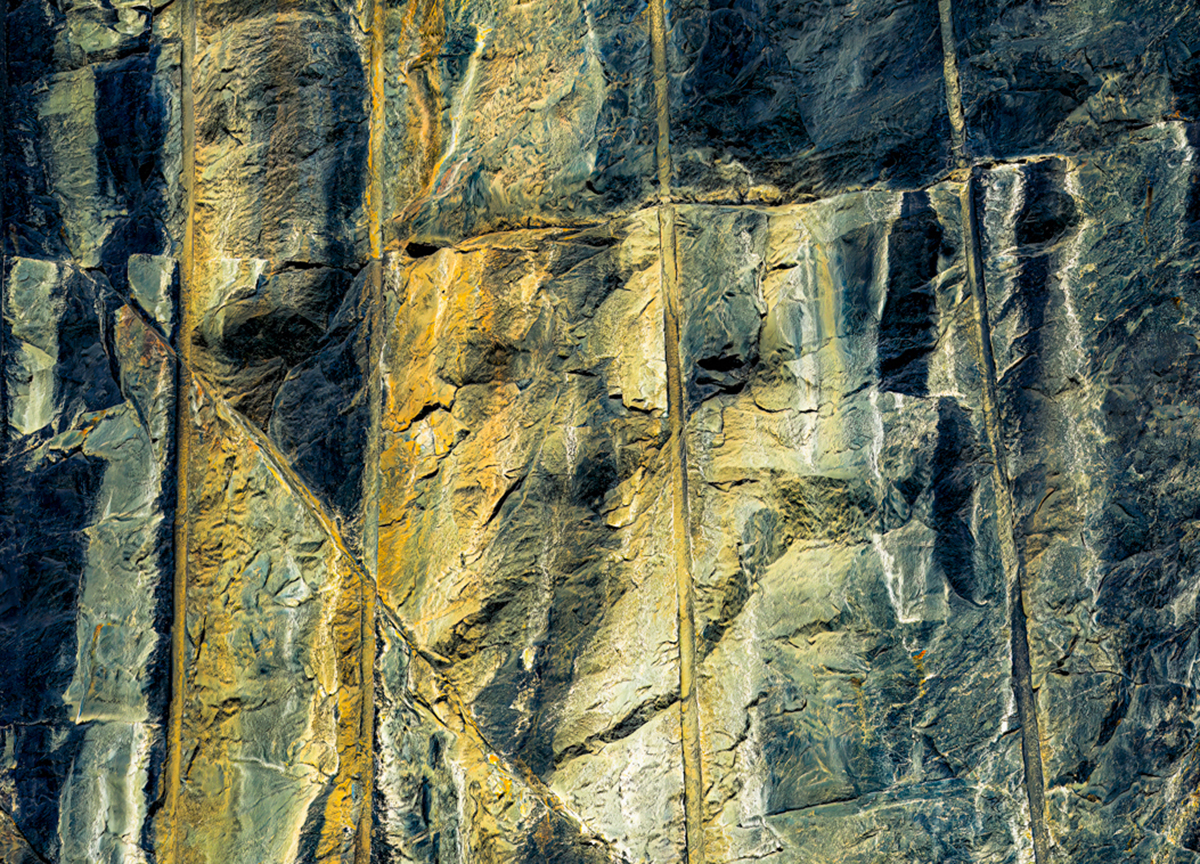
Julian Jollon is an American artist whose creative path has moved through detours, pauses, and returns. His background includes formal study in Fine Arts, Photography, and Painting, and early on he imagined a life centered on the studio. That plan shifted. For fifteen years he stepped away from art and worked in Hospital Epidemiology, a field grounded in science, systems, and the care of human life. During that period, he also experienced a liver transplant, an event that changed how he understands time and survival. When Jollon came back to art, he did so with steadiness and purpose. His practice now grows from lived experience, not just training. Themes of fragility, endurance, and awareness of mortality quietly inform his images. Rather than chasing spectacle, he looks closely at what endures—stone, memory, myth, and the human need to find meaning in the natural world.
Myth, Stone, and Memory
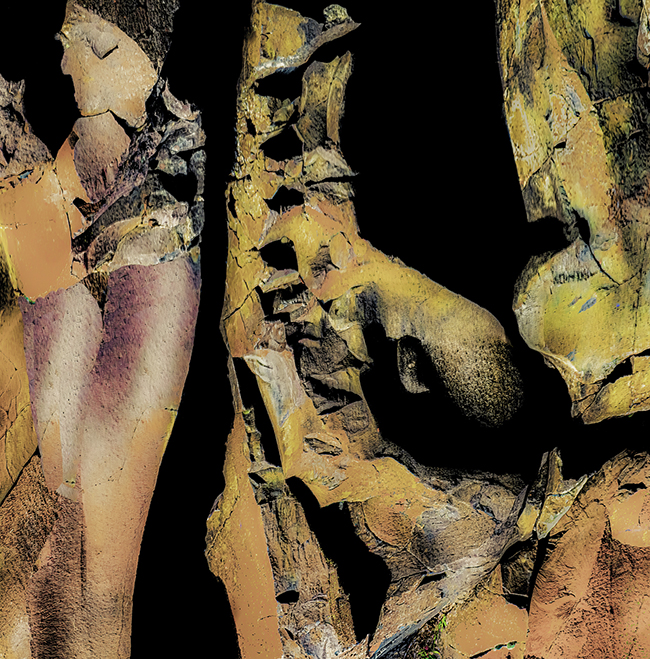
Jollon’s photographic piece Mythical Geology explores how landscape can hold story. At first glance, the image reads as an abstraction of rock and mineral surfaces. Earth tones dominate—rust, ochre, umber—colors that recall soil, clay, and weathered cliffs. The textures feel granular and close, inviting the eye to travel across cracks and ridges. Yet the photograph does more than document geology. Within the stone, viewers begin to notice presences: a serpent shape, a feminine presence, an otherworldly face. These elements do not announce themselves loudly; they appear gradually, like images found in clouds or shadows.
The snake carries layered meaning across cultures. It often relates to renewal, cycles, and healing. In Jollon’s composition, the serpent does not read as threat. It rests within the terrain, part of the same visual language as the rock. This placement suggests continuity between the living and the mineral, between movement and stillness. The land is not a backdrop but a participant.
The feminine presence emerging from the stone introduces another dimension. She is not posed or staged; she seems to surface from the terrain itself. This presence can be read as an echo of Mother Earth, fertility, or the idea that creation is collaborative between human imagination and natural process. The contrast between soft bodily curves and rough stone edges creates quiet tension. It asks how gentleness and endurance coexist.
Then there is the alien-like gaze. This element opens the image toward deep time and cosmic scale. Rather than focusing only on ancestry behind us, Jollon hints at consciousness beyond us. The suggestion of watchers or beings outside linear time reframes the landscape as a site of observation and memory. The rock becomes an archive.
Light and framing play a key role. Shadows carve out shapes that feel like thresholds. Highlights trace edges that look like emerging forms. The composition gives the sense that something is arriving or revealing itself. Time feels present in the image—not clock time, but geological and emotional duration. The land appears to breathe slowly.
The poetic text associated with Mythical Geology deepens this reading. It speaks of listening rather than touching, of stories braided into mineral silence. This aligns with Jollon’s broader approach. His photography often invites stillness. He does not push a single interpretation. Instead, he creates space for viewers to notice what resonates for them.
Odysseus and the Stone Watchers
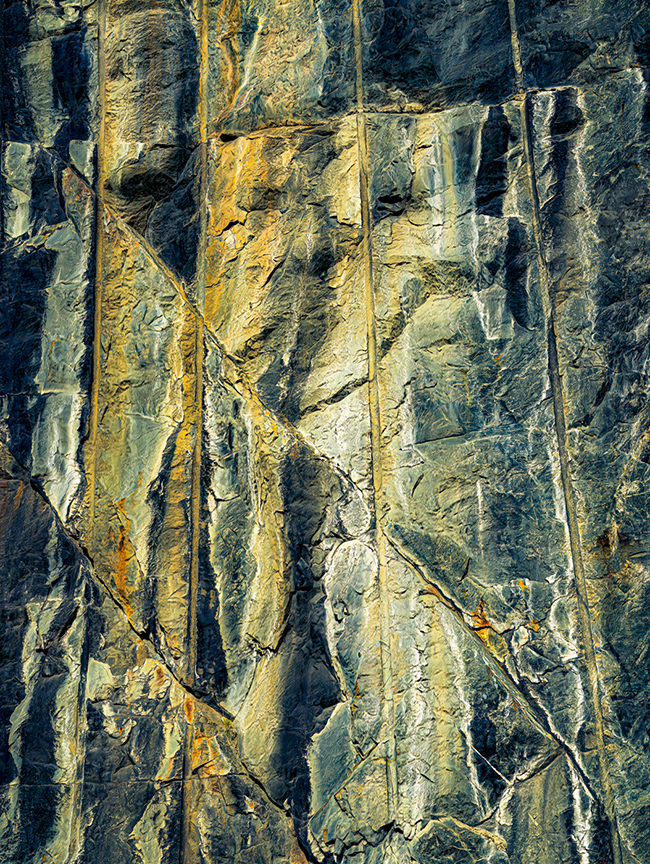
In Odysseus Confronts the Rocky Cliff, Jollon turns toward narrative. The work draws from myth but relocates it into a geological setting. Odysseus is no longer a sea voyager but a seeker of stone memory. This shift moves the hero’s journey inward and downward, into canyons and cliffs.
The idea of the “spirit lens” is central. It does not record images; it reveals what stone remembers. This concept mirrors photography itself—less about capturing reality and more about uncovering layers. Through the lens, ancestors appear, grief becomes language, and avoided truths take shape as masks. Each rocky head—T’kama, Eshuna, Moroq—holds a different human experience: questioning, sorrow, humor, self-recognition.
Eshuna’s canyon, where tears become glowing glyphs, reframes grief as communication. Moroq’s playful trickster energy turns self-avoidance into confrontation with honesty. These encounters read like inner landscapes mapped onto outer terrain. The cliffs are psychological as much as physical.
The ending brings the message home. The final face forming in stone resembles the seeker himself. The realization follows: the goal was not to find the Watchers but to become one. Memory is not only stored in the land; it is carried by those who witness and live.
A Practice Grounded in Awareness
Across these projects, Jollon’s work circles back to awareness—of time, mortality, and connection. His years in epidemiology and his transplant experience likely sharpened his sensitivity to survival and interdependence. While his images engage myth and symbolism, they remain grounded in real materials: rock, texture, light.
There is also patience in his approach. The photographs do not rush. They reward slow looking. They ask viewers to sit with ambiguity, to accept that meaning can be layered and shifting.
Jollon’s return to art does not feel like a restart but a continuation shaped by lived reality. His images suggest that stone remembers, but so do we. In bringing these ideas together, he offers work that is reflective, open-ended, and attentive to the quiet dialogue between Earth and imagination.
